Blossoms Across Borders: How Cultural Heritage Shapes Our Gardens
Share this article:
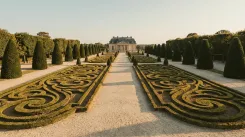
The French formal garden is an argument about order and power — every straight line bent to a single controlling view. Read a style's grammar, not its surface.
Stand in any garden long enough and it will tell you where it came from. The raked gravel of a Japanese temple courtyard and the box parterre of a French château are not simply two ways of arranging the ground; they are two arguments about what a garden is for, made in two different centuries by two different cultures. The world's garden styles are, in this sense, a kind of writing — and the oldest of them go back a very long way. Egyptian ornamental gardens, with their canals, ponds and deliberate symmetry, date to around 1400 BCE, which is to say people were composing with plants and water three and a half thousand years before the word "border" meant anything. What follows is a short tour of the major garden styles, and the culture, climate and belief behind each — because once you know why a style exists, you stop copying its look and start understanding its grammar.
Garden styles at a glance
Style
Origin culture / period
Defining feature
Named example
Japanese Zen (karesansui)
Japan, from ~1300s
Raked gravel as water; stones as mountains
Ryōan-ji, Kyoto
Islamic paradise (chahar bagh)
Persian/Islamic world
Four quadrants split by water channels
Generalife, Alhambra; Taj Mahal grounds
French formal
16th-century France
Axial symmetry, clipped parterre, scale
Versailles
English cottage
18th-century England
Dense, informal mix of food, medicine and flower
—
Terraced / ancestral
Inca (Andes); ancient Egypt
Stepped beds; canals and ponds
Inca terraces; Egyptian temple gardens
The Japanese Zen garden
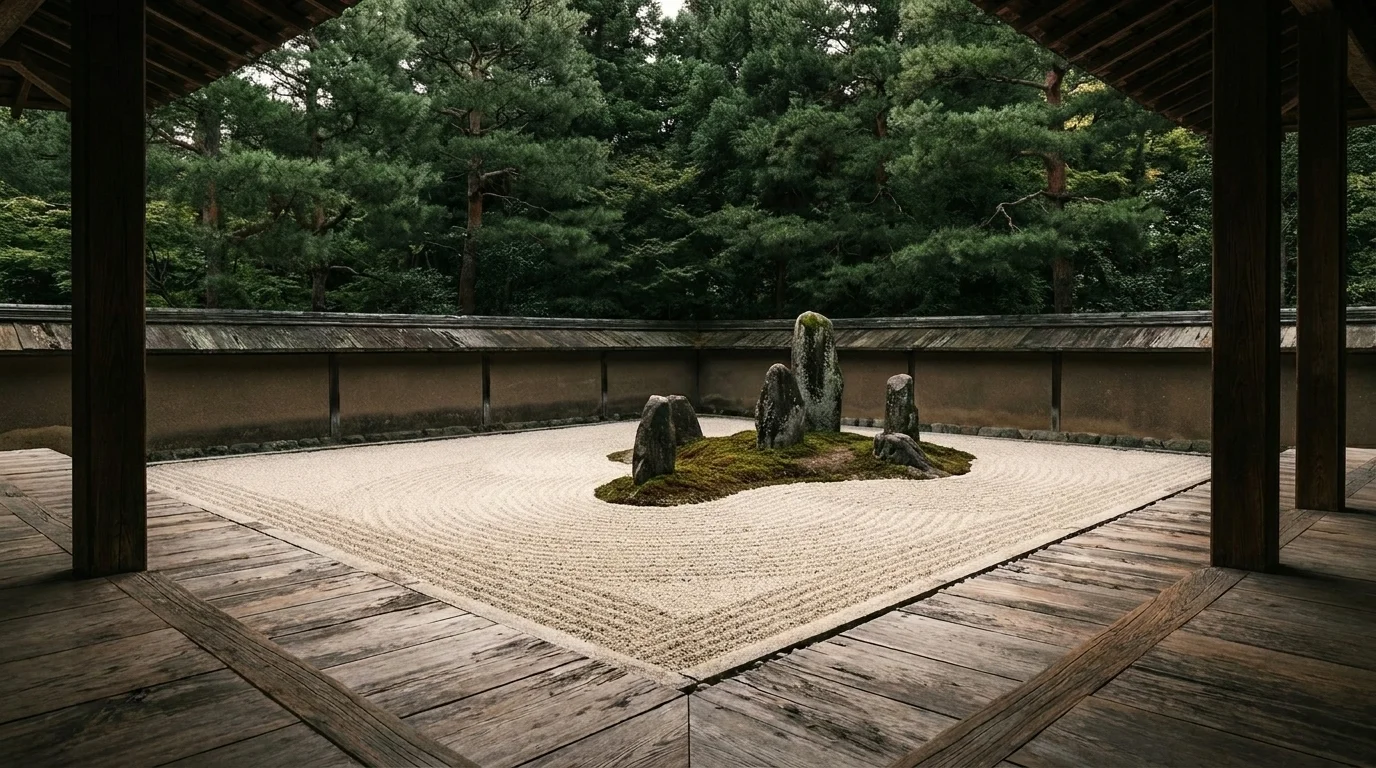
If you only ever learn the grammar of one garden style, make it this one, because it teaches restraint better than any other. The Japanese Zen garden — properly karesansui, or "dry landscape" — uses no flowing water at all. Raked gravel stands in for the sea or a river; carefully set stones become mountains or islands; the whole composition is meant to be contemplated from a fixed point rather than walked through. It became most definitive in Japan around 1300, as Zen Buddhism spread, and its canonical example is the dry garden at Ryōan-ji in Kyoto, laid out in the late fifteenth century.
What makes Ryōan-ji worth knowing is a detail most photographs miss. Its fifteen stones are arranged so that no more than fourteen are visible from any single vantage point along the viewing veranda; there is always one you cannot see. This is not an accident of placement but the point of it — an intentional expression of incompleteness, the Zen idea that perfection withholds something, the same sensibility that gives us wabi-sabi. A border designer spends her life adding; the Zen garden is the discipline of taking away until only meaning is left.
Loading image...
Ryōan-ji sets fifteen stones so you can never see more than fourteen at once — perfection that withholds something, the whole discipline of taking away.
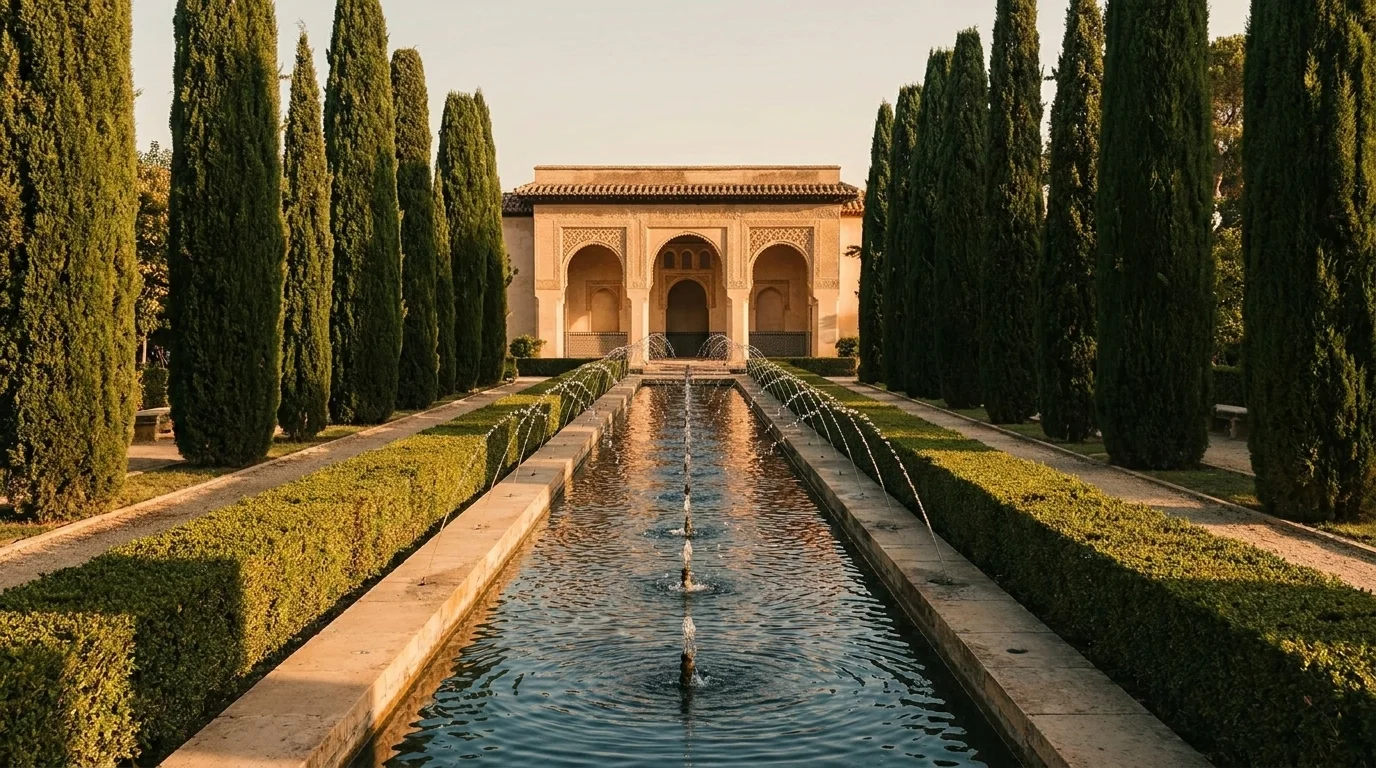
The two exemplars worth carrying in your mind are the Generalife at the Alhambra in Granada and the grounds of the Taj Mahal — the first a summer palace garden of narrow rills and cypress, the second the four-quadrant plan rendered at imperial scale around a tomb. Stand at the crossing of the channels in either and you are standing where the design intends paradise to be.
Loading image...
The four channels of the chahar bagh map the rivers of paradise meeting at a central fountain — the garden isn't a backdrop to paradise; it's a scale model of it.
The French formal garden
The French formal garden, which crystallised in sixteenth-century France and reached its apotheosis at Versailles, is an argument about order — and, frankly, about power. Its grammar is axial symmetry: long sightlines, clipped parterres laid out like embroidery, water held in geometric basins, the whole landscape bent to a single controlling viewpoint, usually the window of the man who owned it. Nothing self-seeds; nothing is allowed to wander. It is the opposite impulse to the Zen garden's restraint and the cottage garden's generous muddle, and it is worth understanding precisely because so much Western garden design still reaches, unconsciously, for its straight lines.
The English cottage garden
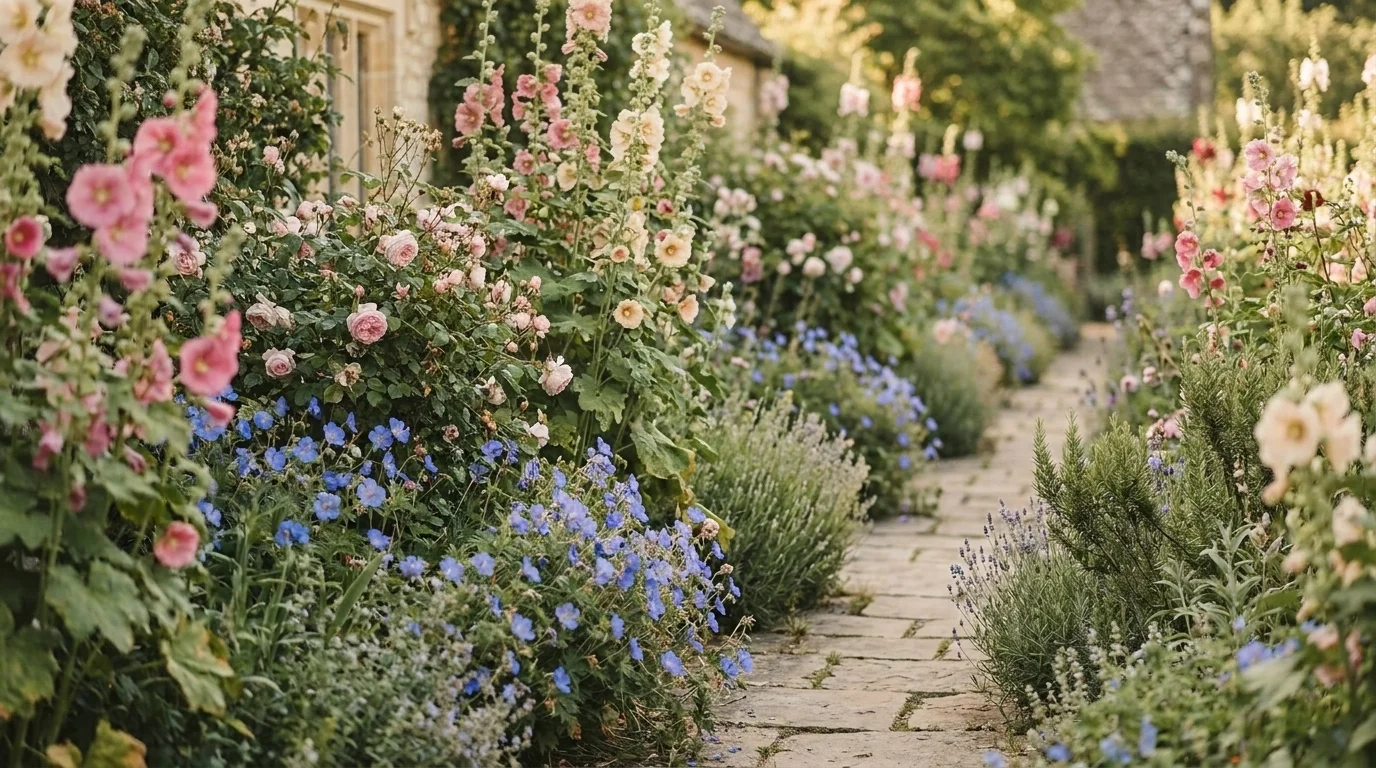
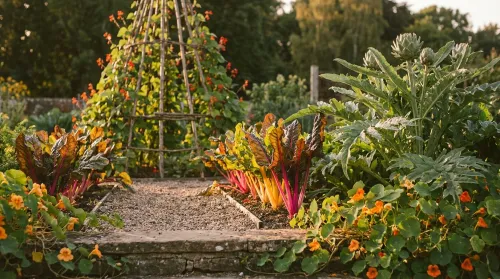
The English cottage garden is the style most often romanticised and least often understood. We picture roses tumbling over a door and read it as leisure, but its origins in eighteenth-century England were a matter of necessity: working gardens of vegetables, medicinal herbs and dye plants, packed tight because the plot was small and every square foot had to earn its place. The flowers came later, when a leisured class borrowed the look and forgot the labour. Gertrude Jekyll, who did more than anyone to refine the style into an art, never forgot it; her drifts of hardy perennials were dense and productive, not merely pretty. The cottage garden is, to my eye, the most honest of the Western styles — it admits that a garden is a place where you grow what you need and learn to love it.
Loading image...
We read the cottage garden as leisure, but it began as necessity — vegetables, herbs and dye plants packed tight; Jekyll never forgot the labour under the flowers.
Terraced and ancestral gardens
Long before any of these became a "style," people were shaping the ground to feed themselves, and the most spectacular survivals are the Inca terraces of the Andes — stepped beds cut into mountainsides that turned an impossible gradient into farmable land, managing water and soil with an engineering subtlety we are still studying. Set beside the Egyptian temple gardens of 1400 BCE, they remind us that the ancestral garden was rarely ornamental first. It was terraced agriculture, irrigation, the patient adaptation of plants to a place. Today's interest in permaculture and companion planting is, in large part, a rediscovery of what these cultures knew without needing the vocabulary.
So here is the invitation, in place of a checklist. The next time you stand in a garden — your own, a neighbour's, a great one open to the public — try to read its grammar rather than its surface. Ask which culture's argument it is making, and what it would be saying if it had been planted somewhere else, by someone who remembered something different. A garden is always a four-dimensional composition; the fourth axis here is not the year but the centuries, and you are standing inside it.
Major styles include Japanese Zen (karesansui) gardens, Islamic paradise (chahar bagh) gardens, French formal gardens, English cottage gardens, and Mesoamerican/Incan terraced gardens — each shaped by the culture, climate, and beliefs of where it began.
What makes a Japanese Zen garden different from other styles?
A Zen garden (karesansui, or "dry landscape") uses raked gravel to represent water and carefully placed stones for mountains or islands, with no flowing water. Ryōan-ji in Kyoto is the canonical example — its 15 stones are arranged so no more than 14 are visible from any single viewpoint, expressing the Zen ideal of imperfection.
What is an Islamic paradise garden?
The chahar bagh, or "four gardens," divides a garden into four quadrants by water channels representing the four rivers of Paradise described in the Qur'an, meeting at a central fountain. The Generalife at the Alhambra in Spain and the Taj Mahal grounds in India are famous examples.
What is the significance of ancestral gardens in modern landscapes?
Ancestral gardens play a crucial role in modern landscapes by reflecting cultural heritage and traditions. They serve as living testaments to our roots, connecting us with our past while influencing contemporary gardening practices. Incorporating elements from these gardens helps preserve cultural legacies in a rapidly changing world.
What are some iconic cultural garden designs and their meanings?
Iconic cultural garden designs, such as Japanese Zen gardens and Islamic paradise gardens, embody the values and artistic expressions of their cultures. These gardens evoke emotional and spiritual responses, serving as sources of inspiration for garden enthusiasts looking to infuse their spaces with deeper cultural significance and beauty.
How do multicultural communities impact urban gardening?
Multicultural communities significantly impact urban gardening by fostering collaboration among individuals from diverse backgrounds. Community gardening initiatives allow people to share botanical knowledge and cultivate plants that hold sentimental value, creating vibrant green spaces that symbolize harmony and cooperation while celebrating cultural diversity.
Why is preserving culturally significant plants important for biodiversity?
Preserving culturally significant plants is vital for maintaining biodiversity as they carry stories of tradition and ecological wisdom. These plants not only contribute to conservation efforts but also help safeguard intangible cultural heritage, ensuring that traditional knowledge and practices are passed down through generations.
What are ethnic culinary gardens and their significance?
Ethnic culinary gardens represent a convergence of traditional recipes and home gardening practices within multicultural neighborhoods. These gardens showcase a variety of herbs, vegetables, and fruits unique to various cuisines, empowering individuals to reconnect with their culinary roots while promoting sustainable food cultivation practices.
Nurturing the Muse: Integrating Fine Art Principles into Your Vegetable Plot
Join
Loading...
Our Green Community!
Loading...
VerdeNook is more than just a source of gardening wisdom; it’s a platform for sharing, learning, and growing together. We invite you to join our community, share your stories, and spread the joy of gardening. Let’s sow the seeds for a greener, healthier, and more sustainable future, one garden at a time.