Whispering Leaves: Integrating Folklore into Modern Home Gardening Practices
Share this article:
Before a plant carried a Latin name it carried a meaning — to plant for symbolism is to join a conversation four hundred years long, not to cast a spell.
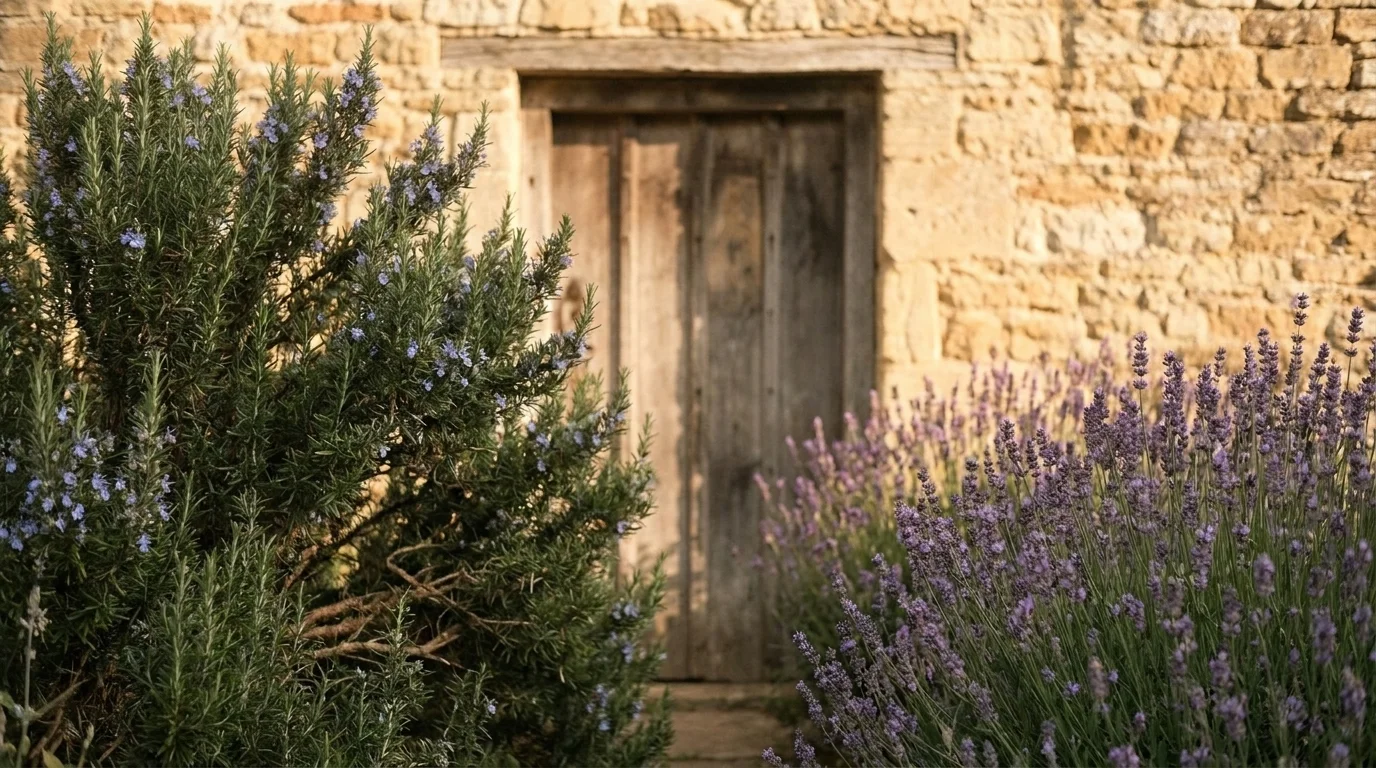
There is a rosemary bush by the door of the walled garden I look after, and I did not plant it for the kitchen. It is there because the person who laid out these beds a century ago planted it there, for the reason rosemary has been planted by doorways for far longer than that: remembrance. Before a plant carried a Latin binomial it carried a meaning, and the study of those meanings — plant symbolism — is one of the oldest threads in gardening. Much of what we now call the language of flowers was codified in the Victorian age, but it reaches back through medieval physic gardens to classical myth. What follows is a working gardener's guide to it: what the common plants mean, where those meanings came from, which carry a darker charge, and one folk practice you can still do by the calendar.
A gardener's chart of plant symbolism
Most symbolism references stop at the meaning. As a gardener I want the meaning and the plant in the ground, so this chart carries both:
Plant
Meaning
Folklore origin
In the garden
Rosemary
Remembrance, fidelity
Carried at funerals and weddings since antiquity
Evergreen, drought-tolerant, full sun
Lavender
Healing, devotion
Strewing herb for purification and calm
Free-draining soil, full sun; loathes wet
Sage
Wisdom, cleansing
Burned and strewn to clear ill humours
Hardy perennial herb, full sun
Rose
Love
Dedicated to Aphrodite, goddess of love
The whole genus; choose for scent and health
Oak
Strength, endurance
Sacred to Zeus, Thor, and the Druids
A tree for generations, not for a small plot
Yarrow
Healing, protection
Achilles' wound herb; hung to ward off ill
Tough, pollinator-rich, sun
Bay laurel
Victory, honour
The victor's wreath of Greece and Rome
Evergreen, container-friendly, tender in hard frost
Holly
Protection, goodwill
Brought indoors at midwinter to shelter good spirits
Evergreen hedge or specimen, sun or shade
Rowan
Warding off evil
Planted by the door in Celtic tradition against harm
Small hardy tree, berries for birds
Notice how often the meaning and the use rhyme — the healing herbs really were medicinal, the protective trees really were planted at thresholds. The symbolism is not arbitrary; it is folk memory of what a plant did, set down as story.
Loading image...
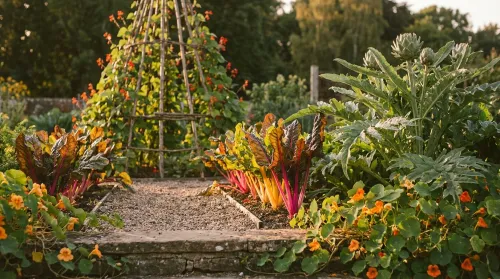
Rosemary by the door means remembrance, lavender means healing — the meaning and the use rhyme, because the symbolism is folk memory of what the plant did.
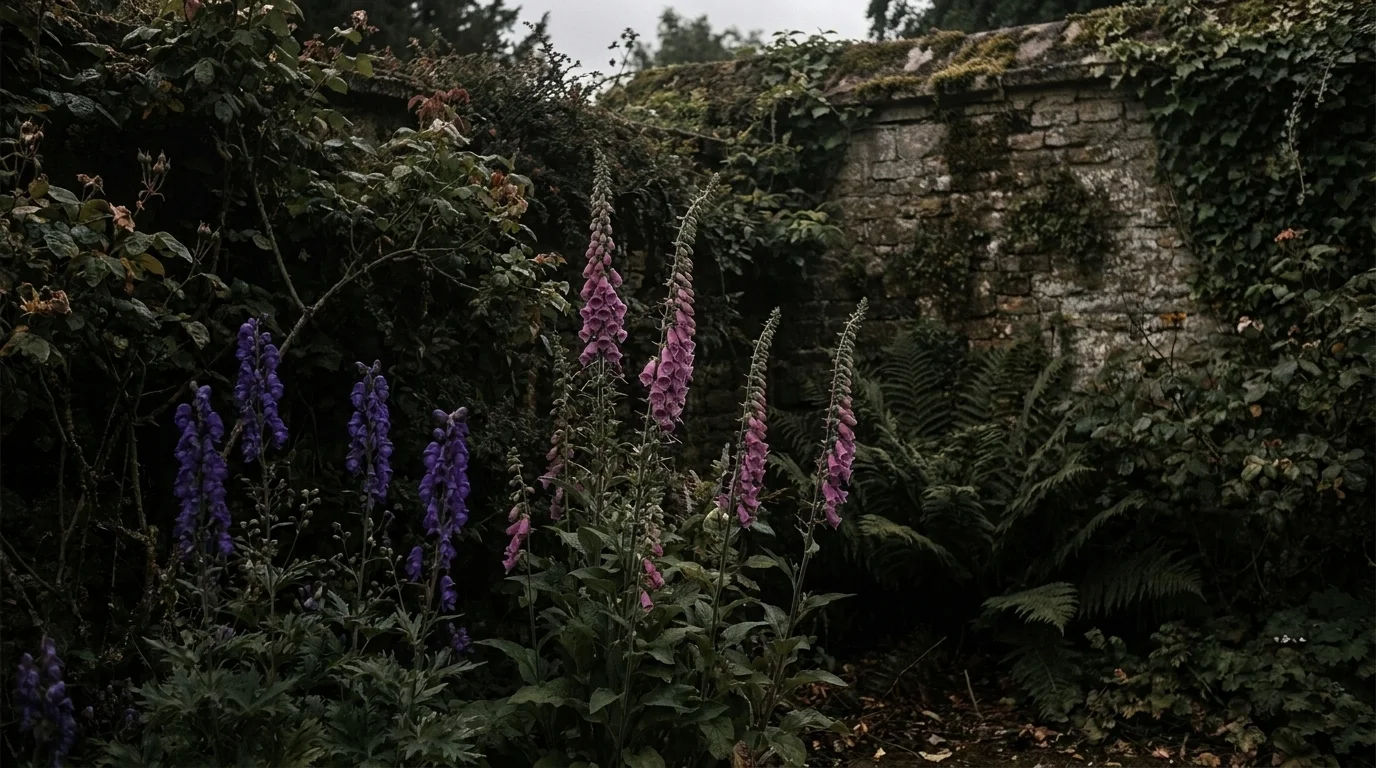
I am not suggesting you weed out the foxgloves. I am suggesting that an old garden is more interesting when you know which of its beauties the previous centuries were a little afraid of — and that the poisonous ones deserve respect rather than superstition, especially where children visit.
Loading image...
The sinister ones earned it pharmacologically — monkshood is bound up with witchcraft and as deadly as its reputation. Respect, not superstition, especially where children visit.
If you want a folk tradition you can actually keep, the most enduring is moon gardening — timing your sowing and planting to the lunar phases. The conventional scheme is simple: sow and plant leafy and flowering crops as the moon waxes toward full, and root crops as it wanes, with the Old Farmer's Almanac still publishing its "Planting by the Moon" tables each year for those who wish to follow them precisely.
Loading image...
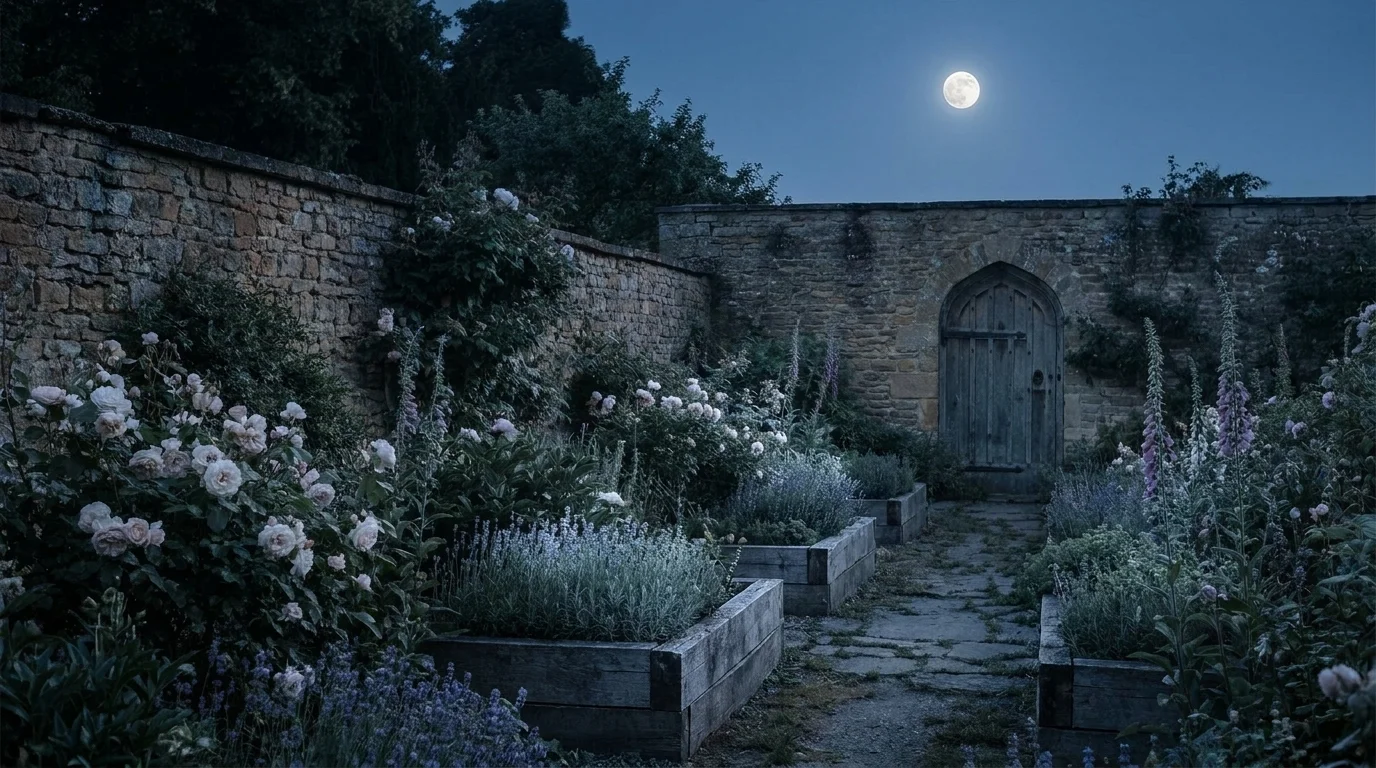
Moon gardening gives no yield advantage — moonlight is far too faint for photosynthesis — but it gives a rhythm: a reason to be in the garden. Heritage, not horticulture.
Here I have to be honest, because I never recommend a scheme I cannot stand behind. There is no reliable peer-reviewed evidence that lunar phase affects plant growth — moonlight falls far below the light intensity a plant needs for photosynthesis, so this is heritage, not horticulture. What it offers is not a yield advantage but a rhythm: a reason to be in the garden on a particular evening, a calendar older than the seed packet, a way of paying attention that gardeners have kept for centuries because it kept them. Practise it for the discipline and the company of the past, not because the carrots can tell.
A garden planted with these meanings in mind is no more productive than one planted without them — but it is, I think, a richer place to stand. When you set rosemary by a door, you are not casting a spell; you are joining every gardener for four hundred years who planted it there and meant remembrance. The plant does the growing. The meaning is the thread that runs back through all the hands that grew it before you, and forward to whoever tends the bed when you are the one being remembered.
What is plant symbolism and where does it come from?
Plant symbolism is the meaning a culture assigns to a plant — rosemary for remembrance, the rose for love (dedicated to Aphrodite), lavender for healing and devotion. Most meanings trace to folklore, mythology, and the Victorian "language of flowers" (floriography), popularized after Joseph Hammer-Purgstall's 1809 flower dictionary; meanings often vary by culture and era.
Which plants have negative or unlucky meanings?
Folklore is full of ill-omen plants. Chrysanthemums signal death across much of Europe; white lilies were funeral flowers said to invite misfortune indoors; in Scotland, lilac and hawthorn brought indoors were thought to bring bad luck; aconite (monkshood/wolfsbane) and belladonna — "the devil's favorite flower" — are tied to witchcraft and death.
Does planting by the moon actually work?
Lunar (moon) gardening times planting to the moon's phases — root crops on the waning moon, leafy and flowering growth on the waxing moon. It's an ancient tradition still followed via guides like the Old Farmer's Almanac, but there's no peer-reviewed evidence that lunar phases affect plant growth; treat it as heritage practice, not proven science.
Which plants symbolize healing and strength?
Lavender, yarrow, and peony are classic healing symbols; gladiolus (from the Latin "gladius," sword), echinacea, snake plant, and the lotus — rising from mud to bloom — symbolize strength and resilience. Many double as practical garden herbs and ornamentals.
Blossoms Across Borders: How Cultural Heritage Shapes Our Gardens
Join
Loading...
Our Green Community!
Loading...
VerdeNook is more than just a source of gardening wisdom; it’s a platform for sharing, learning, and growing together. We invite you to join our community, share your stories, and spread the joy of gardening. Let’s sow the seeds for a greener, healthier, and more sustainable future, one garden at a time.