The Future is Here: Utilizing Drones for Precision Home Gardening
Share this article:
Real, but built for orchards at 40 acres a flight — drone pollination answers a commercial bee shortage, not a backyard one. The maths only works at scale.
In late June, walk out to a courgette plant and you will sometimes find a flower that opened, was not visited, and is now collapsing — the small fruit behind it yellowing and softening instead of swelling. That failed set is the most domestic possible symptom of a very large problem, and it is the reason a phrase like drone pollination has moved from science fiction into the agricultural press. The internet will tell you robot bees are coming to your garden. Some of that is true, most of it is years away, and the honest version is more useful than either the hype or the dismissal. So let me lay out what is actually happening, what works, and what you can do this week with a paintbrush rather than a flying machine.
The single most useful thing I can do here is separate three quite different technologies that the word "drone" collapses into one. They are not at the same stage, and only one of them is something you could pay for today.
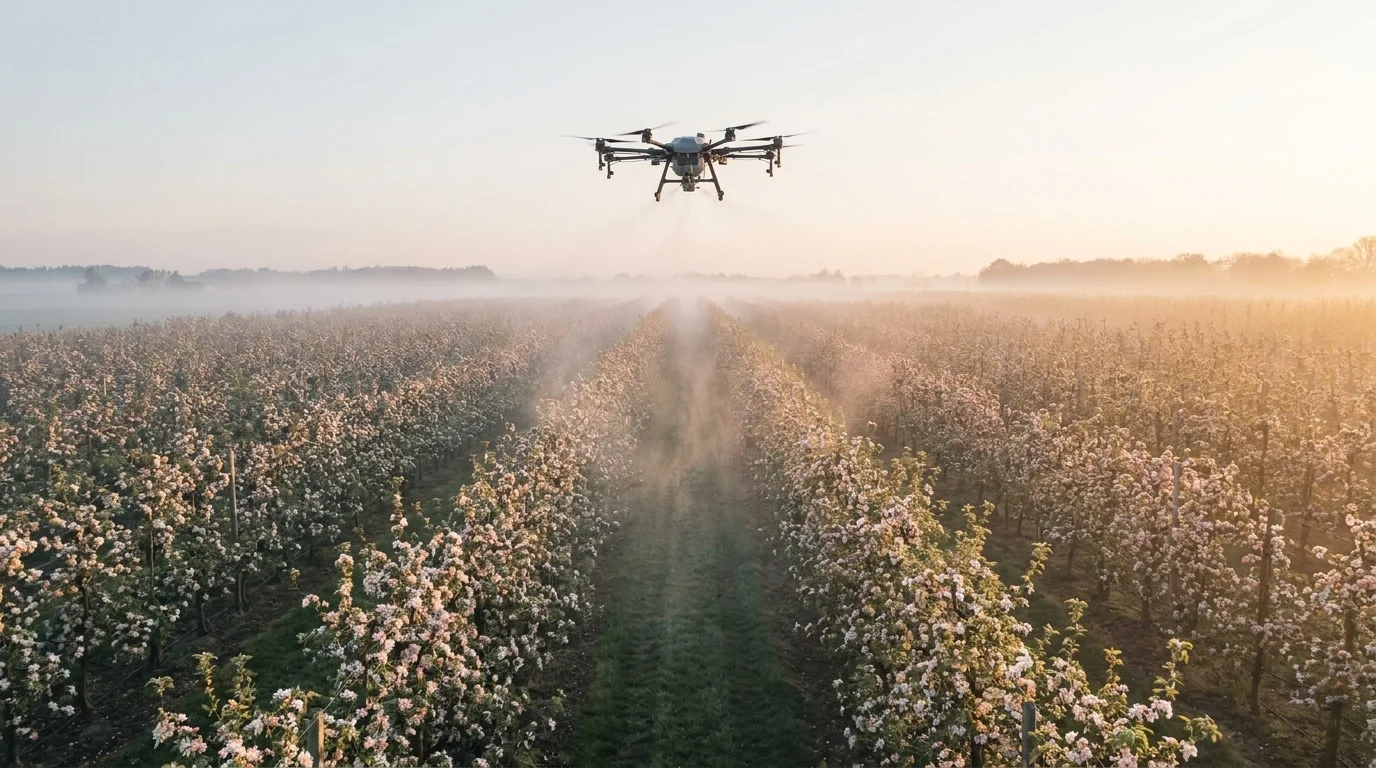
Tier one — open-orchard service drones. Full-size multirotor craft fly over orchards dispensing pollen across the canopy. The commercial example, Dropcopter, reports a single drone covering about 40 acres in roughly four hours, working almonds, apples, cherries and pears. That acreage figure is the tell: this is equipment built for commercial fruit growers, not for a vegetable bed.
One Dropcopter covers about 40 acres in four hours across almonds, apples and cherries — that acreage is the tell: this is equipment for growers, not a vegetable bed.
Does it work?
It does, within its intended setting, and I will give the figures with the caveat that they are early trial results rather than settled science. Growers report yield increases of roughly 25% in almond orchards and up to about 45% in cherry orchards with drone-assisted pollination. The economic case is a straight comparison: drone services aim to undercut the cost of renting hives, which can run up to around $225 per hive at peak season. For a grower with hundreds of acres and no bees to rent, the maths is starting to work. For a garden, there is no maths to do.
Here is where the topic becomes useful rather than aspirational, because the underlying problem — too few pollinators — has answers you can act on now.
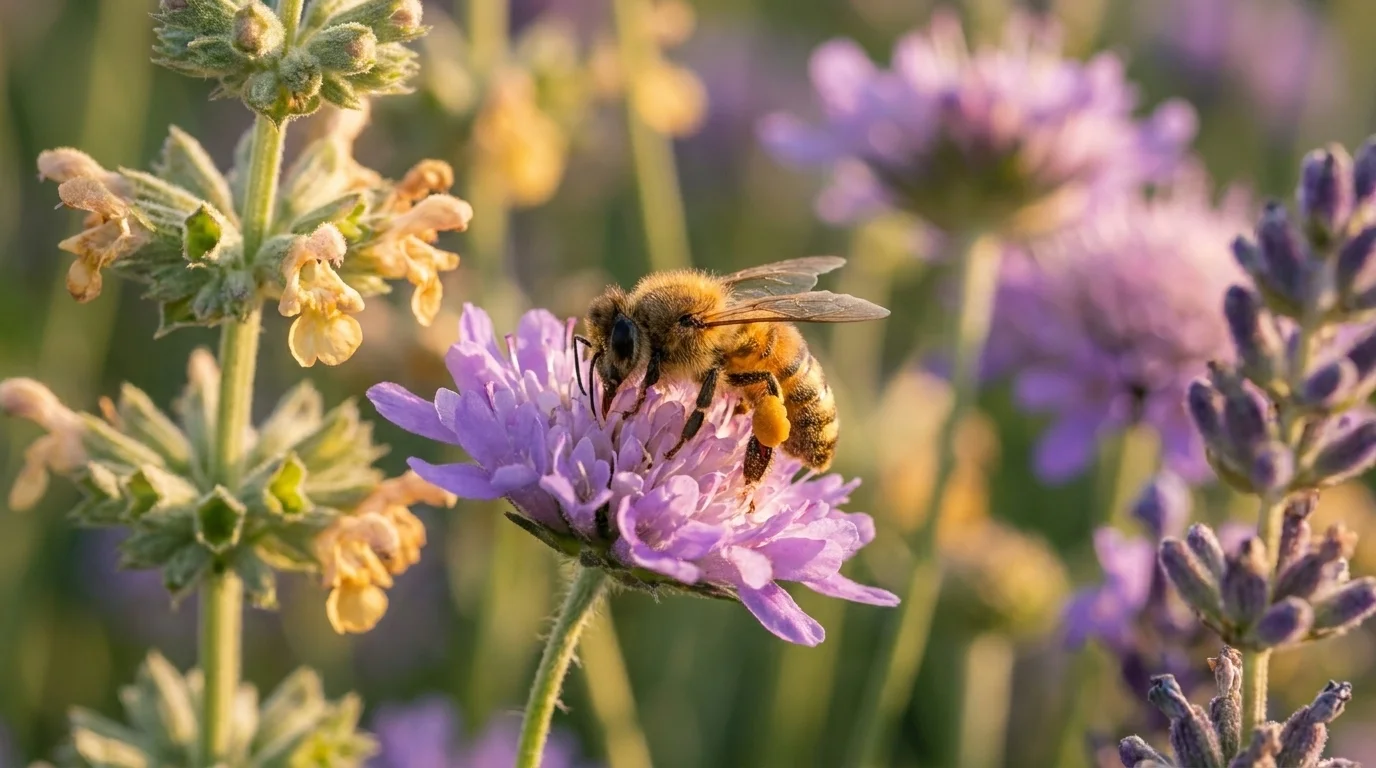
The first is to bring the pollinators back. A garden planted for insects, with a succession of diverse, single-flowered blooms and no broad-spectrum insecticide, will draw far more bees and hoverflies than a tidy, sprayed one. This is not sentiment; it is the same logic the orchards are missing, applied at a scale where it actually works.
Loading image...
Diverse single-flowered blooms and no broad-spectrum spray draw more bees than any tidy bed — the same logic the orchards are missing, at a scale where it works.
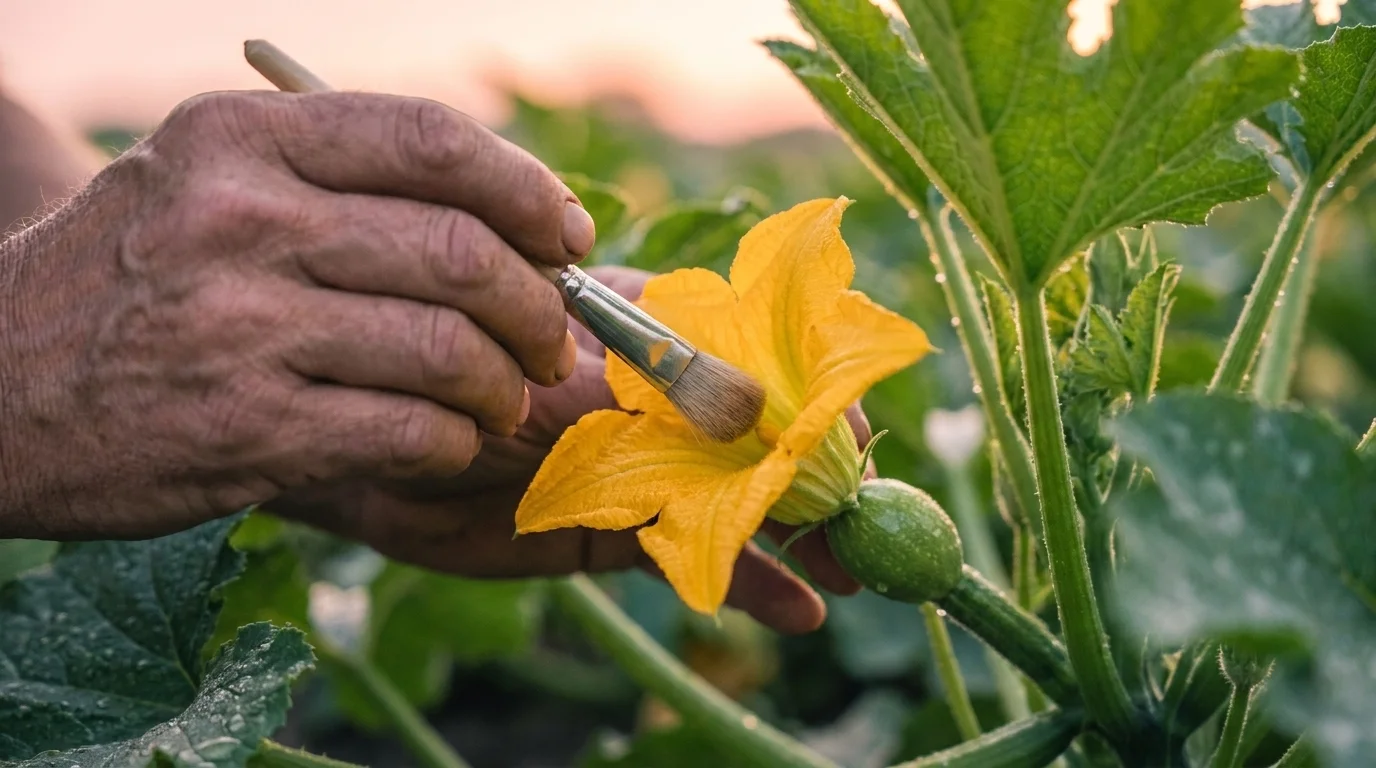
The second is to do the drone's job yourself, by hand, where it matters. Cucurbits — courgettes, squash, pumpkins, cucumbers — carry separate male and female flowers, and in a cool or bee-poor week the female flowers simply never get visited. Pick a freshly open male flower, strip its petals, and brush its pollen directly onto the centre of each female flower (the one with a tiny fruit already swelling behind it). For tomatoes, peppers and strawberries, which are self-pollinating, the issue is not transfer but vibration: a gentle daily tap on the flower truss, or a soft brush, shakes the pollen loose exactly as the greenhouse drones' airflow does. A small artist's brush costs less than a packet of seed and outperforms any drone you could put in a garden this decade.
Loading image...
A small artist's brush costs less than a packet of seed and out-pollinates any drone you could put in a garden this decade — strip a male flower, dust the female.
The near future
It would be dishonest to close as if nothing is coming. Harvard's RoboBee — an insect-scale flying robot a decade in development — finally achieved reliable landings in April 2025, gaining crane-fly-inspired legs after years of crash landings, and its developers explicitly name "artificial pollination with swarms in vertical farms and gardens" among its goals. But the specifications keep the promise honest: it weighs under a tenth of a gram, spans three centimetres, and is still tethered to an external power source. It is a remarkable piece of engineering and it is years from any backyard.
So the one-line diagnostic to take outside with you: before you wonder about robot bees, check your squash. If the small fruit behind an open female flower yellows and shrivels rather than swelling over two or three days, you have a pollination shortfall — and the fix this week is a brush in your hand, not a drone in the sky.
Not yet. Pollination drones are sold as a commercial service for large orchards and greenhouses, not as consumer products, and costs remain high. For now they target high-value crop farms, not residential gardens — though research like Harvard's RoboBee points to a possible consumer future years away.
How well do pollination drones actually work?
Early commercial trials report yield increases of roughly 25% in almond orchards and up to 45% in cherry orchards. A single drone can cover about 40 acres in four hours, using AI to detect flowers and either spray pollen or vibrate self-pollinating crops with propeller airflow.
Why are drones being used to pollinate crops at all?
Honeybee colonies are collapsing — US commercial beekeepers lost an estimated 55–62% of colonies between 2024 and 2025, the worst on record. With natural pollinators in crisis, growers are turning to drone-assisted pollination to protect food crops.
What can home gardeners do to help pollination right now?
Skip the drones and plant for pollinators — native flowers, diverse blooms, and pesticide-free beds attract bees and other insects. For crops like tomatoes, squash, and peppers, simple hand-pollination with a small brush is cheap, effective, and available today.
Augmenting Reality, Cultivating Dreams: AR in Garden Design & Management
Join
Loading...
Our Green Community!
Loading...
VerdeNook is more than just a source of gardening wisdom; it’s a platform for sharing, learning, and growing together. We invite you to join our community, share your stories, and spread the joy of gardening. Let’s sow the seeds for a greener, healthier, and more sustainable future, one garden at a time.