The diagnostic paradox most watering guides won't name — leaves droop because waterlogged roots can't move water, not because the plant is thirsty.
The conventional wisdom on plant watering is that overwatering is the bigger sin, full stop. That isn't quite right — an overwatered plant can be just as compromised as a parched one. A 2023 study on container-grown kale published in ScienceDirect concluded plainly that "overwatering may be as detrimental as underwatering" — they are different injuries to the same plant, and both kill on a similar timescale. Knowing which one you've inflicted is the entire job, because the rescue protocols are not the same and applying the wrong one accelerates the damage. What follows is a measured guide: how to read the symptoms, what the moisture-meter scale actually means, how often to water by plant type and soil, and — the section nobody else seems to publish — exactly how to bring an overwatered plant back, with realistic timelines.
Loading image...
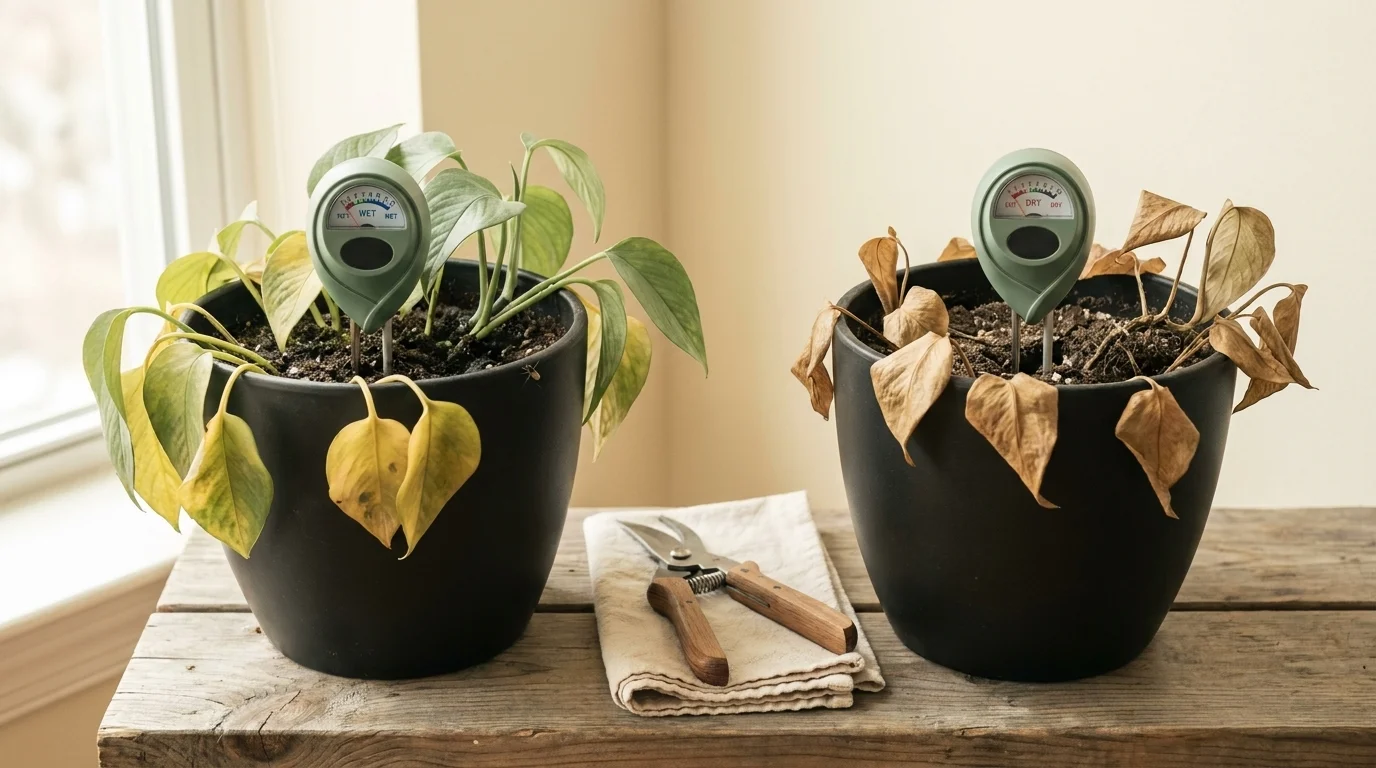
Same plant, two failure modes — yellow-and-limp on the left, brown-and-crisp on the right. The diagnostic is which one the patient on your shelf actually looks like.
Quick comparison: overwatered vs underwatered
The fastest diagnostic is to check the soil and the leaf at the same time. The combination tells you which mistake you've made — checking only one will mislead you, because a wilted plant in wet soil looks identical to a wilted plant in dry soil from across the room.
What to check
Overwatered
Underwatered
Soil moisture
Soggy or wet, often for days
Dry, crumbly, pulling away from the pot edge
Leaf colour
Yellow, often starting with older/lower leaves
Brown or tan, often starting at the tips and edges
Leaf texture
Limp, soft, sometimes translucent
Dry, crispy, curling inward
Stem base
Soft, mushy, may smell sour
Firm but sometimes brittle
Pot weight
Heavy
Noticeably light
Soil surface
Fungus gnats, mold, white salt crust, foul odour
Cracked, shrunk away from pot wall
Roots (if checked)
Brown or black, mushy, rotten smell
Dry, brittle, may have died back but stays light-coloured
Whole-plant droop
Wilted despite wet soil — the classic tell
Wilted because soil is bone-dry
Signs of overwatering
The conventional wisdom says yellow leaves are the overwatered tell. That's the headline symptom, but it isn't the most reliable one. By the time leaves yellow, root damage is usually already underway. The earlier signals are stranger and worth knowing.
Yellowing on older, lower leaves first. Waterlogged soil suffocates roots and disrupts nitrogen uptake, so the plant pulls reserves from older leaves to feed new growth. Crispy tips on new growth point the opposite direction.
Wilting in wet soil. The diagnostic paradox: roots starved of oxygen can't move water into the plant, so leaves droop despite a soaked rootball. If the soil is wet and the plant looks thirsty, it isn't.
Mushy, unstable stem base. Press gently at the soil line. Healthy stems are firm. A stem that gives under your finger or smells sour signals rot has reached the crown — and the plant is in genuine trouble.
Brown spots with yellow halos. Bacterial leaf-spot from chronic wet conditions. Different shape and edge from the crispy brown of underwatering.
Fungus gnats, mold, or a white salt crust on the soil surface. Continuously moist soil is a fungus-gnat nursery and a mineral-deposit factory. Either is a sign you've watered too often.
These are the easier ones to read, because they look the way the conventional wisdom tells you they should — until they don't.
Crispy, brown tips and edges. The classic underwater signature. Tips brown first because they're farthest from the root supply.
Curling inward. Leaves curl to reduce surface area and slow transpiration. Pothos and peace lilies are particularly dramatic curlers.
Whole-leaf droop in dry soil. Wilting because soil is dry, not despite wet soil. Confirm by lifting the pot — chronically underwatered pots are noticeably light.
Soil pulling away from the pot edge. Container soil shrinks as it dries. The visible gap is a late-stage signal — by this point the soil has likely also gone hydrophobic and will need a soak, not a top-water.
Stunted or paused growth. New leaves stop forming. Existing leaves may drop.
Lightweight pot, dry stem. Stems stay firm but become brittle. A snap-test on a non-essential branch confirms.
Soil cracking. Final-stage signal. The plant can be rescued, but the bottom-soak technique below is the only effective way to rehydrate cracked soil.
Watch for these by plant type
Five plants account for the majority of "is mine overwatered or underwatered?" questions. Each has a specific tell worth knowing.
Pothos — leaves curl down and limp before they yellow when overwatered; they curl inward and crisp at the tips when underwatered. The two curls look different; the direction is the diagnostic.
Monstera — overwater produces edema droplets on the underside of leaves and brown spots on the lower leaves with yellow halos. Underwater produces full-leaf curl and dry crisping along the fenestration edges. Stem-base mushiness is the rot warning.
Tomato (in pots or beds) — overwater shows up as lower-leaf yellowing plus corky edema bumps along the stem; underwater shows up as leaf curl, blossom-end rot risk, and fruit cracking when watering resumes erratically. Tomatoes hate irregular schedules more than they hate any specific frequency. Once they start fruiting, consistency is more important than perfection.
Peace lily — the most dramatic wilter on the list. A peace lily that has fully collapsed will often spring back within an hour of a proper soak, which is exactly why people overwater them: the rapid recovery teaches the wrong lesson. The peace lily is fine going to the edge of wilt. It is not fine being kept constantly wet.
Succulents and cacti — overwater produces translucent, mushy leaves that pop or shed at a touch. Underwater produces wrinkled, puckered leaves that look slightly deflated. Wrinkled is recoverable in a day. Translucent is not.
How often to water: a frequency table
Watering schedules in the wild are unhelpfully vague. The honest answer for most plants is a range, anchored to two variables — plant type and soil mix — and adjusted by season. Here is the table the "Watering Schedule" section of every other guide should publish and doesn't.
Plant category
Typical frequency
Notes
Common houseplants (pothos, monstera, philodendron, ficus)
Every 7–14 days
Water when the top 2.5–5 cm (1–2 inches) of soil are dry
Moisture-loving tropicals (calatheas, ferns, palms, bird of paradise)
Every 5–10 days
Stay in the lower 4–7 range on a moisture meter; let it dry briefly between waterings
Succulents and cacti
Every 14–21 days
Less in winter — many genera want a near-dry dormant rest from Nov–Feb
Snake plant, ZZ plant
Every 14–28 days
Treat as succulents; overwater is the dominant killer
Vegetable gardens (in ground)
2.5–4 cm (1–1.5 inches)/week
Total, from rain or hose, ideally in 1–2 deep waterings rather than daily light ones
Container tomatoes / peppers
Every 1–3 days in summer
Pots dry faster than ground; daily during peak fruiting in heat
Flowering perennials in beds
Deep water 1–2x per week
Mulch holds the moisture between waterings
Drought-tolerant after establishment
Monthly or rainfall only
First year is the rule-out year — water normally then taper
These are ranges, not commandments. The single most useful adjustment is "less in winter." Most indoor plants need roughly half their summer water during a dim, cool winter — same plant, half the schedule.
Soil type changes everything
A 7-day rhythm in loamy soil is a 4-day rhythm in sand and a 10-day flood in clay. The same volume of water behaves differently in each medium.
Clay holds water and drains slowly. Water deeply every 7–10 days. Frequent light watering is a clay-soil mistake — the surface stays wet and roots stay starved of air. If you garden in clay, the deepest crime is daily watering "to be safe."
Sandy drains fast and dries out quickly. Lighter applications every 2–4 days work better than rare deep soaks, because the water just leaves before the plant can use it. Mulch and organic matter reduce the frequency.
Loamy is the balanced ideal. A 5–7 day rhythm covers most plants in loam, adjusted by season and weather.
Hydrophobic soil is the failure mode of all three when the soil has dried out hard or the peat fraction has degraded. Water beads on the surface and runs off. The fix is a 10–15 minute bottom-soak (more on this below), or a wetting agent worked in. A topical pour does nothing on hydrophobic soil; it just washes off.
Diagnostic tools that earn the shelf space
A finger and a careful eye will get you most of the way. Three tools are worth owning if you have more than a couple of plants.
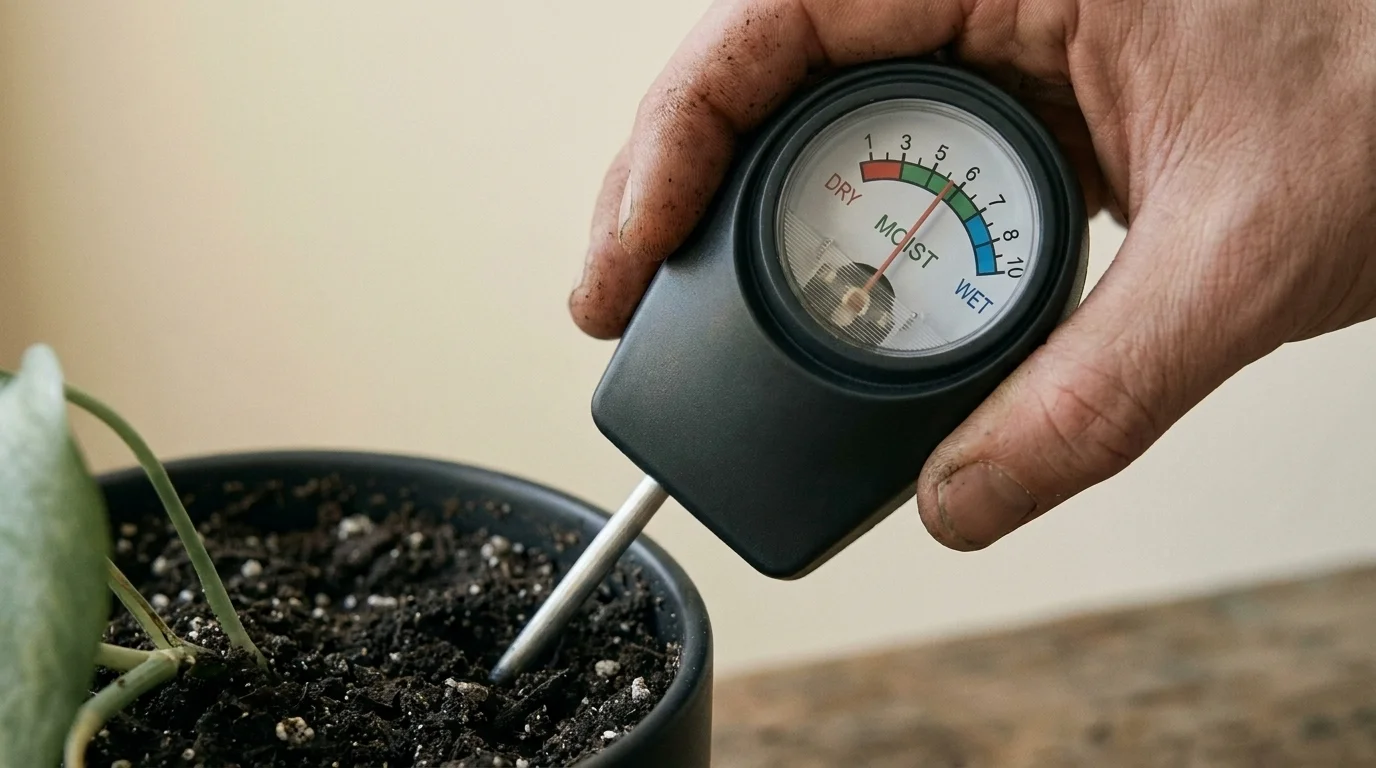
A soil moisture meter ($10–$25, no batteries on the cheap ones). Insert the probe deep into the root zone, read the 1–10 scale: 1–3 is dry, 4–7 is moist, 8–10 is wet (blue zone). Water succulents at 1–3; water moisture-loving tropicals when the meter has dropped into the lower 4–7 band. After a thorough watering, leave the meter and re-check in 15–20 minutes — a complete watering should read 8–10 by then. If it doesn't, you didn't actually saturate the rootball. Test cadence: probe every 7–10 days for typical houseplants; faster for small pots. Don't leave the probe in the soil between checks — that's how you corrode the cheap ones in six weeks.
The pot-lift test. Lift a freshly-watered pot, note the weight. Lift the same pot a few days later. The weight difference is the water loss. After two or three rounds you'll know by feel whether the plant needs water — no meter required. The lightest test on this list and the most reliable for the actual gardener doing five-second daily checks.
Loading image...
Probe before you pour. The 1-to-2-inch finger test gets you most of the way; a twelve-dollar meter takes you the last mile and skips the guesswork.
How to save an overwatered plant
This is the section nobody else writes in the same article as the diagnostic. Hold the conventional wisdom — "just let it dry out" — at arm's length. For mild overwatering with intact roots, drying out works. For active rot, drying out is too slow and the plant dies while you wait. Read the symptoms first, then choose the protocol.
If the soil is just too wet but roots feel firm and look light-coloured:
Stop watering. Move the plant to a brighter spot with better airflow — a windowsill instead of a corner, a balcony in the shade for outdoor recovery.
Let the top 2.5–5 cm of soil dry fully before the next watering.
Repot in fresh, well-draining mix in a pot with drainage holes (not the original pot — that one is contaminated). Bark, perlite, and a small fraction of peat or coco-coir is the houseplant standard.
Water lightly, only enough to settle the mix. Don't soak — the plant has fewer roots than yesterday and can't move much water.
One warning. Don't use the bottom-soak on a plant showing overwater symptoms. You'll accelerate the rot. Bottom-soak is the underwatering rescue, not the overwatering rescue. Conflating the two is the most common DIY recovery mistake — the plant looks wilted, the conventional wisdom says "give it water," and you finish the job your overwatering started.
Loading image...
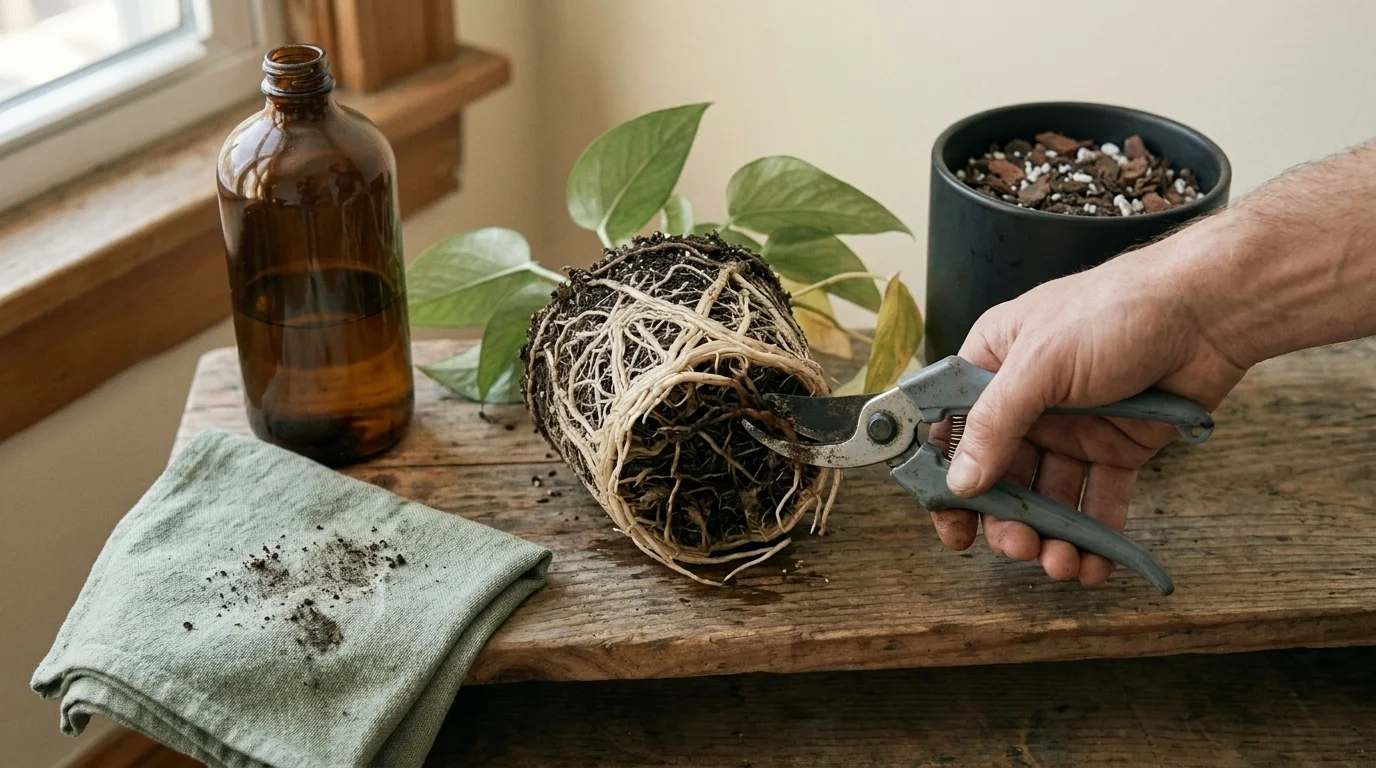
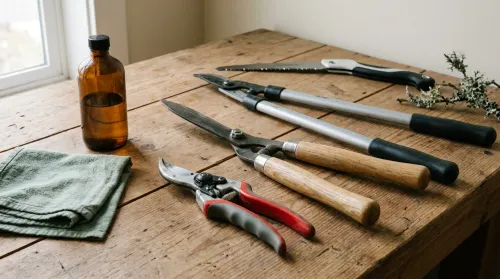
Wipe the shears with isopropyl between each cut — that one fussy step is the difference between a recovered plant and a re-infected one.
The cheapest fix you can make this weekend
If you take one thing from this guide: stop watering on a schedule, start watering on a measurement. Buy a twelve-dollar moisture meter or commit to the finger test, check every plant every 7–10 days, and water only when the meter or the finger says so. That single change — probe before pour — is what separates a plant collection that thrives from one that limps. Drought-tolerant plants and outdoor perennials follow the same rule, just with longer intervals. Total build: twelve dollars in materials, twenty seconds per plant per check, zero plants killed by overwatering. The conventional wisdom — water on a schedule "to be safe" — is wrong, and the data is the reason.
Yellowing of older or lower leaves, wilting despite moist soil, mushy stem base, fungus gnats or surface mold, brown spots with yellow halos, edema bumps on leaves, and a foul soil odor. The decisive confirmation is at the roots — healthy roots are white or light tan, while overwatered roots are brown or black and mushy.
How does soil type affect watering practices?
Clay holds water and drains slowly — water deeply every 7 to 10 days, never lightly every day. Sandy drains fast — lighter applications every 2 to 4 days work better than rare deep soaks. Loamy is the balanced ideal — typical 5 to 7 day rhythm depending on plant type and season.
What is hydrophobic soil and how do I fix it?
Hydrophobic soil resists absorbing water — common after long dry spells or in pots with degraded peat. Water beads on the surface and runs off. Rehydrate by bottom-soaking the pot for 10 to 15 minutes, then work organic matter or a wetting agent into the surface and water slowly in multiple passes thereafter.
How can I tell if my plant is overwatered or underwatered?
Check the soil first: soggy plus a drooping plant is overwatered; bone-dry plus a drooping plant is underwatered. Then check leaf texture — limp, yellow, soft leaves point to overwater, while crispy, curling, brown-tipped leaves point to under. Confirm at the roots if you can: healthy roots are white or light tan, while overwatered roots are brown, mushy, and smell sour.
Can an overwatered plant recover on its own?
Mild cases often can. Stop watering, move the plant to a brighter spot with better airflow, and let the top 1 to 2 inches of soil dry fully before the next watering. Expect visible improvement in 7 to 14 days. If roots are already mushy and dark, the plant needs active rescue — unpot, trim away rotted roots with sterilized shears, and repot in fresh, well-draining mix. Recovery from active rot takes 2 to 4 weeks or longer.
How long does it take for an overwatered plant to recover?
7 to 14 days for mild overwatering with healthy roots still intact. 2 to 4 weeks or more if root rot has set in and rotted roots had to be trimmed. Hold off on fertilizer until you see fresh new growth, then resume at half strength for 2 or 3 light feedings before returning to normal.
How often should I water my houseplants?
Most houseplants want water every 7 to 14 days, when the top 1 to 2 inches of soil feel dry. Succulents and cacti want every 14 to 21 days, less in winter. Moisture-loving tropicals like calatheas, ferns, and palms want slightly more frequent watering — test with a moisture meter or finger every 7 to 10 days rather than watering on a fixed schedule.
How do I use a soil moisture meter correctly?
Insert the probe deep into the root zone without touching the pot bottom, then read the 1 to 10 scale: 1 to 3 is dry, 4 to 7 is moist, 8 to 10 is wet. Water succulents at 1 to 3 and water moisture-loving tropicals when readings drop into the lower 4 to 7 band. After a thorough watering, re-check 15 to 20 minutes later to confirm the reading reaches 8 to 10. Don't leave the probe in the soil between checks.
DIY Greenhouse Gardening: Tips for Year-Round Harvests and Plant Propagation
Join
Loading...
Our Green Community!
Loading...
VerdeNook is more than just a source of gardening wisdom; it’s a platform for sharing, learning, and growing together. We invite you to join our community, share your stories, and spread the joy of gardening. Let’s sow the seeds for a greener, healthier, and more sustainable future, one garden at a time.