United Greens: The Story of Two Neighbors Transforming Their Fence Line into a Lush Edible Garden
Share this article:
Two backyards, one boundary left open — a community garden is less a place than an agreement to share the soil, the labour and what comes off it.
There is a community garden behind the train line near me that started, as most of them do, with two people and a fence. It is tempting to tell that kind of story as a heart-warming one, and I am going to resist, because the sentimental version leaves out everything useful. What actually happened between Sasha and Diego — two neighbours who turned a shared boundary into an edible garden — is more instructive than touching, and it is also not unusual. Community gardens are in measurable expansion: there are now more than 29,000 garden plots in the parks of the hundred largest U.S. cities, a number up roughly 22% in a single year and more than 44% since tracking began in 2012. Two neighbours and a fence line are the smallest unit of that movement, and the easiest place to start.
The smallest viable community garden
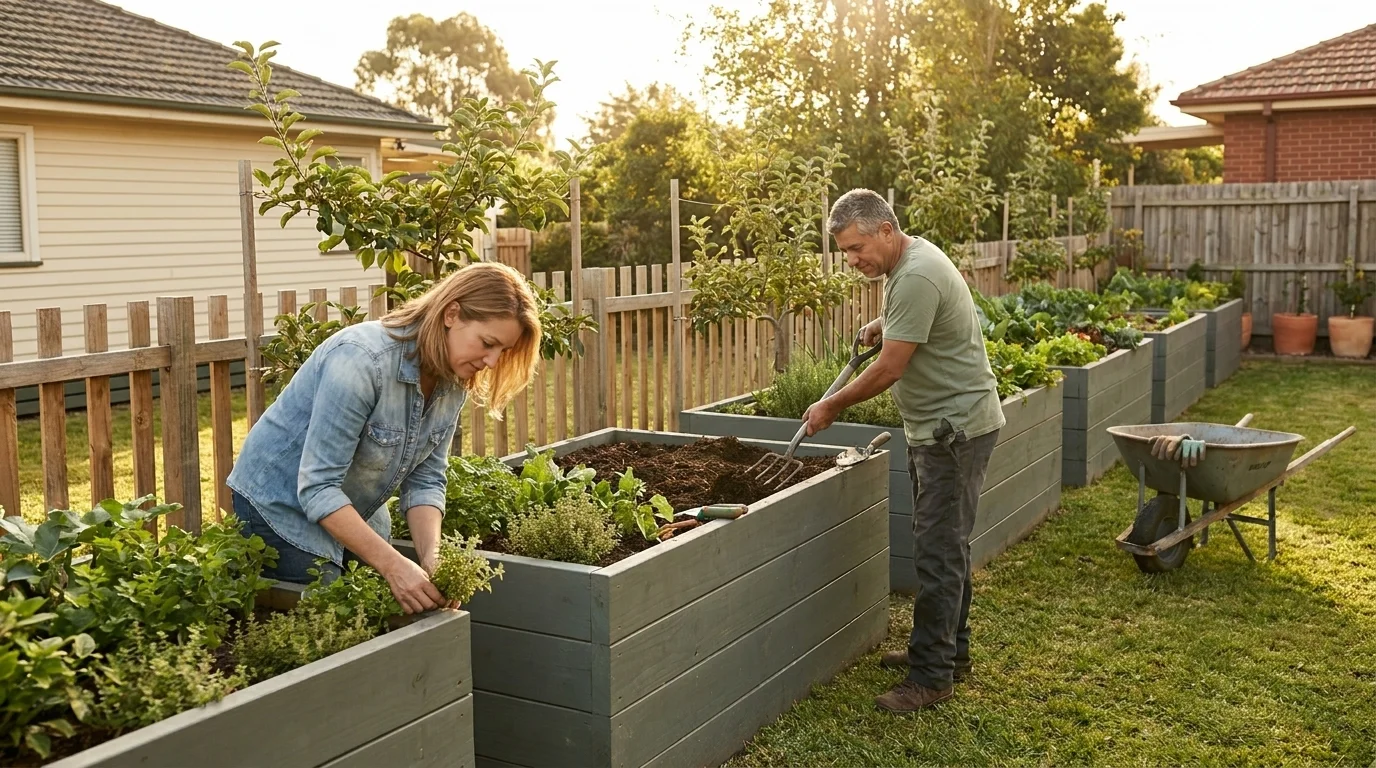
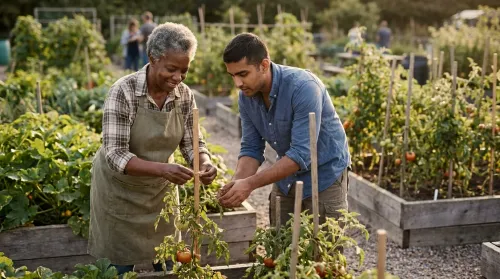
Nearly every guide to starting a community garden assumes a committee — three to five people, a patch of city land, a council application, a constitution. That is one model, and it is a good one, but it is not the only one, and the committee framing scares off the people who could most easily begin. The smallest viable shared garden is two households who share a fence. The land is already jointly held; the relationship already exists; the only things to negotiate are the ones people skip. Sasha brought herbs, Diego brought fruit trees, and the fence line that had divided two plots became a single longer bed worked by both. That is not a parable. It is a template.
Loading image...
The smallest viable community garden is two households and a shared fence — the land is already joint, the relationship already there; only the boring bits need negotiating.
How two neighbours start a shared edible garden
Here is the sequence, in the order it actually has to happen:
Agree to do it on purpose. A conversation over the fence is how it begins; a stated intention is how it survives. Decide together that you are building one garden, not two adjacent ones.
Read the fence line. An edible garden needs six to eight hours of direct sun — walk the boundary across a day in spring and mark where the light actually falls, not where you assume it does.
Split the space and the roles. Decide who tends what. A workable plot runs 100 to 400 square feet; for two households a strip at the lower end is plenty to start.
Put it in writing. The step everyone skips and the one that matters most — covered in its own right below.
Plant, and share the maintenance honestly. Set a watering rota before the first heatwave, not during it.
The herbs-and-fruit division Sasha and Diego fell into was not luck; it was each person bringing what they already knew, which is the quiet engine of every shared plot. Knowledge exchange — crop rotation, when to sow, how to read a pest before it becomes an infestation — is the part that compounds.
None of which requires a solicitor. It requires a single page agreed between two adults: who tends which section, who waters when, how the harvest is divided, and — the clause people find awkward and need most — what happens to the plantings if one of you moves. On the harvest, the established community-garden model is the rule of thirds: roughly a third to the people who did the work, a third shared communally, and a third donated. For two households you can simplify it, but the principle holds: name the split before there is fruit to argue over, not after.
What it actually costs
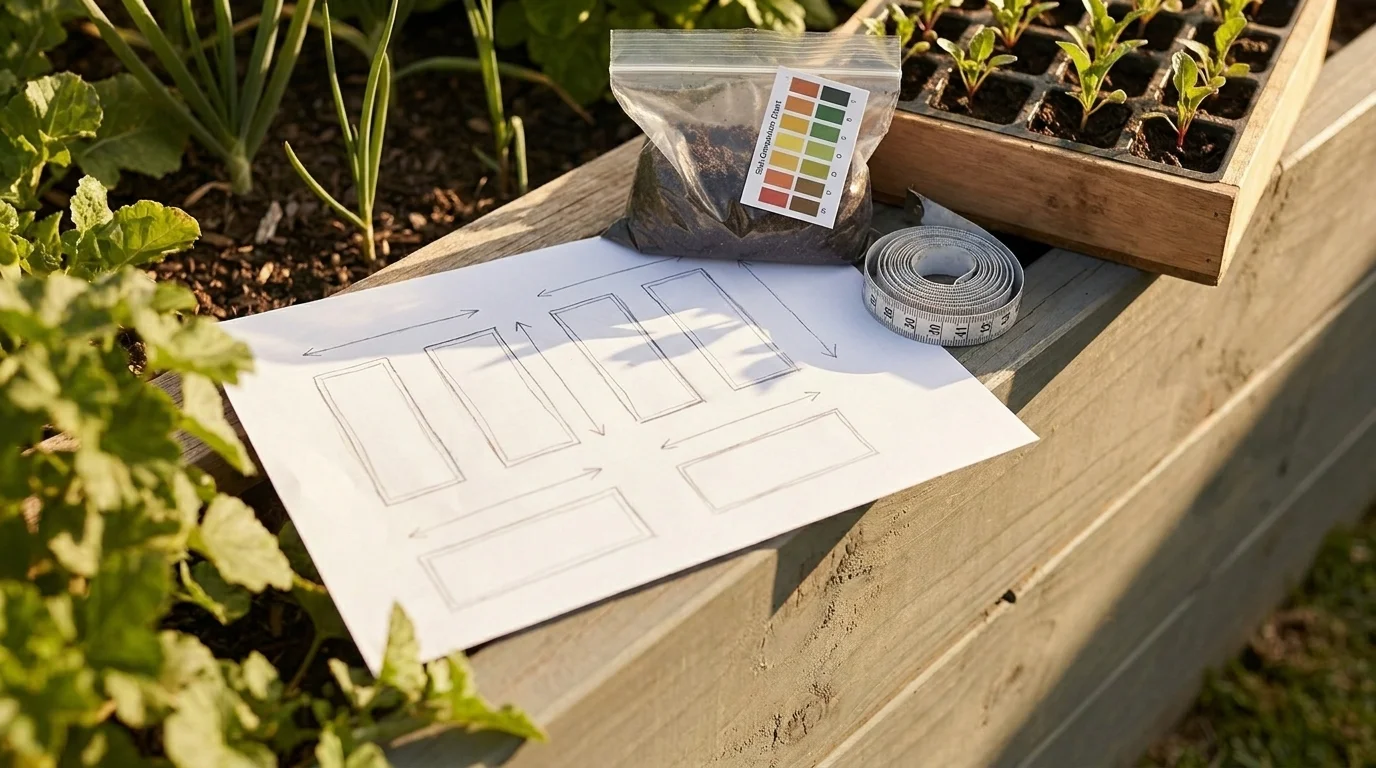
I have a standing habit of counting the hours and the dollars honestly, because the romantic version of gardening never does. A modest community garden built from scratch — beds, soil, fencing, a water connection — runs somewhere between $3,750 and $7,500 to set up. A two-neighbour fence-line plot costs a fraction of that, because the single most expensive thing — the land — is already shared and already there. Against the outlay, the same guides put the return at roughly $6 of produce for every $1 invested, which sounds decisive until you price your own labour, at which point it stops being a financial argument at all. That is fine. The spreadsheet was never the reason. But knowing the numbers is what separates a garden that lasts from one that quietly folds in its second season.
Loading image...
The soil test, the bed plan, the honest setup cost — knowing the numbers up front is what separates a plot that lasts from one that quietly folds by its second season.
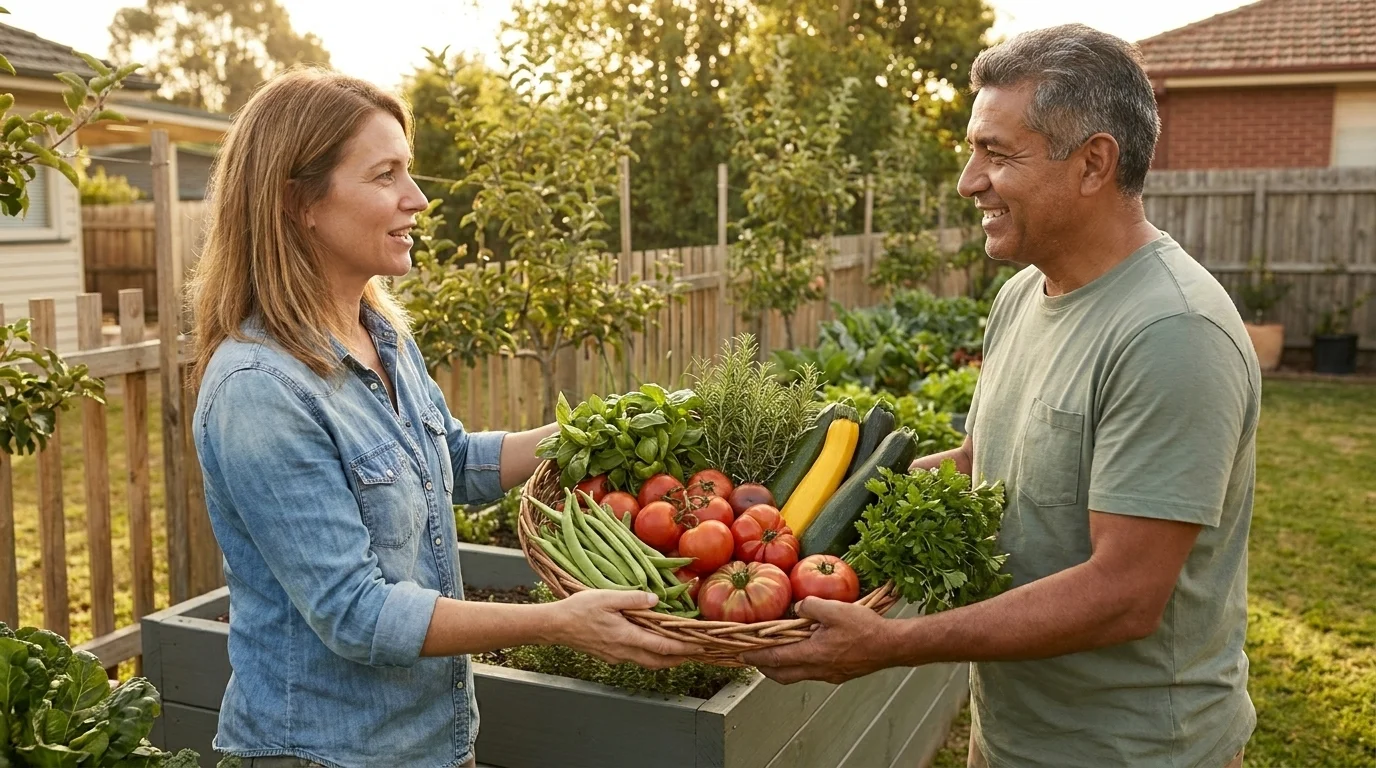
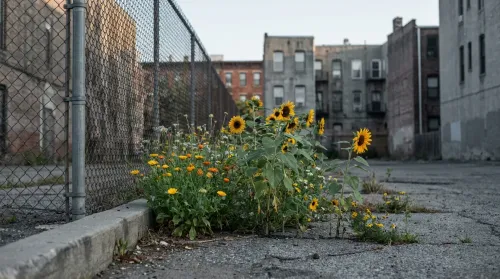
The harvest is the smallest return — the evidence ties shared plots to more veg, less stress and social ties that bridge generations and divides.
Where shared gardens go wrong
I would be breaking my own rule if I left it there, because shared gardens fail, and they fail in predictable ways. The common modes are volunteer burnout, the absence of any written agreement, neglected shared space, theft, and unresolved interpersonal conflict. Read that list again and you will notice that almost every item is a governance failure dressed up as a gardening one. The plot that collapses rarely does so because the tomatoes failed; it collapses because one person ended up doing everything, or because nobody decided what happened to the harvest, or because a friendship frayed over a watering rota nobody agreed to.
What kept Sasha and Diego's plot going was not enthusiasm — enthusiasm is the part that always shows up and always fades. It was the boring structure underneath: the roles agreed, the rota set, the split written down, the workload genuinely shared rather than resting on whoever cared most. Pests they handled the same unglamorous way — shared vigilance and organic controls applied early, before a problem became a crisis.
So if you take one thing from the garden behind my train line, let it be this: the most durable thing two neighbours can grow together is not the produce but the agreement. Plant the herbs and the fruit trees, by all means. But decide first who waters them in January, and what happens when one of you moves — and you will have built something that outlasts the conversation that started it. That, and not the harvest, is what the fence line was actually for.
How did Sasha and Diego start their gardening collaboration?
Sasha and Diego's gardening collaboration began with a casual conversation over the fence about their shared interest in growing organic vegetables. This simple chat blossomed into a partnership where they combined their skills to transform their fence line into a lush edible garden, benefiting both themselves and their community.
What benefits did the community experience from the United Greens project?
The United Greens project fostered a sense of community by bringing neighbors together to share gardening tips, exchange produce, and celebrate harvests through communal feasts. This initiative not only provided fresh, homegrown food but also strengthened neighborly bonds and inspired others to engage in sustainable practices.
What lessons can be learned from Sasha and Diego's gardening experience?
Sasha and Diego's experience highlights the importance of collaboration, open communication, and mutual respect in shared gardening projects. They learned to negotiate space effectively, coordinate maintenance schedules, and share knowledge on planting techniques, which maximized their garden's yield while fostering a strong partnership.
How do you start a community garden with just one neighbor?
You don't need a committee or city land — two households and a shared fence line are the smallest viable unit. Agree on the space split, sun and water access, a watering rota, and how you'll share the harvest, then put it in writing. Most guides assume a 3–5 person committee, but a two-neighbor edible border is the easiest way to begin.
What does it cost to start a community garden?
A modest community garden typically costs $3,750–$7,500 to set up, though a two-neighbor fence-line plot costs far less since you're using land you already share. A useful rule of thumb: roughly $1 invested returns about $6 in produce. Budget for soil testing (often under $20 via your county Extension), beds, and water access.
What are the proven benefits of community gardening?
Peer-reviewed research links community gardening to higher vegetable and fiber intake, more physical activity, lower perceived stress and anxiety, and stronger social support networks that bridge social, generational and cultural divides. It's one reason U.S. community garden plots have grown more than 44% since 2012.
Why do some shared gardens fail — and how do you avoid it?
The common failure modes are volunteer burnout, no written agreement on responsibilities, neglected shared space, and unresolved interpersonal conflict. The fix is structure: agree the roles, the watering rota, and the harvest split in writing up front, and keep the workload genuinely shared rather than resting on one person.
Blossoms of Resistance: The Impactful Role of Gardening in Social Movements
Join
Loading...
Our Green Community!
Loading...
VerdeNook is more than just a source of gardening wisdom; it’s a platform for sharing, learning, and growing together. We invite you to join our community, share your stories, and spread the joy of gardening. Let’s sow the seeds for a greener, healthier, and more sustainable future, one garden at a time.