The Empathetic Gardener: How Emotional Intelligence Enhances Leadership in Home Gardening
Share this article:
Three sentences, three minutes, repeated — the journal accumulates into a record that no productivity app and no meditation timer will produce.
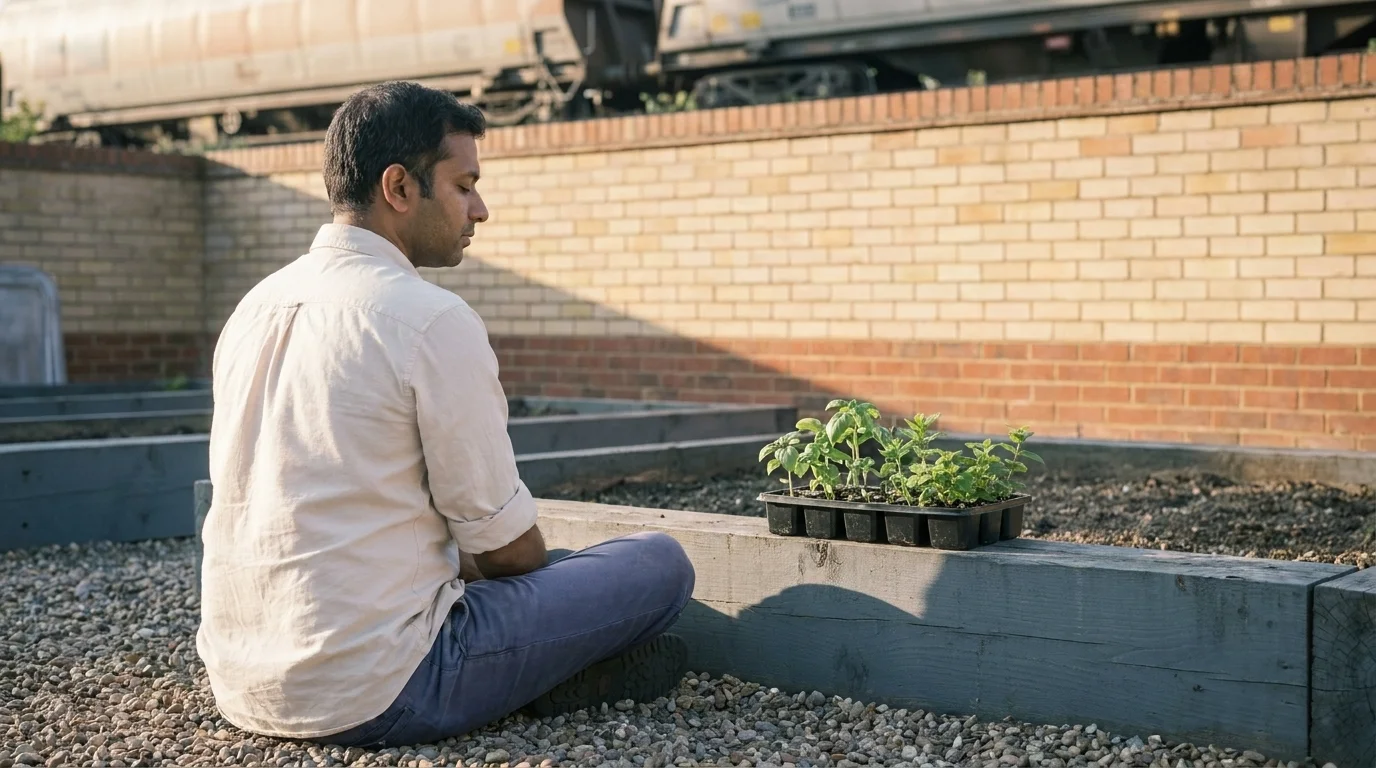
The community plot I help run in Brunswick sits on a strip of council land behind a train line, and on the Saturday morning I am thinking of I was alone there for the first hour — the rest of the roster running late, the freight train moving past the back fence on its way south, and the only sound the slow steady drip of the bed I had finished watering coming off the edge of the cedar onto the gravel. I had not gone there to practise mindful gardening. I had gone to weed. But by the time the others arrived, sometime after nine, I had spent forty-five minutes with my hands in the soil and my mind largely off the spreadsheet I had brought to the plot to think about, and the spreadsheet was still there and the wheelbarrow was full of bindweed and something in my chest had gone quieter than it had been in the kitchen at eight.
This is what mindful gardening turns out to be, in my experience: not a separate practice on top of the gardening, but the ordinary gardening done with attention. The literature has names for it — mindful gardening, therapeutic gardening, the more clinical horticultural therapy — and the language matters because the credentials behind it matter. The hour at the plot does not. The hour at the plot is just an hour at the plot.
What follows is an article on the practice, the evidence, and a small set of concrete ways to begin it — including a five-minute morning routine, a garden-journaling prompt set, and a short list of plants that reward the kind of slow attention this article is asking you to give to anything at all.
What mindful gardening actually is
Mindful gardening is the practice of tending plants with full sensory attention — noticing the sound of the watering, the texture of a leaf, the weight of a trowel, the pace of your own breathing — rather than rushing through chores to get them done. It turns ordinary tasks like watering, weeding, sowing, and harvesting into short, restorative moments of presence.
The practice sits inside a broader family. Therapeutic gardening is roughly the same activity framed as a wellness intervention; the American Horticultural Therapy Association reserves horticultural therapy for the clinical version delivered by credentialed practitioners (HTR through July 2026; the new HT-BC credential from October 2026 onward). The home gardener landing on this article is in the wellness lane, not the clinical one — but the science behind both is the same, and worth knowing.
The science of why this works
The case for mindful gardening as more than aesthetic preference has strengthened considerably in the last few years. A 2025 Frontiers in Psychology study of weekly seventy-five-minute therapeutic-horticulture sessions across a university semester measured the largest effect on state anxiety — Cohen's d of 1.18, statistically significant at p < 0.001. Academic resilience moved by d = 0.87. A multi-site trial published in PMC in 2022 documented measurable mental-health and well-being effects across populations. A meta-analysis of eighteen randomised trials found horticultural therapy produced a significant positive effect on mental health, with a pooled effect size of 0.55 — a moderate-to-large signal by clinical standards.
What is happening biologically, in plain terms: time in green space lowers cortisol, the stress hormone, in consistent measurements across multiple 2024-2026 reviews. Gardening activity stimulates the release of serotonin, dopamine, and endorphins through the simple physiological response to slow rhythmic movement and sensory input. A harmless soil bacterium called Mycobacterium vaccae has been shown in rodent studies dating back to a 2007 Bristol experiment to activate serotonin-producing brain cells with effects compared to antidepressants — the human evidence for this specific mechanism remains limited, so I would describe it as plausible biological contributor rather than proven cure, but the general direction of the literature is unambiguous.
The honest summary is that mindful gardening as a regular practice does measurable work for anxiety, stress, and mood, and that the effects are visible in studies of practical size with reasonable methodology. It is not a placebo. It is not a substitute for clinical care when clinical care is what is needed. It is, in the gentlest possible terms, one of the most reliably useful small practices a home gardener can take up.
Loading image...
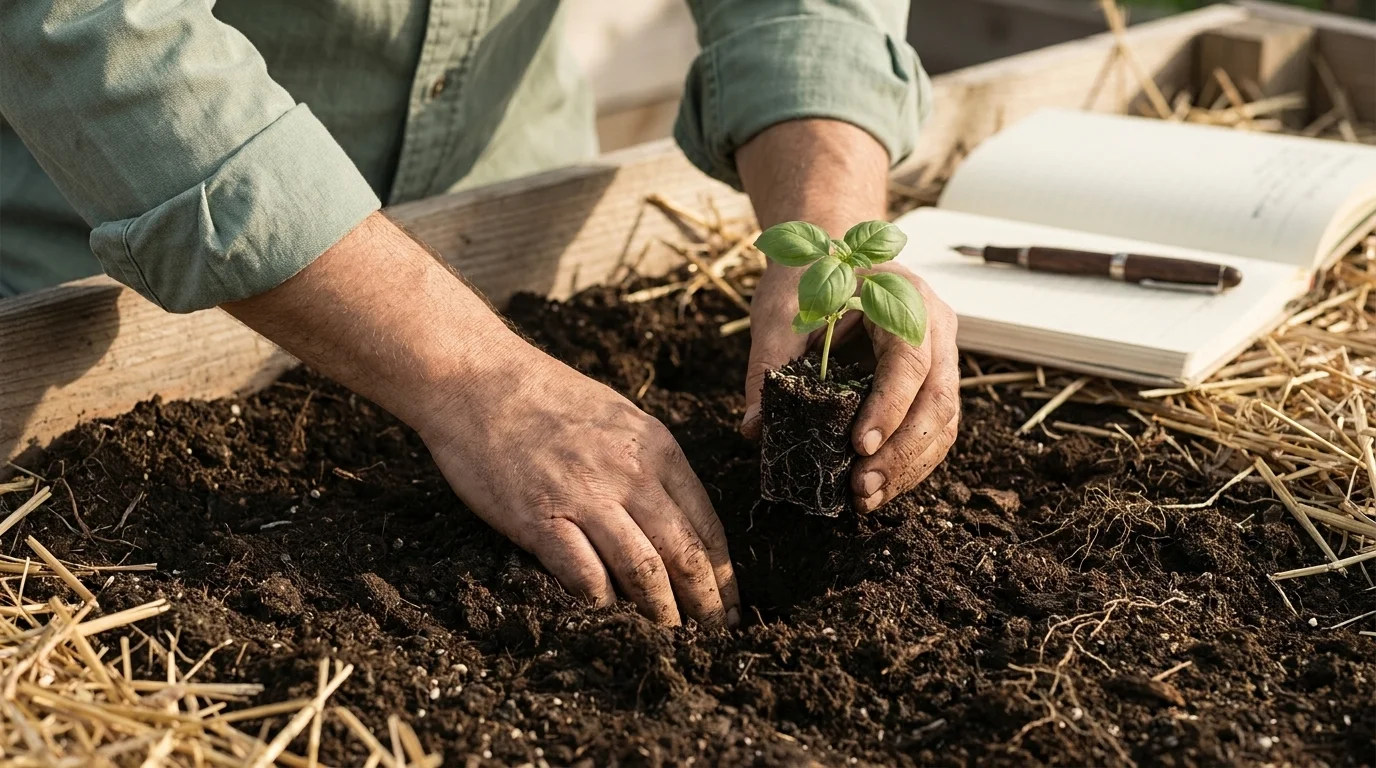
Mindful gardening is the ordinary gardening done with attention — hands in the work, the journal ready for the three sentences afterward.
The empathetic gardener: EQ pillars, redirected inward
The framing this article carries from its earlier life — emotional intelligence, the five pillars of self-awareness, self-regulation, motivation, empathy, and adaptability — turns out to be the right vocabulary applied in the wrong direction. Redirected inward, toward the gardener's relationship with their own plot, the pillars stop being a leadership coaching framework and become a useful map of what mindful gardening practice actually does.
Self-awareness becomes the noticing practice — what state did I arrive at the plot in, what did the garden do to it, what did I notice today that I did not notice yesterday. This is where garden journaling earns its keep.
Self-regulation becomes the rhythm of breath and watering — the paced inhale on pour, the exhale on lift, the small breaths between actions that the garden, by its own pace, will teach you to take if you let it.
Empathy becomes the noticing of plants under stress — the wilt that arrived overnight, the leaf curl, the pest pressure — held as a mirror for noticing the same kind of stress in yourself, neither minimised nor dramatised.
Adaptability becomes seasonal acceptance — the bed that failed this spring, journaled honestly, replanted intentionally. The garden is the better teacher of failure I have encountered.
Motivation becomes the harvest as embodied reward — the basil that goes onto the kitchen counter at five o'clock, the bowl of cherry tomatoes that came from eight feet of bed, the small accumulated victories that the spreadsheet would never have measured.
This is the empathetic gardener — the version of the practice that has empathy for the gardener as well as the garden, and that uses the EQ vocabulary as a way of pointing at the slow work going on inside the person at the bed.
Garden journaling as the practice of self-awareness
The single concrete practice that operationalises the noticing more reliably than any other is the garden journal. The journal does not need to be elaborate. Three short entries per visit is sufficient, and three minutes is enough to write them in.
A starter prompt set I have used with people new to the practice:
One observation. What did I notice today that I did not notice last week? (The new buds on the agastache, the way the bindweed has shifted to the north corner, the soil dry to an inch.)
One feeling. What did my body do in the garden today? What did my mood do? (The shoulders dropping in the second hour, the slight impatience at the start, the quietness that arrived between the watering and the weeding.)
One intention. What would I like to tend to next time? (The carrots that need thinning. The compost heap that has been on hold for a fortnight. The two minutes of sitting still at the end before I walk to the train.)
Three sentences, three minutes, repeated. Over a season, the journal accumulates into a record that no productivity app and no meditation timer will ever produce — a private, slow, gardener-specific document of what was noticed and what changed. The journal is the empathetic gardener's notebook. It is also, by accident, one of the most reliable mindfulness practices the literature has produced.
Calming plants for slow attention
The plant choice that supports the practice is not the planting that supports a productive vegetable bed. The mindful-garden corner rewards specific characteristics — scent that releases when brushed, texture that invites the hand, gentle bloom rhythm across the season, repetitive harvest that pulls the gardener back to the bed week after week. A short list of reliable picks:
Lavender (Lavandula angustifolia, zones 5-9). The most reliable calming-garden plant in temperate horticulture. Plant alongside a path so the foliage releases scent when brushed.
Lemon balm (Melissa officinalis, zones 3-9). Gentle citrus scent, vigorous habit, tolerates partial shade. Pinch the leaves between thumb and forefinger when you arrive at the bed.
Chamomile (Matricaria chamomilla annually or Chamaemelum nobile perennial, zones 4-9). Small daisy-form flowers, apple-scented foliage, harvested for tea over weeks.
Mint (Mentha spp., zones 3-9; container only, please). Strong scent, repetitive harvest, the kind of plant the hand returns to without thinking.
Jasmine (Jasminum officinale, zones 7-10). For evening contemplation; the scent at dusk is the part of the day the garden does best.
Rosemary (Rosmarinus officinalis, zones 8-10 in ground, container further north). Year-round in mild zones; the scent on a hand after pruning carries for hours.
A serviceable mindful corner is three or four of these plants in a single small bed or a row of containers near the seat where the gardener will most often sit. The point is not abundance; the point is the deliberate pairing of plants with the slow attention the practice asks you to give them.
Loading image...
A serviceable mindful corner is three or four calming plants near the seat where the gardener will most often sit — not abundance, deliberate pairing.
A five-minute morning garden mindfulness routine
The honest case for a five-minute routine is that it is short enough to be done daily and structured enough not to drift into the kind of vague intention that produces nothing. The version I have run for most of the last year, give or take:
Minute one — arrive. Walk to the bed without picking up a tool. Stand at the edge, weight on both feet, hands loose at your sides. Three slow breaths. Notice what the garden looks like before you have touched anything.
Minute two — sense. Eyes closed. Count five sounds. The wind, the traffic at the end of the street, the bird at the back, the watering at the next plot, your own breath. Five sounds, slowly named.
Minute three — touch. Open your eyes. Brush one plant — the lavender, the lamb's ear, whichever is nearest — with the back of your hand. Pinch a leaf of mint or lemon balm between thumb and finger. Note the scent.
Minute four — water. Slow paced watering of one bed or container. Inhale on pour, exhale on lift. Five repetitions. The plants do not need the water at this pace, particularly; the gardener does.
Minute five — note. Three sentences in the journal. One observation, one feeling, one intention. Walk away.
Five minutes. Repeated daily, the routine compounds in the way the literature predicts it will — the largest effects in the studies come from regular weekly practice, but the home garden does not have to wait for a research-grade dose to produce a felt benefit. The benefit shows up after the first week.
Sensory practice across the seasons
The mindful corner of a garden changes through the year, and the practice changes with it. A short seasonal frame:
Spring. The dominant senses are smell (the first lavender of late April, the chamomile in May) and sight (the brave clear yellow of calendula, the first salvia spike). The journaling prompt: what is arriving this week that was not here last? The watering practice: slower than feels natural; the soil holds more spring moisture than the eye reads.
Summer. The dominant senses are scent at intensity (rosemary in full sun, the jasmine at dusk) and touch (lamb's ear, ornamental grass between the fingers). The journaling prompt: where did your body fail today and where did it find its rhythm? The watering practice: early morning only; the afternoon is for harvest, not for water.
Autumn. The dominant senses are taste (mint and basil before frost, the last cherry tomatoes) and the slow visual fading of the bed. The journaling prompt: what am I keeping into next year and what am I letting go of? The watering practice: half what summer demanded, with attention to the autumn cooling at the root.
Winter. The dominant senses are visual (bare structure, the bones of the garden, the form of clipped evergreens) and the quiet of an off-season plot. The journaling prompt: what did the garden teach me this year? The practice is the sitting practice — five minutes on the bench in a coat, hands cupped around a warm cup, noticing.
The point of the seasonal frame is that mindful gardening is not a single practice. It is the same attention applied to different conditions, and the practice teaches the gardener — over a full year — what those conditions are.
What the practice is, and is not
Mindful gardening is not therapy in the clinical sense. The horticultural-therapy literature is clear about the boundary, and the American Horticultural Therapy Association is the place to look if a credentialed clinical practitioner is what someone in your life needs. The evidence is strong enough — d = 1.18 on anxiety in a 2025 trial, 0.55 pooled meta-analysis effect, the slow accumulation of the multi-site work in PMC — that the formal practice is doing real work, and the formal practice is the version delivered by people with the training to do it.
Mindful gardening, the home version this article has been about, is something smaller and quieter. It is the slow attention you bring to the bed, the five minutes at sunrise, the three sentences in the journal, the noticing of the plant under stress as a mirror for the noticing of yourself. The empathetic gardener — to keep the article's original metaphor where it can earn its keep — is the version of the gardener who has learned to extend the same patience to themselves that they have always extended to the late-arriving carrots. The garden, in my experience of the Brunswick plot and a great many others before it, will teach you that practice if you give it the time.
The carrots are part of it. The journal is part of it. The five minutes is part of it. None of them, on their own, is the whole story.
Loading image...
Walk to the bed without picking up a tool — stand at the edge, three slow breaths, notice what the garden looks like before you have touched anything.
Mindful gardening is the practice of tending plants with full sensory attention — noticing the sound of the watering, the texture of a leaf, the weight of a trowel, the pace of your own breathing — rather than rushing through chores to get them done. It turns ordinary tasks like watering, weeding, sowing, and harvesting into short, restorative moments of presence. It is not a separate practice on top of the gardening; it is the ordinary gardening done with attention.
How is mindful gardening different from horticultural therapy?
Horticultural therapy is a credentialled clinical discipline delivered by a trained practitioner working from a documented treatment plan, often inside a hospital, rehabilitation centre, or correctional setting. The American Horticultural Therapy Association credentials practitioners as HTR through the first half of 2026 and HT-BC (Board Certified) from October 2026 onward. Mindful or therapeutic gardening is the everyday, at-home version of the same evidence-backed activities used for your own well-being, without a clinical setting and without a credentialed practitioner in the room.
How do I start a garden journal for mindfulness?
Pick any notebook and write three short entries per visit. One observation — what did you notice today that you did not notice last week? One feeling — what did your body do in the garden, what did your mood do? One intention — what would you like to tend to next time? Three sentences, three minutes, repeated. Over a season the journal accumulates into a private, slow, gardener-specific record of what was noticed and what changed — no productivity app and no meditation timer will produce the same document.
Which plants are best for a mindful, calming garden?
Lavender (zones 5-9) is the most reliable calming-garden plant in temperate horticulture; plant alongside a path so the foliage releases scent when brushed. Lemon balm (zones 3-9) offers a gentle citrus scent and tolerates partial shade. Chamomile is harvested for tea across weeks. Mint (container only, please) rewards repetitive harvest. Jasmine carries the scent of dusk into evening contemplation. Rosemary delivers a year-round scent on the hand after pruning. Three or four of these plants in a single small bed or row of containers near the seat where you most often sit is a serviceable mindful corner.
Does gardening actually reduce stress?
Yes. A 2025 Frontiers in Psychology study of weekly seventy-five-minute therapeutic-horticulture sessions across a university semester measured the largest effect on state anxiety — Cohen's d of 1.18, statistically significant at p < 0.001. A meta-analysis of eighteen randomised trials found horticultural therapy produces a moderate-to-large positive effect on mental health (pooled effect size of 0.55). Time in green space measurably lowers cortisol, the stress hormone, and gardening activity stimulates the release of serotonin, dopamine, and endorphins through the slow rhythmic movement and sensory input of the work itself.
Join
Loading...
Our Green Community!
Loading...
VerdeNook is more than just a source of gardening wisdom; it’s a platform for sharing, learning, and growing together. We invite you to join our community, share your stories, and spread the joy of gardening. Let’s sow the seeds for a greener, healthier, and more sustainable future, one garden at a time.