The Ultimate Guide to Creating a Beautiful Butterfly Garden at Home
Share this article:
A butterfly garden is host plants plus nectar plus a basking stone, designed in drifts. Two or three seasons in, the insects find the bed.
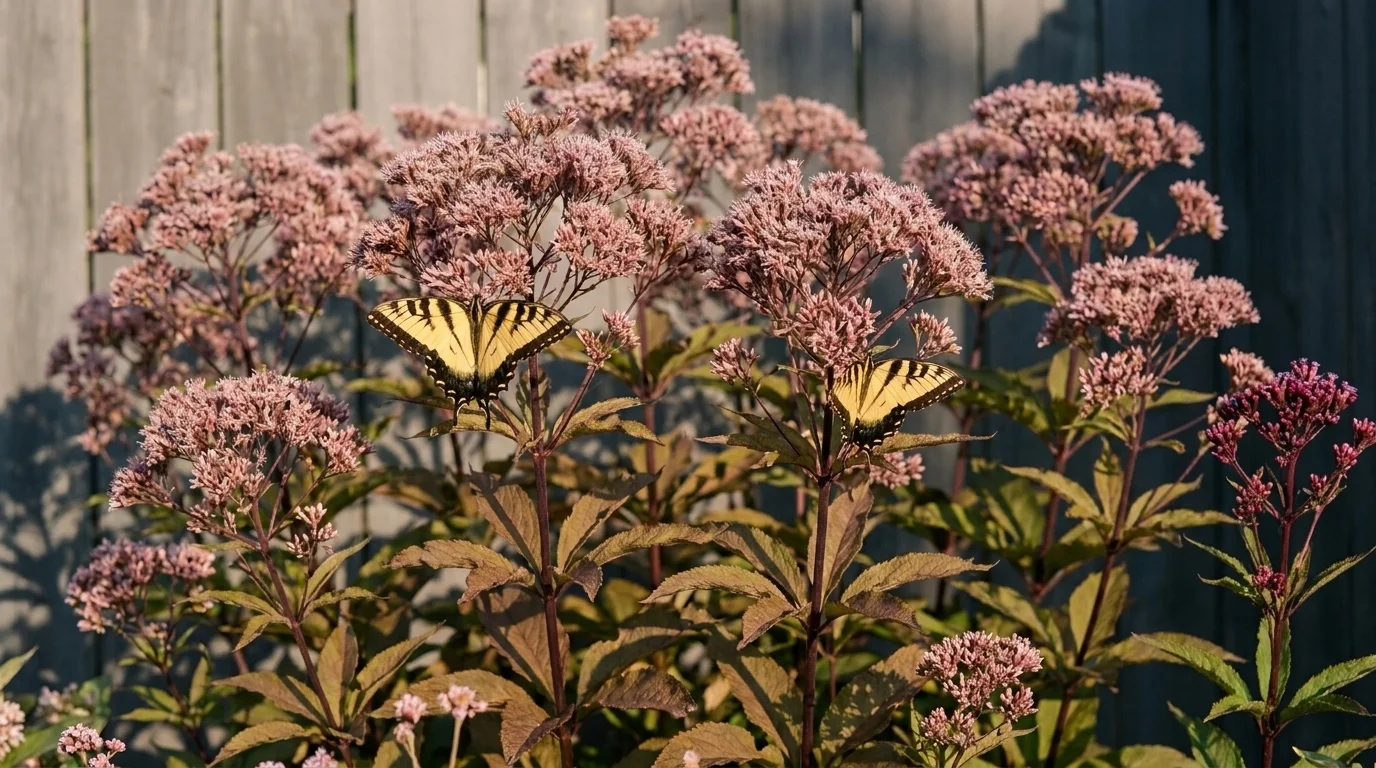
In the last week of August, in the hour before the light goes, a properly planted butterfly border is one of the most quietly extraordinary scenes in a garden. The Eutrochium purpureum — Joe-Pye weed — is at full height, four feet of dusty mauve held over silvering grasses; Verbena bonariensis threads through it at chest height; the Asclepias tuberosa in the warmer patch by the wall has gone to seed and is starting to release its silk. There is a tiger swallowtail working the Joe-Pye, slowly and methodically. This is how to start a butterfly garden — by planting the species the insects evolved alongside and giving them a few seasons to find the bed. The garden is doing exactly what it was planted to do, and it has been doing it since June.
This guide is about how to start a butterfly garden, in the sense of: what to plant, where to put it, and what to expect from it. The reward is not the photograph of a butterfly on a flower; it is the moment in late August when the garden settles into its own rhythm and the insects you planted for are reliably there. Getting to that moment takes two or three years, a list of named species, and a willingness to take design seriously. Most beginner guides skip the design part. Mine will not.
A 2026 update on monarchs (because the question is changing)
The single most asked-about butterfly in North America is the monarch, and the data on the eastern population has moved meaningfully in the last twelve months. Overwintering monarchs in the Mexican forests occupied 2.93 hectares in winter 2025–2026 — a 64 per cent rebound on the previous winter and the second consecutive year of gains (Monarch Joint Venture monitoring; KCBX 2026 reporting). The recovery is real. It is also fragile: the long-term trend is still roughly 80 per cent below the 1996 baseline of around 18 hectares.
That ambivalent context — real progress, durable problem — is the honest place to plant from. Your garden is small, but it is one of millions, and the actions below are the ones the literature consistently identifies as the most useful at the household scale.
Host plants vs. nectar plants — the distinction nobody makes
If you remember one concept from this article, make it this one. Butterfly gardens fail when the gardener plants only nectar plants — flowers the adult butterfly feeds from — and not the host plants the caterpillars eat. Adults are passing through; caterpillars stay put for two to three weeks of voracious eating, and they can only eat very specific plants. A garden full of zinnia and lantana feeds adults briefly and produces no next generation. A garden with the right host plants is a working habitat.
The matrix below pairs the common butterflies of North American home gardens with the host plants their caterpillars require. Plant at least one host plant from this list if you want a butterfly garden, not a butterfly feeder.
Butterfly
Host plant(s) the caterpillar eats
Notes
Monarch
Asclepias (milkweed) only — see regional table below
The single most important host plant in this guide
Black swallowtail
Parsley, dill, fennel, rue, golden alexanders (Zizia aurea)
Easy to grow; expect the caterpillars to find them
Eastern tiger swallowtail
Tulip tree (Liriodendron tulipifera), wild cherry (Prunus serotina)
Larger plants; suit larger gardens
Painted lady
Thistle, hollyhock, mallow, common nettle
Wide host range; one of the easiest to support
Gulf fritillary
Passionflower vines (Passiflora spp.)
Florida + Gulf Coast + warmer Southwest
Spicebush swallowtail
Spicebush (Lindera benzoin), sassafras
Eastern North America; native shrub layer
Pipevine swallowtail
Aristolochia (Dutchman's pipe / pipevine)
Climbing vine; needs trellis or fence
Cabbage white
Brassicas (cabbage, kale, broccoli)
Hosts the only non-welcome caterpillar on this list — your vegetable bed already feeds them
Notice how many of the host plants are things a designed garden traditionally tries to avoid — parsley going to seed, thistle in a sunny corner, common nettle in a back stretch. The first design decision in a butterfly garden is whether you are willing to allow that.
Milkweed: the plant monarchs cannot live without
Monarch caterpillars eat only Asclepias — milkweed. No milkweed in your garden, no monarch breeding. The single most useful thing a home gardener in North America can do for monarchs is to plant the right native species of milkweed for their region. A 2024 USDA study found that caterpillars can survive on all nine milkweed species tested, but the probability of reaching adulthood varies from roughly 30 to 70 per cent depending on species (USDA — Evaluating Milkweed Species).
A regional shortlist:
Region
Best native milkweed
Notes
Northeast / Midwest
Common milkweed (Asclepias syriaca)
Spreads by rhizome; site accordingly
Anywhere with moist soil
Swamp milkweed (Asclepias incarnata)
Tolerates wet feet; clump-forming, well-behaved
Dry sun, well-drained soil
Butterfly weed (Asclepias tuberosa)
Bright orange; the showiest of the natives
West (Plains, Rockies)
Showy milkweed (Asclepias speciosa)
Robust; large flower heads
California
California milkweed (Asclepias californica), heartleaf milkweed (A. cordifolia)
Native to CA; better than tropical for monarch migration
A critical caveat. Tropical milkweed (Asclepias curassavica) — the orange-and-red species sold widely at garden centres outside its native range — should not be planted north of USDA Zone 9. It stays evergreen rather than dying back in winter, which both harbours Ophryocystis elektroscirrha (OE) parasite spores and disrupts the migratory cues monarchs depend on (UC ANR Bug Squad). The advice from extension services and the Xerces Society has moved firmly behind native-region milkweed; old garden-centre stock and earlier-era blogs are not yet caught up. If you have tropical milkweed in your garden, cut it to the ground each November to mimic the dormancy of native species; better still, replace it with the local native.
Loading image...
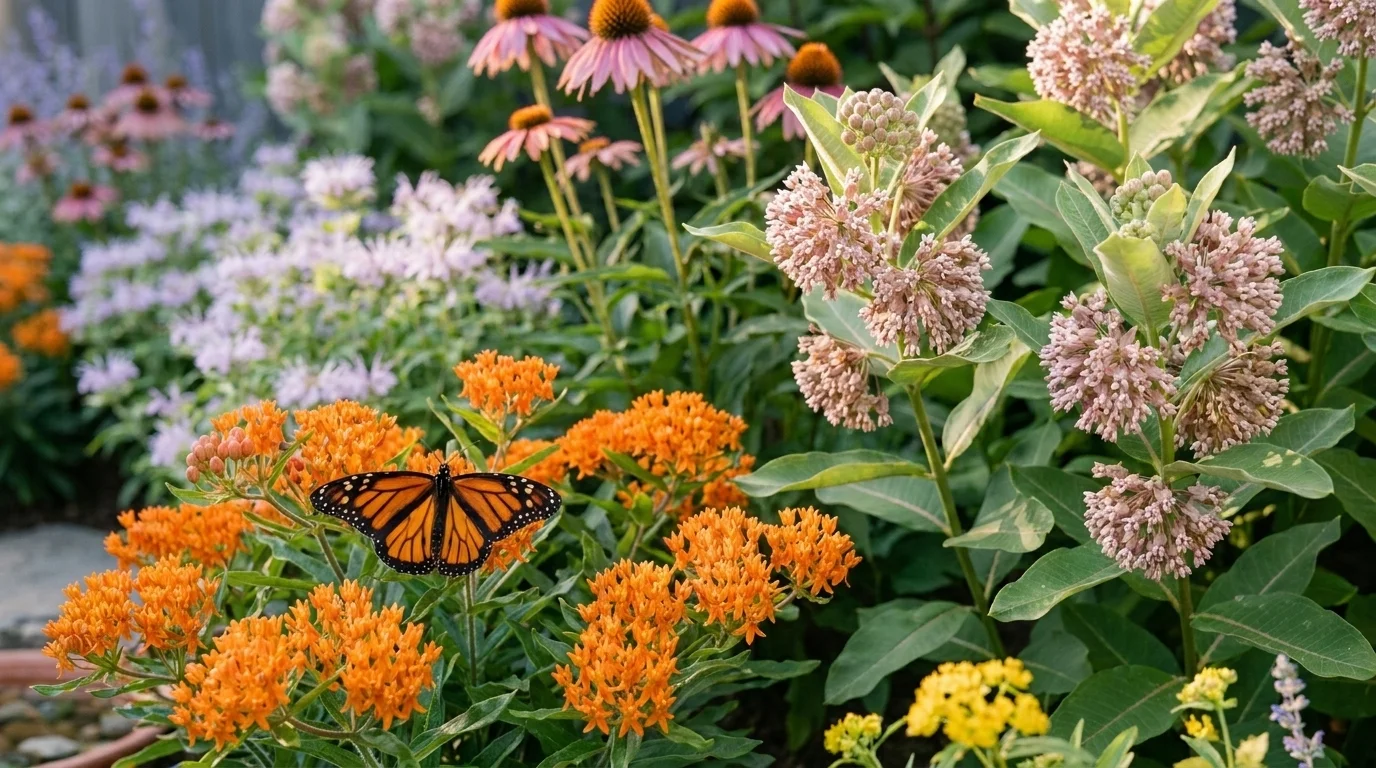
Plant the right native milkweed for your region, in drifts. Single specimens read as a mistake; three to five plants together read as habitat.
Butterfly bush: the honest answer
Most twenty-year-old butterfly gardens were planted around a Buddleia davidii. It is fragrant, long-flowering, easy to grow, and so attractive to butterflies that the marketing name "butterfly bush" stuck. Unfortunately, it is also invasive in a long and growing list of US states.
Washington and Oregon ban its sale outright; Oregon allows only certified low-seed cultivars producing under 2 per cent viable seed. Pennsylvania, North Carolina, Delaware, Indiana, and Missouri list it invasive. Maryland's 2025 update to its invasive-species programme included butterfly bush; Virginia's new invasive-plants law takes effect in 2027. The "just plant a butterfly bush" advice that dominated home-and-garden coverage between 2005 and 2018 is, in twenty US states in 2026, actively harmful.
The good news. Modern interspecific hybrids — NC State's 'Lo & Behold' series ('Blue Chip', 'Pink Micro Chip'), 'Miss Molly', and the Buddleia × weyeriana sterile crosses — produce less than 2 per cent viable seed and are legal in the restricted states. If you specifically love the form and want a Buddleia, those are the ones to ask for at the nursery, by cultivar name.
Better still: plant the natives that do the same work. Four reliable substitutes, each with a different garden role:
Buttonbush (Cephalanthus occidentalis) — a moisture-loving shrub with white pincushion flower-heads that attract a wide range of butterflies and native bees. Zones 5–10. Wet feet welcome.
New York ironweed (Vernonia noveboracensis) — six to seven feet of structural perennial topped with dusty-purple flat-topped flowers in late summer. A magnet for monarchs, swallowtails, and skipper butterflies. Zones 5–9.
Joe-Pye weed (Eutrochium purpureum and E. maculatum) — mauve flower-heads on tall stems in August; the plant in the opening paragraph of this guide. Zones 4–9.
Sweet pepperbush (Clethra alnifolia) — fragrant white bottlebrush flowers in mid-summer, a softer architectural choice. Zones 3–9.
I have grown all four; the buttonbush in particular surprises every visitor with how many insects it carries at once.
Loading image...
Joe-Pye weed and New York ironweed do the work the butterfly bush was once asked to do, without escaping the garden into the woodland.
Plants for a butterfly garden: the working list
A scannable list of dependable nectar plants and host plants for a temperate North American butterfly garden, organised by USDA zone and primary role. The botanical names matter — local-ecotype seed from regional nurseries supports the local pollinator population better than the same species sourced from a thousand miles away.
Plant
Botanical name
Role
USDA zones
Sun
Bloom
Common milkweed
Asclepias syriaca
Host (monarch)
3–9
Full sun
Jun–Aug
Butterfly weed
Asclepias tuberosa
Host (monarch) + nectar
3–9
Full sun
Jun–Aug
Swamp milkweed
Asclepias incarnata
Host (monarch) + nectar
3–8
Full sun
Jul–Aug
Purple coneflower
Echinacea purpurea
Nectar
3–8
Full sun
Jun–Sep
Wild bergamot
Monarda fistulosa
Nectar
3–9
Full sun
Jul–Sep
Joe-Pye weed
Eutrochium purpureum
Nectar
4–9
Sun to part
Aug–Sep
New York ironweed
Vernonia noveboracensis
Nectar
5–9
Full sun
Aug–Sep
New England aster
Symphyotrichum novae-angliae
Nectar
4–8
Full sun
Sep–Oct
Mountain mint
Pycnanthemum spp.
Nectar
3–7
Full sun
Jul–Aug
Liatris / blazing star
Liatris spicata
Nectar
3–9
Full sun
Jul–Sep
Goldenrod
Solidago spp.
Nectar (late)
3–9
Full sun
Aug–Oct
Verbena bonariensis (tall verbena)
Verbena bonariensis
Nectar (matrix)
7–10 (annual elsewhere)
Full sun
Jun–frost
Golden alexanders
Zizia aurea
Host (black swallowtail) + nectar
3–8
Sun to part
May–Jun
Dill / parsley / fennel
(culinary herbs)
Host (black swallowtail)
annual / 4–9
Full sun
–
Spicebush
Lindera benzoin
Host (spicebush swallowtail)
4–9
Part shade
Apr–May
Buttonbush
Cephalanthus occidentalis
Nectar (shrub)
5–10
Sun to part
Jun–Aug
Bloom succession matters. Most beginner butterfly gardens overplant for July, the showiest month, and run out of nectar by mid-September — exactly when monarchs are migrating south and need it most. A garden that is still flowering in late September and early October is doing far more conservation work than a garden that peaks on the Fourth of July.
A sample 10×10 ft butterfly border
A workable starter border, viewed from above. The narrow back (north end) holds the tall plants; the front faces the path or lawn.
                          BACK (north)
   ┌─────────────────────────────────────────────────────────┐
   │  Joe-Pye weed   │  New York ironweed  │  Buttonbush     │
   │  (Eutrochium)   │  (Vernonia)         │  (Cephalanthus) │
   │                 │                     │                 │
   ├─────────────────┴──────┬──────────────┴─────────────────┤
   │   Common milkweed     │     Wild bergamot               │
   │   (Asclepias syriaca) │     (Monarda fistulosa)         │
   │                       │                                 │
   ├──────────┬─────────────┼────────────────┬───────────────┤
   │ Purple   │  Liatris    │  Verbena       │  Mountain     │
   │ coneflower│  spicata    │  bonariensis   │  mint         │
   │ (Echinacea)│            │  (matrix)      │  (Pycnanthemum)│
   ├──────────┴─────────────┴────────────────┴───────────────┤
   │  Butterfly weed (Asclepias tuberosa) — repeated drift   │
   │  Golden alexanders (Zizia aurea) — host for swallowtails │
   │  New England aster — late-season nectar                  │
   │     flat sun-warmed stone for basking, here            │
   │     shallow water dish with pebbles, here              │
   └─────────────────────────────────────────────────────────┘
                          FRONT (south, path side)
A few design notes that the layout cannot show.
Repetition. Plant the butterfly weed in three or four drifts along the front, not as single plants. A drift reads as intentional from twenty paces; a single plant reads as a mistake.
Matrix plant.Verbena bonariensis runs through the middle layer at chest height, threading the whole composition together. It is the connective tissue between the louder things — the same role Astrantia and Alchemilla play in shadier borders.
Habitat features. A flat sun-warmed stone toward the front gives butterflies a basking surface (they cannot fly until their flight muscles are above 18°C). A shallow dish of water with stones half-emerging gives them puddling water and mineral access — refill weekly, not daily. Tuck both into the planting rather than placing them as features; the garden should not read as a butterfly house with plants around it.
Bones. Even a butterfly border needs structure. The three back-row shrubs (Joe-Pye, ironweed, buttonbush) provide the bones; the soft perennials in front do the seasonal work. Leave the seed heads of the coneflower, liatris, and ironweed standing through winter — they are food for songbirds and habitat for overwintering insects, and they read beautifully against frost.
What to expect: year 1, year 2, year 3
Most disappointment in a new butterfly garden is the gap between expectation and reality. The honest timeline:
Year 1 (establishment). Plants put energy into roots, not flowers. Adult butterflies will visit any nectar that is in bloom — expect occasional sightings on the milkweed, coneflower, and verbena. You will not see eggs or caterpillars in any number; the host plants are too small.
Year 2 (the first real season). Perennials hit a normal size. Adult visits are reliable. You should see the first eggs on milkweed and the first black swallowtail caterpillars on dill or parsley by mid-summer.
Year 3 (the working habitat). The garden begins to function as a complete habitat — eggs, caterpillars, chrysalises, and adults on the same square metre across the season. Self-seeding annuals (the Verbena, the dill) start to drift to where they want to be. The border has begun to design itself, gently and with patience.
If you plant in May 2026 and check on the garden every Saturday morning, year three will arrive somewhere in the summer of 2028. That is a slower payoff than the marketing wants, but it is the truthful one.
Small-space butterfly gardens (balcony or patio)
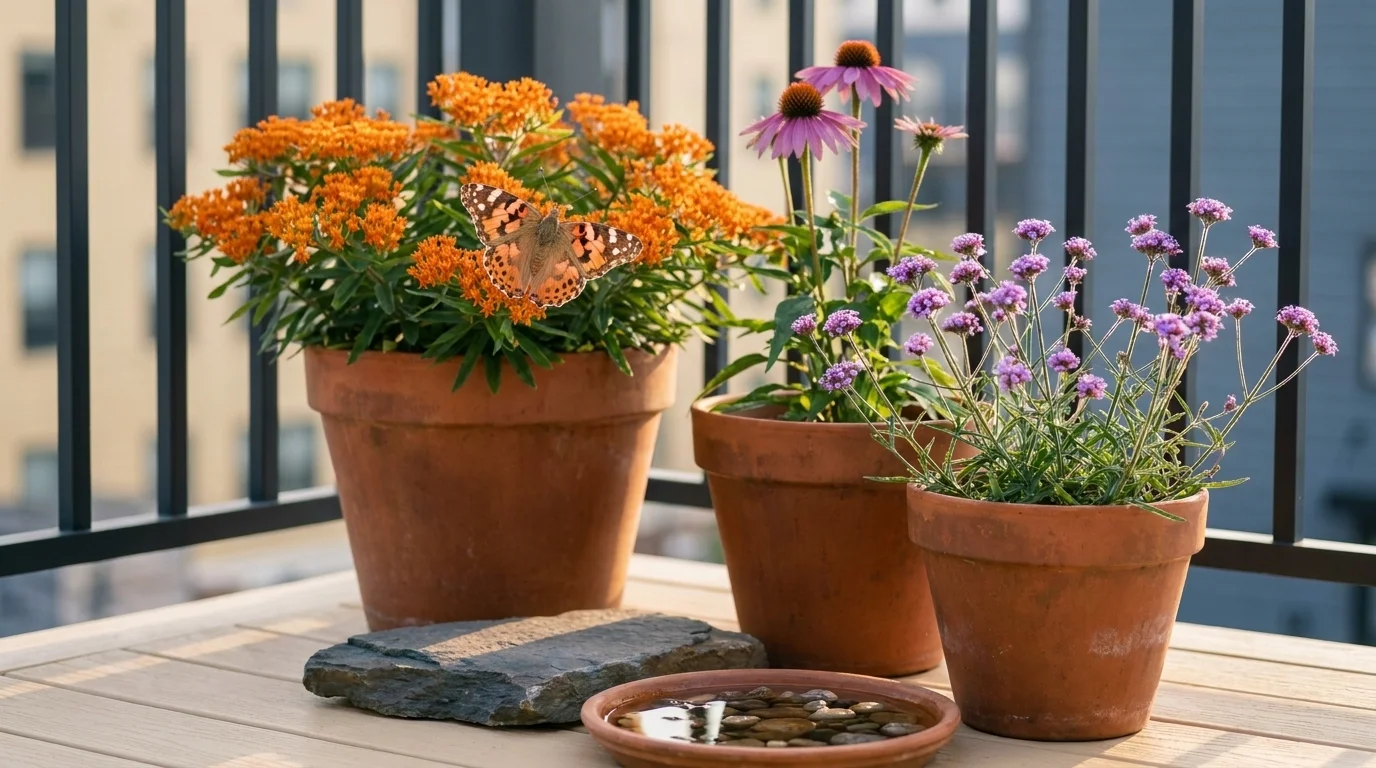
A butterfly garden does not require a quarter-acre. A workable three-pot cluster on a south-facing balcony:
One host plant. Common or swamp milkweed in a 14-inch pot, or a parsley/dill/fennel pot if you prefer the swallowtail route. Either gives you the host.
Two nectar plants with staggered bloom — for example a coneflower (June–September) and a Verbena bonariensis (June through frost), each in a 12-inch pot.
Add a single flat stone for basking and a shallow saucer of water with pebbles. Butterflies do find balconies; I have a Verbena on a windowsill that has hosted painted ladies for three consecutive summers.
Loading image...
A butterfly garden can be three pots and a basking stone. One host, two nectar plants, one shallow puddling dish — that is the whole formula.
A chemical-free garden, named precisely
The phrase "avoid chemicals" is everywhere, and not particularly useful. The specifics matter. The single largest threat to home butterfly gardens is neonicotinoid insecticides — imidacloprid, clothianidin, thiamethoxam, and related compounds. They are systemic, meaning the plant absorbs them and the residue persists in nectar and pollen for months to years. A nectar plant grown from a neonic-treated nursery is a poison source, not a habitat plant.
Ask, every time you buy a plant, whether it has been treated. Reputable local native-plant nurseries will know and will say. Garden-centre chains will frequently not know; if they cannot tell you, do not buy. The same caution applies to pesticide drift from neighbouring lawns and treated lots — if your neighbour sprays a broad-spectrum, your border can be partially poisoned by drift on a windy day. There is not a clean solution to that beyond the slow conversation across the fence.
Where to log what you see (and why it matters)
A butterfly garden is more useful when the gardener participates in the citizen-science programmes that track populations.
Journey North — real-time monarch migration map, contributed by gardeners across North America.
Logging takes five minutes a week and feeds the population datasets the conservation policies are built on. The 2.93-hectare overwintering measurement at the top of this article exists because someone counted.
A moment to notice
The plants above are the right plants. The layout is the right layout. The chemicals to avoid have names. The host-versus-nectar distinction is the one that matters.
The thing the guide cannot give you is the moment. It happens, usually, on a Saturday morning sometime in the third week of August, in the second or third year of the garden. The Joe-Pye is fully open, the Liatris spires are halfway, the Verbena bonariensis is at chest height. A monarch — not the first you have seen, but the one you happen to notice — lands on a swamp milkweed in the middle of the border. It stays a moment. It moves to the next flower. It moves to a third. The garden is doing exactly what it was planted to do, and you are the only person who is watching.
What are the benefits of having a butterfly garden at home?
A butterfly garden creates a habitat that supports the full life cycle of butterflies — from egg to caterpillar to chrysalis to adult — while also supporting bees, hummingbirds, and other pollinators that share the same nectar plants. The result is a working pollinator habitat at the household scale, plus the slow pleasure of watching the population build over two or three seasons.
How can I attract more butterflies to my garden?
Plant the right combination of host plants (where caterpillars develop — milkweed for monarchs, parsley for swallowtails, passionflower for fritillaries) and a succession of nectar plants that flowers from May through October. Place a flat sun-warmed stone for basking and a shallow water dish with pebbles for puddling, and site the garden where it gets six or more hours of direct sun. Most importantly, avoid neonicotinoid-treated nursery stock — ask before you buy.
Are pesticides safe for butterfly gardens?
No. Broad-spectrum pesticides — particularly neonicotinoids (imidacloprid, clothianidin, thiamethoxam) — are systemic, persist in plant tissue for months to years, and reach butterflies through nectar and pollen. They kill caterpillars directly and contaminate adult food sources. A butterfly garden should be neonic-free, and gardeners should ask nurseries whether plants have been treated before bringing them home.
What is the easiest butterfly to attract to a home garden?
Painted ladies are typically the easiest — they are widespread across North America, use common host plants (thistle, hollyhock, mallow), and accept a wide range of nectar sources including zinnia, cosmos, and lantana. Black swallowtails are a close second for any garden that grows parsley, dill, or fennel.
How small can a butterfly garden be?
A butterfly garden can be as small as three large pots grouped together — one host plant (milkweed for monarchs, parsley for swallowtails) and two nectar plants chosen so one blooms earlier and one later. Butterflies recognise plant clusters as food sources from flight; even a 2×3 ft container grouping counts as a real butterfly garden.
How long until butterflies find my new garden?
Adult butterflies often arrive within the first season if nectar plants are blooming and the garden is in full sun, but self-sustaining caterpillar populations typically take two to three seasons to establish. Year one is establishment, year two brings reliable adult visits, and by year three a properly planted garden becomes a working habitat with eggs and caterpillars on host plants.
Do butterfly gardens attract bees and other pollinators?
Yes — bees, hoverflies, hummingbirds, and beneficial wasps share most of the same nectar plants as butterflies. This is a feature, not a bug: a thriving butterfly garden is a thriving pollinator garden. Native bees in particular are essential and far less aggressive than honeybees; the overlap multiplies the ecological value of every square foot you plant.
Should I plant butterfly bush (Buddleia)?
Butterfly bush is invasive in many U.S. states — Washington and Oregon ban its sale, and Pennsylvania, North Carolina, and other Mid-Atlantic states list it as invasive. If you love the flower form, look for certified low-seed cultivars such as the 'Lo & Behold' series (developed by NC State) that produce less than 2% viable seed. Better still, plant native alternatives such as buttonbush (Cephalanthus occidentalis), New York ironweed (Vernonia noveboracensis), Joe-Pye weed (Eutrochium purpureum), or sweet pepperbush (Clethra alnifolia) — all support butterflies without the ecological cost.
The Power of Allelopathy: Harnessing Plant Interactions for Thriving Gardens
Join
Loading...
Our Green Community!
Loading...
VerdeNook is more than just a source of gardening wisdom; it’s a platform for sharing, learning, and growing together. We invite you to join our community, share your stories, and spread the joy of gardening. Let’s sow the seeds for a greener, healthier, and more sustainable future, one garden at a time.