Blossoms of Resistance: The Impactful Role of Gardening in Social Movements
Share this article:
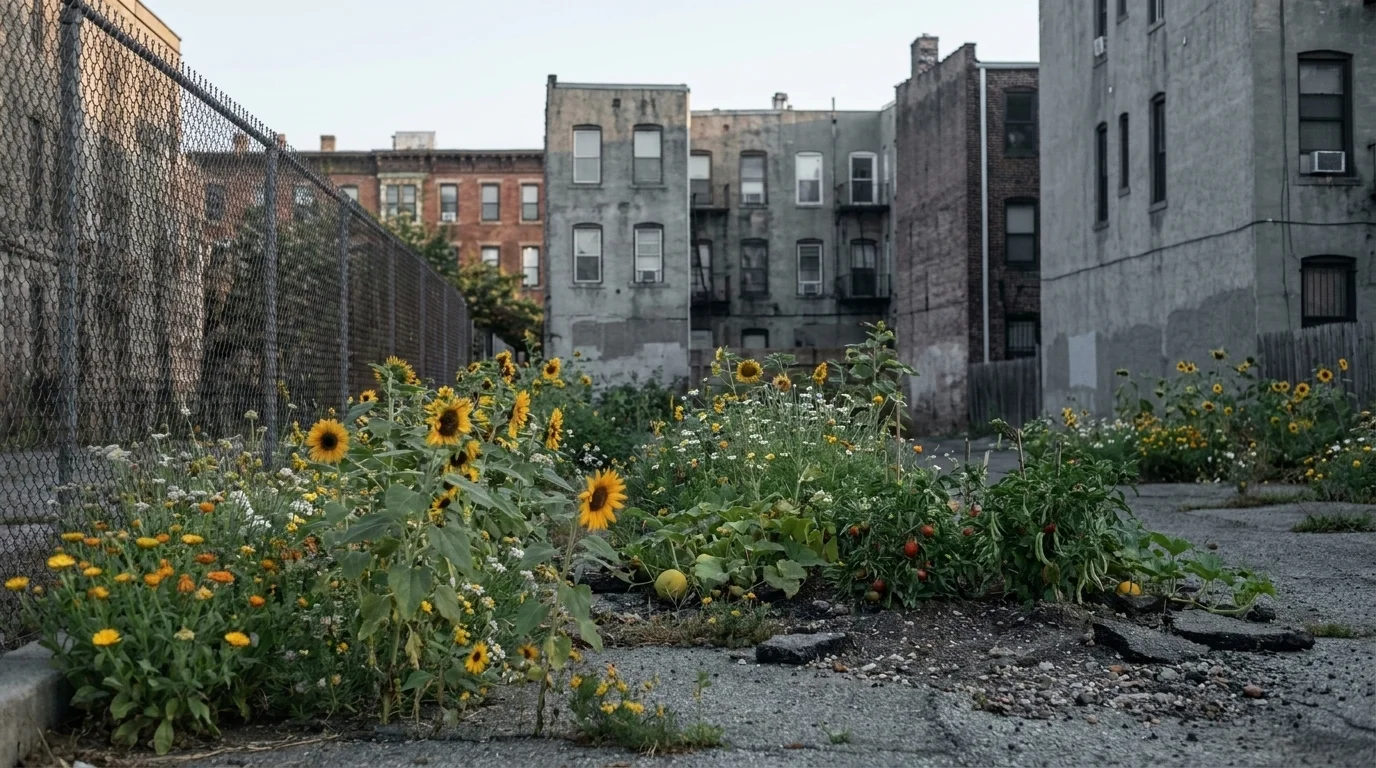
Guerrilla gardening is the quietest kind of politics: planting what should be there on ground no one was tending, and letting the green make the argument.
In 1649, a small band who called themselves the Diggers walked onto common land at St George's Hill in Surrey and began to plant vegetables, on the radical argument that the earth was a "common treasury" and no one's to fence off. They were moved on within months. Nearly four centuries later, someone scatters a handful of native seed over the fence of a derelict lot at dawn and calls it guerrilla gardening — and the underlying argument has not changed at all. Gardening has always been, among other things, quiet political work: a claim about who gets to grow what, and on whose land. This is a look at the sharpest current form of that claim, where it came from, whether it is legal, and how to take part without doing more harm than good.
What guerrilla gardening actually is
Guerrilla gardening is the cultivation of land the gardener does not have legal rights to — a roadside verge, a neglected council strip, an abandoned lot. The term has broadened in recent years; it once meant strictly illegal, anarchic planting, and now stretches to cover planting on public land with tacit permission, blurring the line between activism and sanctioned civic greening. Its best-known modern advocate, Richard Reynolds, turned a London tower-block doorstep into a movement with a website and a trowel.
Not mere decoration: planting a lot you don't own is a small vegetal argument about property — and about who decides what a tidy city is allowed to look like.
A long line, from the Diggers to the Dig for Victory
The instinct is much older than the hashtag, which is exactly why it carries weight. The victory gardens of the two world wars turned millions of back yards and vacant lots into food production — framed then as patriotic duty, a way of feeding a country under strain. What is striking is the 2025 revival, because its politics have inverted. Younger gardeners have rebranded the victory garden as "Seeds of Rebellion," and the nemesis is now domestic rather than foreign — distrust of a fragile food supply and of government dysfunction, rather than a wartime enemy. The same act, planting your own food, has swung from an expression of loyalty to an expression of doubt.
Five parts clay, one compost, one regionally native seed. The native rule isn't a footnote — it's the difference between repairing an ecology and seeding the next invasive problem.
The second is physical and easy to forget in the romance of it: urban soil is frequently contaminated, carrying lead and other legacy pollutants, and scattering food crops across an unknown lot can produce a harvest that is actively unsafe to eat. The responsible guerrilla gardener treats both as real — favours flowers and pollinator plants over food on untested ground, and asks who benefits from the greening before celebrating it.
Gardens that heal and remember
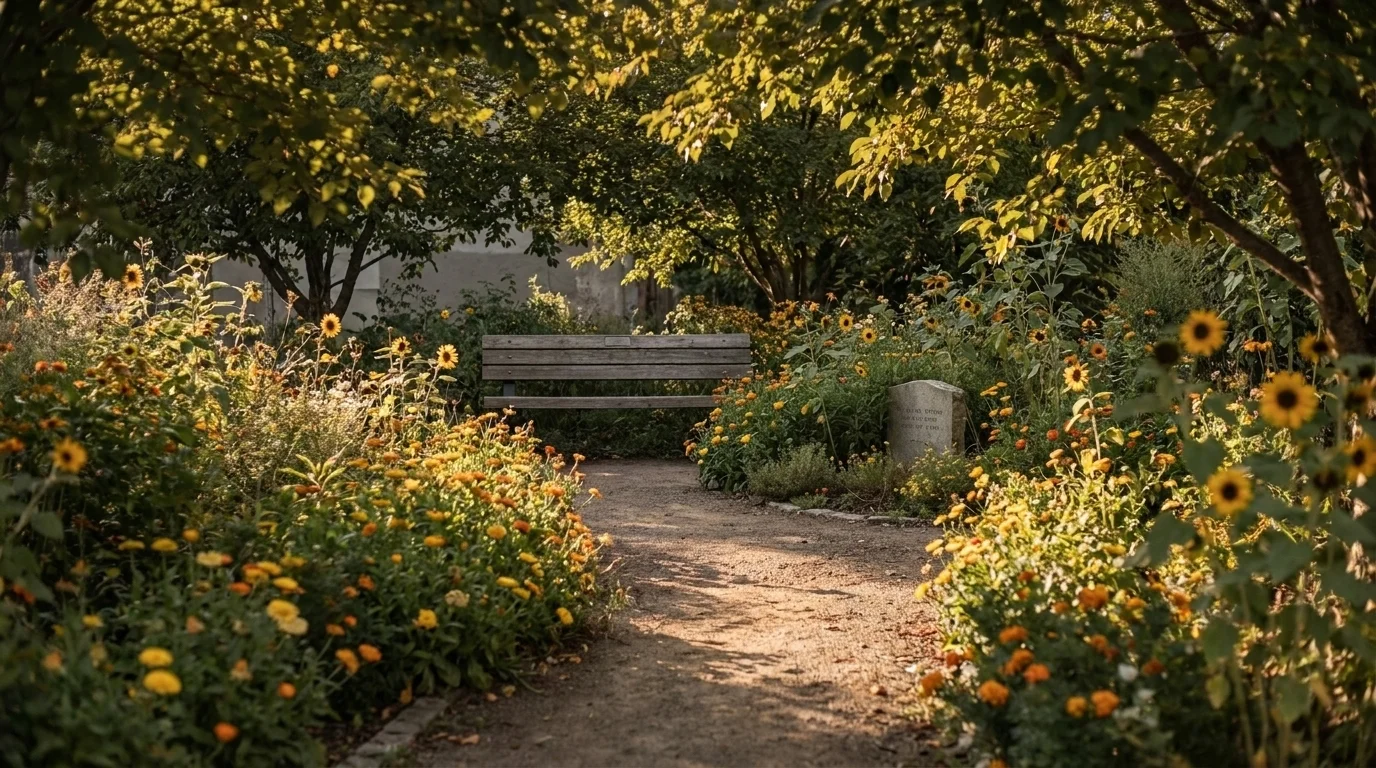
Two quieter forms round out the tradition. A healing garden — the principle behind horticultural therapy — uses the act of tending plants as recovery, a recognised practice in hospitals and community settings for the measurable calm it brings. A memorial garden does parallel work for grief and memory, turning commemoration into something living rather than carved; social movements have long planted them to keep a name or an event present in a neighbourhood. Neither is a protest in the seed-bomb sense, but both belong to the same tradition — the use of cultivated ground to hold what a community values, whether that is recovery, memory, or simply the right to grow.
Loading image...
A healing garden makes tending into recovery; a memorial garden turns grief into something living. Same tradition as the seed bomb — cultivated ground holding what a community values.
From the Diggers on St George's Hill to a teenager rolling seed bombs from native wildflower mix, the through-line has never really been the plants. It has been the question of who is allowed to grow on which land, and what we owe the ground while we do it. Plant the verge if you must — but plant it native, mind the soil, and ask who the greening is for. That last question is the one that separates a garden that resists from a garden that merely tidies, and it is the one worth carrying out to the lot at dawn.
By definition it's a civil trespass — planting on land you don't own, including throwing a seed bomb over a fence. Enforcement varies widely and many cities tacitly allow it, but introducing non-native or invasive seeds can also violate the Plant Protection Act and Lacey Act, with fines up to $50,000 ($1,000 for first-time personal use). Doing it responsibly means using native plants and seeking permission where you can.
What is a "victory garden," and why is it making a comeback?
Victory gardens were WWI/WWII home plots that eased wartime food shortages. The 2025 revival is grassroots and political — younger gardeners rebrand it "Seeds of Rebellion," driven by food-supply distrust and self-sufficiency; roughly 40% of US gardeners (and 69% of Gen Z) planned to invest more in their gardens in 2025.
How do you make a seed bomb?
Mix 5 parts clay, 1 part compost, and 1 part regionally native wildflower seed with water to a mud-pie consistency, roll into palm-sized balls, and dry them in the sun. Use native species only, and seek permission before planting on land that isn't yours.
Can gardening be an act of protest?
Yes. By reclaiming unused or off-limits land for cultivation, gardeners challenge who is allowed to grow food and where — a tradition running from the 1649 Diggers to modern guerrilla gardening. Academic work now treats it as "normalised law-breaking": a deliberate challenge to land ownership and the aesthetic order of the tidy city.
What therapeutic benefits do gardens provide?
Tending plants is the basis of horticultural therapy, a recognized practice in hospitals and community settings for the measurable calm and emotional well-being it brings. A healing garden offers a space for recovery and quiet dialogue, which is part of why gardens recur across social movements as places of care, not just protest.
What is the significance of memorial gardens in social justice?
Memorial gardens turn commemoration into something living — keeping the name of a person or the memory of an event present in a neighborhood. Social movements have long planted them as tributes that double as spaces for reflection and ongoing dialogue, ensuring legacies stay rooted in the community.
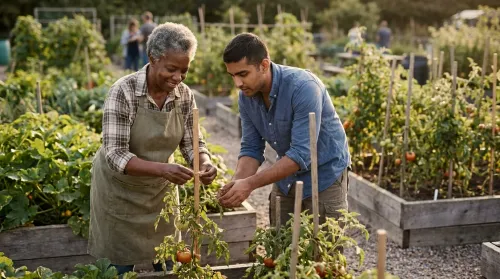
United Greens: The Story of Two Neighbors Transforming Their Fence Line into a Lush Edible Garden
Join
Loading...
Our Green Community!
Loading...
VerdeNook is more than just a source of gardening wisdom; it’s a platform for sharing, learning, and growing together. We invite you to join our community, share your stories, and spread the joy of gardening. Let’s sow the seeds for a greener, healthier, and more sustainable future, one garden at a time.