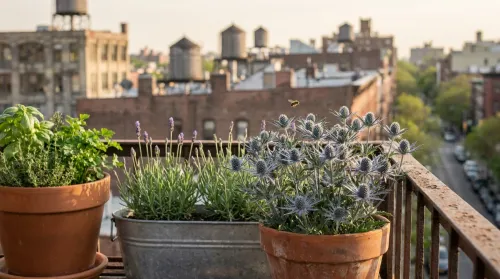
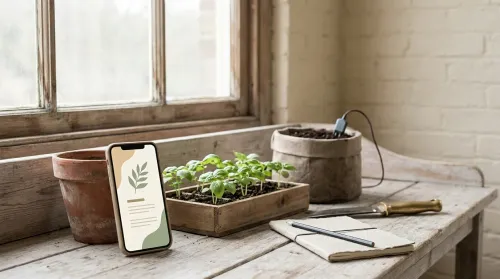
From Likes to Harvests: The Influence of Social Media on Home Gardeners' Community Engagement
Share this article:
The road in was an Epic Gardening reel, a regional Facebook group, a seed swap on a Saturday. The road out is the seed packets in the hand, and the phone set aside.
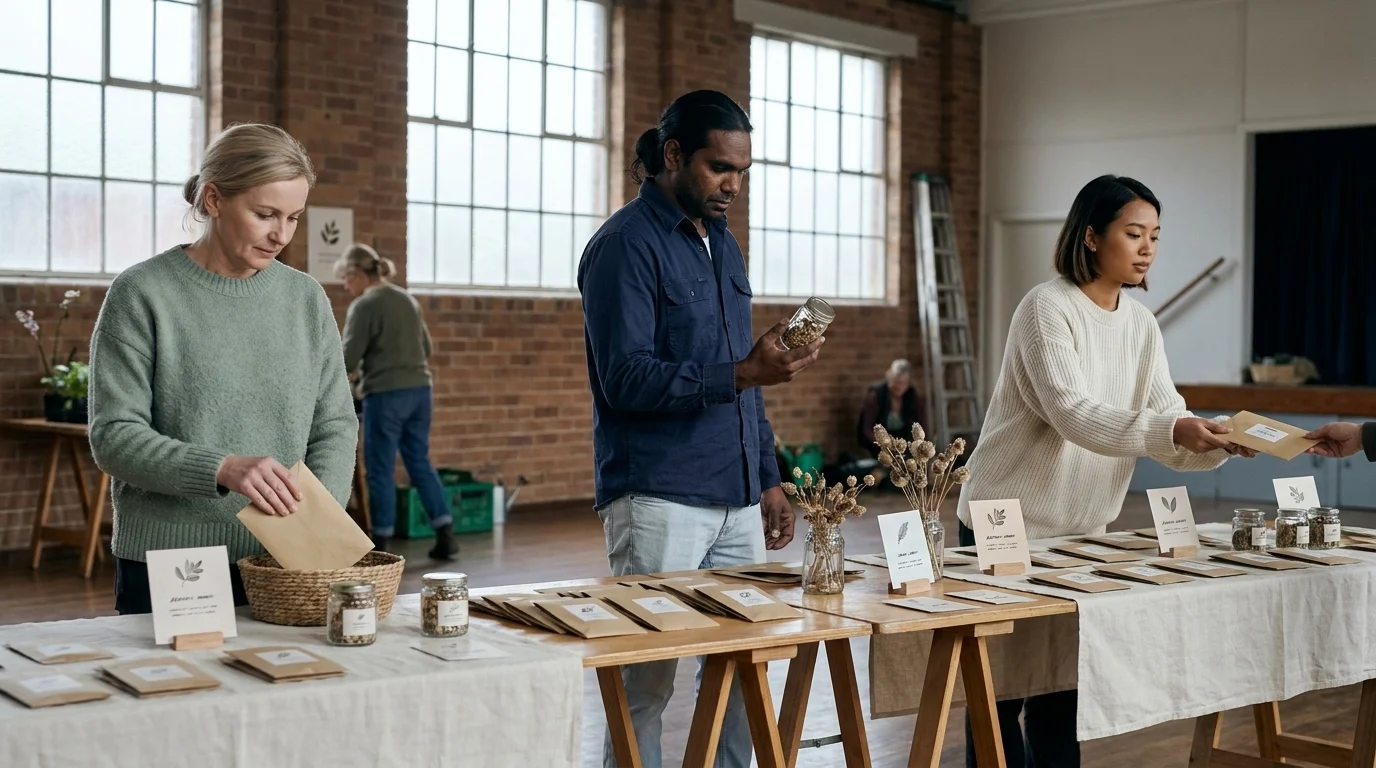
On a Saturday in early November, the Brunswick plot I help run had its annual seed swap, and roughly forty people turned up — most of them strangers, most of them under thirty-five, most of them brought there by a Facebook post in a regional community-gardens group that had been shared, in turn, by people who had originally followed the plot's quiet Instagram account because of a single short reel about turning over a no-dig bed. Three real-world harvests now reach back, through six months of likes and shares and a small handful of carefully chosen garden influencers, to that one reel and the algorithm that decided to put it in front of the right people. This is what social media does for home gardening when it works: it builds the bridge between a thing you see on a phone and a thing you have to actually plant.
This article is for the gardener who has followed enough garden influencers to be slightly disillusioned with the algorithm but suspects there is still something real underneath. The next sections name the creators worth following in 2026, compare the platforms by what each is actually good at, list the hashtags that still work (in shorter sets than the old "use all thirty" wisdom would suggest), and close with the part the brochure never quite gets to — how a feed of inspiration becomes a seed swap, a community plot, a friendship, or a meal.
Garden influencers worth following in 2026
The garden-influencer space has matured in the last two years to the point where it is no longer one category. Below is a short, deliberately curated list — ten or so creators rather than a hundred — across the niches that home gardeners actually live in: food-growing, ornamentals, sustainable / forager, urban container, indoor / houseplants. Follower counts are 2025-26 figures from the published creator round-ups (Disrupt Marketing — Top 10 Green-Fingered Gardening Influencers; Feedspot — Top 60 Gardening TikTok Influencers 2026).
Kevin Espiritu — Epic Gardening (~3.3M TikTok / 1.5M+ Instagram / Epic Gardening YouTube): the most consistently practical food-growing channel in English-language gardening media. Strong on raised beds, container vegetables, and a deeply researched podcast that the Reels never quite capture. Best entry point for any new food gardener.
Alessandro Vitale — Spicy Moustache (~3.3M TikTok): a London-based urban-and-sustainable creator whose short-form videos lean hard into food-waste reduction (regrowing scraps, fermenting, low-input balcony gardens). The most useful creator I know of for renters in a small flat.
Alexis Nikole Nelson — Black Forager (~4.5M TikTok / 2M Instagram): foraging-meets-food-history, James Beard Award winner for Best Social Media. Not strictly gardening, but indispensable for anyone interested in the wild end of the food-growing conversation and the ecological context that home gardens sit inside.
Brian Brigantti — Red Leaf Ranch (~3.2M TikTok): a Brooklyn-to-New-York-state grower whose accessibility-of-tone (and high-output bed videos) reach a much younger audience than the conventional gardening press. Strong on the labour and look of the working garden.
Tara Ratcliffe (~2.6M TikTok): cottage-garden aesthetics with a working flower-cutting business behind it. The best creator I have found on the gap between Instagram-pretty and actual cut-flower production.
Garden Marcus (Marcus Bridgewater, Instagram + TikTok): Houston-based; his calm, plant-by-plant tutorials are some of the most useful onboarding content for new houseplant growers — the rare creator who teaches the underlying soil-and-light principles rather than naming the latest cultivar trend.
Carmen in the Garden (Carmen Johnston, Instagram): southern-US ornamental design with strong colour and structural sense. Best for the gardener trying to think about a border as a composition, not as a list of plants.
Charles Dowding (Instagram + YouTube): the no-dig patriarch; an older creator whose long-running trial plots in Somerset have produced the most-cited side-by-side comparisons of no-dig vs dug vegetable beds anywhere in the English-language literature. Essential reading for anyone moving beyond the introductory phase.
Frances Tophill (Instagram + UK television): a Royal Horticultural Society horticulturist and Gardeners' World regular; the rare UK creator whose content actually reflects 2026 RHS science (Plants for Pollinators, biodiversity-first design) rather than 1990s gardening orthodoxy.
Gardenary (Nicole Burke) (Instagram + podcast): kitchen-garden design with a strong how-to-plan-a-bed framework; useful for the gardener thinking about season-long succession rather than one-off planting.
The list is deliberately short. The trap of garden-influencer culture, like every other influencer culture, is following too many people too widely; the gardeners I know who get the most out of social media tend to follow five to ten creators in the niches they actually grow, and to mute the rest.
Loading image...
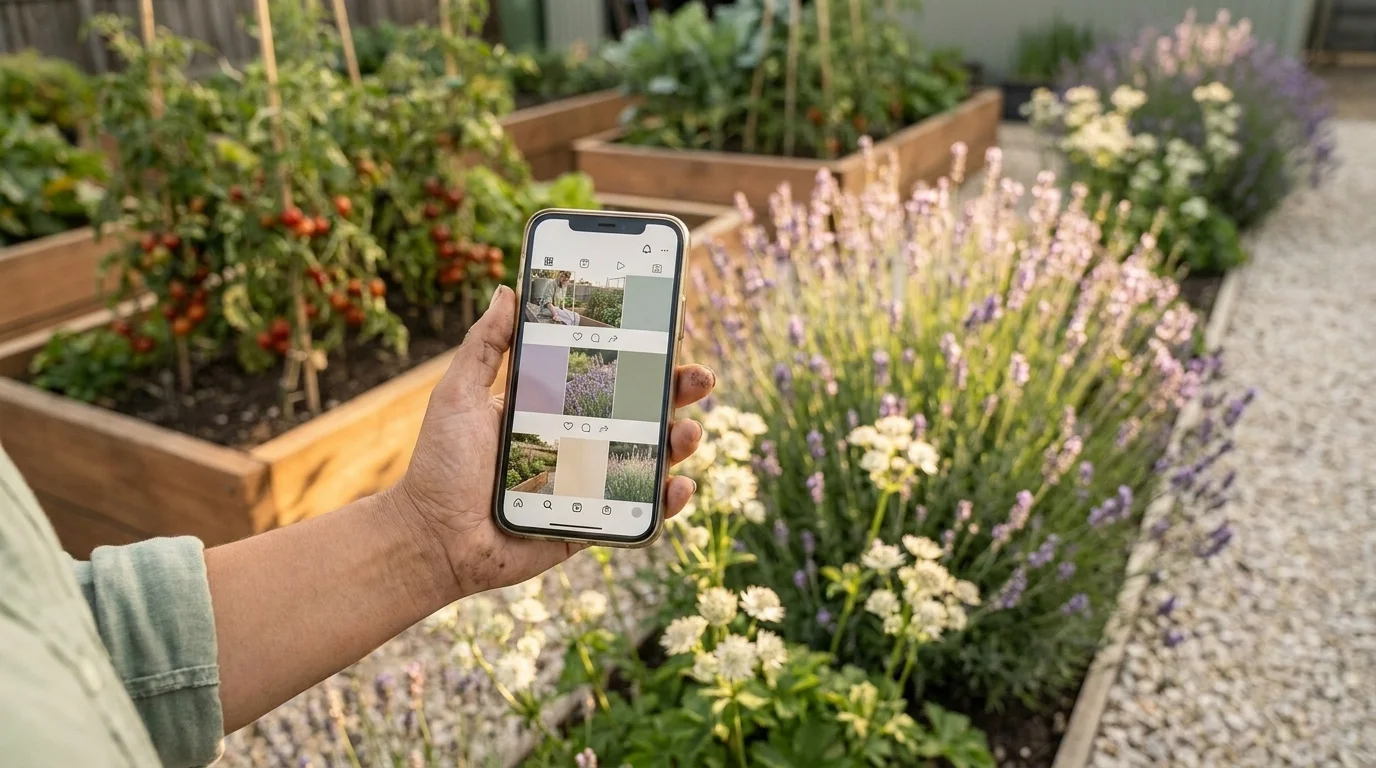
Instagram is the visual-inspiration tab. The chronological-ish feed surfaces March and August from the same garden — useful only if you act on what you see.
Platform-by-platform
No competitor I found covers all the platforms a home gardener might use, and the right answer to "which platform should I be on?" is almost always more than one. The point is to use each for the part of the gardening life it is actually good at.
Instagram is, still, the visual-inspiration tab. Carmen in the Garden's borders, Gardenary's bed plans, the cottage-garden corners of Tara Ratcliffe — they live there because the format rewards photographs and short reels. It is also the best platform for following individual creators' arc through a season, because the chronological-ish feed surfaces March and August from the same garden. What Instagram is not good at is troubleshooting; the comments section will not answer "why is my courgette dying" with the speed or specificity that Reddit will.
TikTok, in 2026, is the place where short-form how-to and micro-niche communities have found each other. The GardenTok ecosystem now splits clearly into three sub-verticals: food-growing (#growyourown, #vegetablegarden, #homestead), aesthetic/cottage (#cottagecore, #cottagegarden), and indoor (#planttok, #houseplants). Creators self-identify by which one they belong to, and the algorithm — once you start tapping through a few — will sort you into the right one quickly. Best for: under-sixty-second technique videos (planting depth, pruning angles, container drainage), and for finding creators whose climate and style are close enough to your own that the advice transfers.
Reddit is the underrated workhorse of the entire online gardening world. r/gardening crossed six million members (HappySprout — Reddit for Gardeners) and has been actively running since 2008, which makes it bigger than any individual creator's following and structured for question-asking in a way that no visual-first platform is. The sister communities matter too: r/IndoorGarden, r/houseplants, r/whatismyplant (for hard plant IDs), r/vegetablegardening, r/composting, r/permaculture, r/UrbanGardening. If the question is "what is wrong with this leaf?" or "is this seedling going to survive?", Reddit gives a faster useful answer than any other platform.
Facebook Groups are where the local lives. They are where you find the regional seed-swap announcements, the council-allotment waiting-list updates, the Saturday-morning working-bee invitations, and the gardener two streets across with the same soil type. Search for "{your city or county} gardeners", "{your city} seed swap", "allotment {your town}". The interface is unloved; the local network density is unmatched.
Discord and dedicated forums are where the deep niches live. The permaculture community has thriving Discord servers; the native-plant gardeners of the eastern US run several; UK heritage seed-savers cluster in old-style forum software at GardenWeb and on the Garden Organic Heritage Seed Library mailing lists. These spaces are slow, archival, and full of people who know the answer because they have made every mistake themselves. If you are getting serious about a sub-discipline, this is where you find your people.
Blogs and long-form are not platforms in the algorithmic sense but still where the deepest writing lives — Margaret Roach's A Way to Garden, James Wong's columns, the Charles Dowding archive, Hortus magazine, Gardens Illustrated. Most of the creators above also keep a written archive somewhere; the gardeners I know who improve year-on-year tend to read at least one long piece a week alongside the feed.
Gardening hashtags that work in 2026
The "use all thirty hashtags" guidance that dominated Instagram-marketing blogs in 2020-22 is dead. Instagram's own creator account now recommends three to five hashtags per post for organic reach; independent engagement studies put the peak slightly higher, around five to fifteen, but agree that more is not better (Display Purposes — Best #gardening hashtags 2026). Posts with at least one hashtag still get about 12.6% more engagement than posts without. The trick is to pick the right small set, not the largest set possible.
Group your hashtags by intent and choose three to five per post from across the groups.
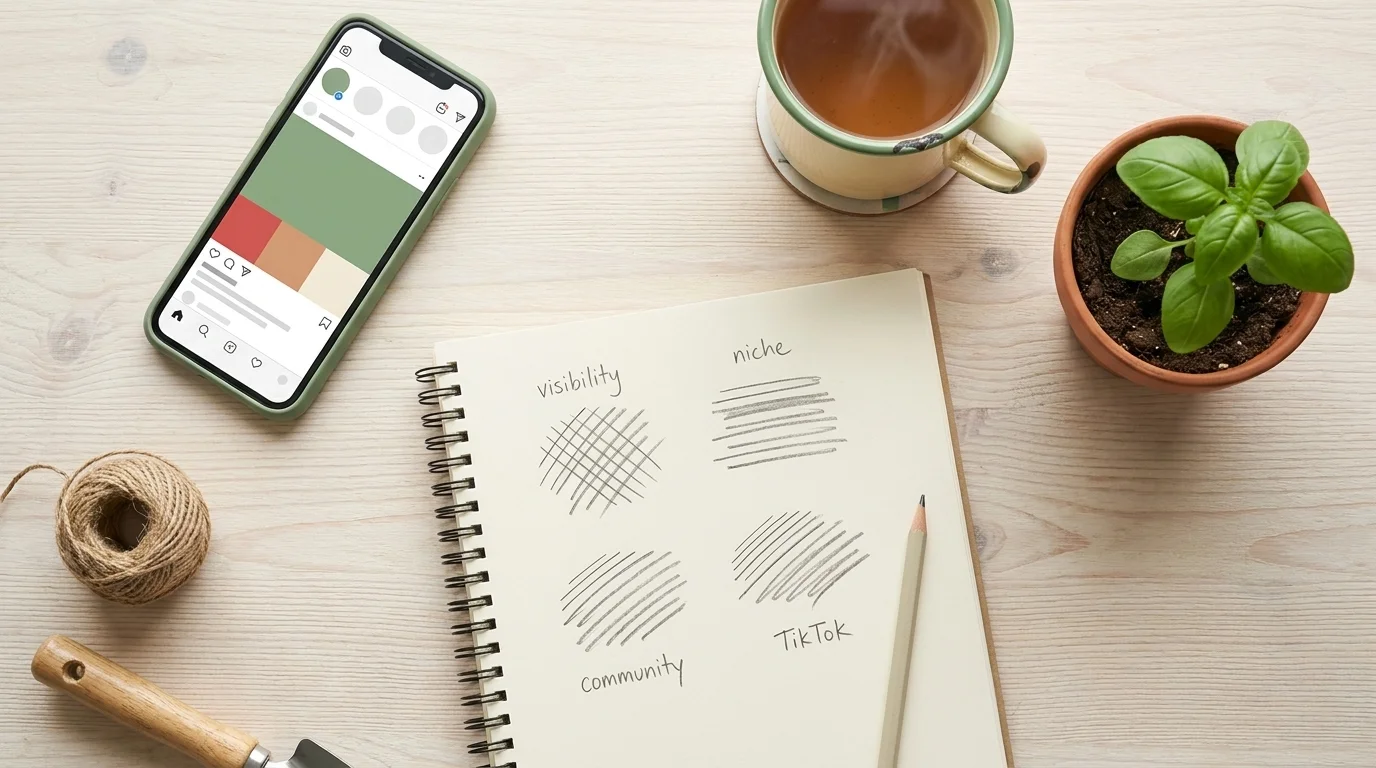
Visibility (general, high-volume — pick one or two): #gardening, #garden, #gardenersofinstagram, #growyourown, #homegarden. These get you into the broad pool but on their own won't differentiate you.
Niche discovery (medium-volume, more specific — pick two): #vegetablegarden, #cottagegarden, #containergardening, #urbangardening, #raisedbedgardening, #nodig, #permaculture, #balconygarden, #kitchengarden, #nativeplants, #cuttinggarden, #houseplants, #planttok. These tell the algorithm what kind of gardener you are, which is what gets you in front of the right followers.
Community / movement (lower-volume, identity-anchored — pick one): #growfoodnotlawns, #savetheseeds, #nomow, #wildlifegarden, #seedsaver, #heritageseeds, #organicgardening, #regenerativegardening. These signal a stance and connect you to gardeners who share it.
TikTok-specific (add the platform tags on TikTok): #gardentok, #planttok, #plantmom, #plantsoftiktok, #gardening101, #fyp (the algorithm tag), and the seasonal-content tags #gardenharvest, #growyourownfood, #cottagecore (TikTokHashtags.com — #gardening; best-hashtags.com — #gardentok).
A working post: one or two visibility tags + two niche-discovery tags + one community tag + one or two TikTok-platform tags if you're cross-posting. Total: five to seven. Anything beyond that is, by Instagram's own admission, working against you.
Loading image...
Five to seven tags, grouped by intent: visibility, niche, community, platform. The thirty-tag dump that worked in 2020 is now spam, by Instagram's own admission.
Where to start if you're a beginner
The published creator-discovery sites are mostly long lists with no entry point for the gardener who is also new to social. A working pathway, by gardening interest:
If you are starting vegetables: follow Kevin Espiritu (Epic Gardening) on whichever platform you use most, join r/vegetablegardening on Reddit, search Facebook for "{your county} vegetable gardeners". Total: three accounts and two communities. Do not follow more than five vegetable creators in your first year — the variety of advice will paralyse you.
If you are starting with houseplants: follow Garden Marcus on Instagram and one Houseplant TikTok creator whose climate (heating-on, humidity, light) is close to yours; join r/houseplants on Reddit; bookmark the whatismyplant subreddit for IDs. Add a single newsletter (Margaret Roach's A Way to Garden is the best of the long-form ones).
If you are starting with ornamentals / borders: follow Carmen in the Garden and one local-climate ornamental creator; join r/gardening and a regional Facebook group; subscribe to Gardens Illustrated or The English Garden for slower, longer-form planting writing.
If you are starting on a balcony or rented flat: follow Spicy Moustache, join r/UrbanGardening, search Facebook for "{your city} balcony gardeners". The container-and-rental advice is its own discipline and the conventional gardening press is mostly silent on it.
The general rule is: pick the platform that matches how you actually learn (visual, short-video, question-and-answer, or text), follow a small number of creators in your real niche, and add one community where the gardeners around you actually live.
Sustainability, foraging, and the slower end of the feed
The creator subculture I find most useful to follow, beyond the named names above, is the slower, sustainability-first end of garden social — Black Forager and Spicy Moustache as the prominent examples, but also a long tail of permaculture, native-plant, and food-waste creators on TikTok and Instagram whose feeds are less algorithm-bait and more sustained practice. Alexis Nikole's James Beard Award for Best Social Media legitimised this corner of the food-and-garden world as something serious editors take seriously (Disrupt Marketing), and the audience has grown accordingly. If you are interested in the relationship between gardening and the wider food system, this is where to follow the conversation.
The general rule with sustainability-leaning creators is the one that applies to all niche following: pick the two or three voices whose ethics and practice actually match your own situation, follow them deeply for a year, and ignore the rest. Slow following beats fast following, even on platforms that reward the opposite.
Loading image...
Three hundred seed packets exchanged, six new working-bee volunteers, two new plot-holders, one wedding announcement. None of which appeared in the Reels.
From feed to harvest
The part of garden social media that no competitor article quite covers is what happens after the follow — the chain that goes from a video on a phone to a thing in the ground. The version of it I see most often, on the Brunswick plot and across the wider Community Gardens Australia network I help coordinate, is:
Someone sees a creator's content (often an Epic Gardening reel or a Spicy Moustache short) and follows the account.
They notice that local commenters on the same creator's posts are from their city.
They search Facebook or Reddit for a local gardening group and join it.
The group posts about a seed swap, a community garden working bee, or a free-tools clinic at a local nursery.
They turn up, mostly to lurk, and end up with three packets of seeds and a conversation with someone who knows the soil two streets across.
The following spring, they have a working plot — or a balcony, or a windowsill — that they did not have before.
The seed swap I named at the start of this article was an instance of that chain. So is most of the new membership at any UK or Australian community garden of the last three years; if you ask the coordinators, they will tell you that the algorithm — for all its many faults — has been quietly responsible for more new gardener arrivals than every public-information campaign the trade association has ever run. The gardens that have leaned into the chain, posting their own short content from the plot and inviting their followers to the next working bee, have grown faster than the gardens that have not.
There are caveats. A gardener whose entire practice is mediated through a feed risks becoming a follower of gardens rather than a gardener of one — the small, slow, unphotogenic work of actually weeding a bed in July is the part the algorithm will never reward. The most useful posture, the one I have settled on after a decade of running community plots and writing about them, is to treat social as one of several roads into the garden and out of it. The roads in are inspiration, community, and the occasional answer to a question you could not have known to ask. The road out is the harvest, the seed swap, the friendship, the meal — the part that, to use the phrase I keep coming back to, the receipts have never been able to print.
The Brunswick plot's seed swap this year produced about three hundred individual seed packets exchanged, six new working-bee volunteers, two new plot-holders on the waiting list, and one wedding announcement between two gardeners who met at the previous year's swap. None of that appeared in the original Reels that brought them to the gate. All of it was, in some real way, downstream of those Reels. Follow the creators whose voice you trust, use the hashtags that put your post in front of the right small audience, join the regional community that turns the algorithm into a doorstep — and then put the phone down, and pick up the trowel. The garden, in the end, is what the rest of this is for.
Who are the best garden influencers to follow in 2026?
Top creators include Kevin Espiritu (Epic Gardening, ~3.3M TikTok) for food-growing; Alessandro Vitale (Spicy Moustache, ~3.3M) for sustainable urban gardening; Alexis Nikole (Black Forager, ~4.5M) for foraging and food history; Brian Brigantti (Red Leaf Ranch, ~3.2M) for high-output bed work; Charles Dowding for no-dig; Frances Tophill for RHS-science UK gardening; Carmen in the Garden for border design; and Gardenary's Nicole Burke for kitchen-garden planning.
What are the best gardening hashtags on Instagram and TikTok?
Pick five to seven hashtags per post grouped by intent. Visibility: #gardening, #gardenersofinstagram, #growyourown. Niche discovery: #vegetablegarden, #cottagegarden, #containergardening, #raisedbedgardening, #permaculture, #balconygarden. Community: #growfoodnotlawns, #savetheseeds, #nomow, #wildlifegarden. TikTok-specific: #gardentok, #planttok, #gardening101, #gardenharvest, #fyp.
How many hashtags should I use on Instagram posts?
Three to five per post per Instagram's own creator guidance; five to fifteen at peak engagement per independent studies. The legacy 'use all 30' advice from 2020-22 is dead — fewer, more relevant tags consistently beats spamming. Posts with at least one hashtag get about 12.6% more engagement than posts without.
What's the difference between Instagram, TikTok, and Reddit for home gardeners?
Instagram is best for visual inspiration and following individual creators through a season. TikTok (#gardentok, #planttok) is where short-form how-to and micro-niche communities live — the algorithm sorts you into food-growing, cottage-aesthetic, or indoor sub-verticals quickly. Reddit r/gardening (6M members, active since 2008) is the fastest place to get a specific problem answered. Most active home gardeners benefit from at least one of each.
How do I join an online gardening community?
Start with r/gardening on Reddit for daily Q&A, then search Facebook for '{your city or county} gardeners' or 'seed swap' groups for the local network. Follow three to five creators on Instagram or TikTok in the niche you actually grow (vegetables, flowers, or indoor). For deep niches like permaculture, native plants, or heritage seed-saving, find a Discord server or a dedicated forum where the slow archival writing lives.
What is GardenTok and PlantTok?
GardenTok and PlantTok are TikTok's gardening and houseplant micro-communities — hashtags that aggregate millions of short-form videos. By 2026, GardenTok has split clearly into food-growing (#growyourown, #vegetablegarden, #homestead), aesthetic / cottage (#cottagecore, #cottagegarden), and indoor (#planttok, #houseplants) sub-verticals. They are the fastest-growing gardening-discovery channel for new gardeners under thirty-five.
How can a beginner gardener use social media to learn?
Pick the platform that matches how you actually learn — Instagram for visual ideas, TikTok for under-sixty-second how-tos, Reddit for asking specific questions. Follow three to five creators in your climate and real niche (do not doom-scroll a hundred). Join one regional Facebook group, and bookmark r/gardening for problem-solving. Slow following beats fast following, even on platforms that reward the opposite.
Bridging the Digital Divide: Empowering All Home Gardeners with Accessible Technology
Join
Loading...
Our Green Community!
Loading...
VerdeNook is more than just a source of gardening wisdom; it’s a platform for sharing, learning, and growing together. We invite you to join our community, share your stories, and spread the joy of gardening. Let’s sow the seeds for a greener, healthier, and more sustainable future, one garden at a time.