The Economic Impact of Home Gardening: An Analysis of Financial Benefits and Opportunities
Share this article:
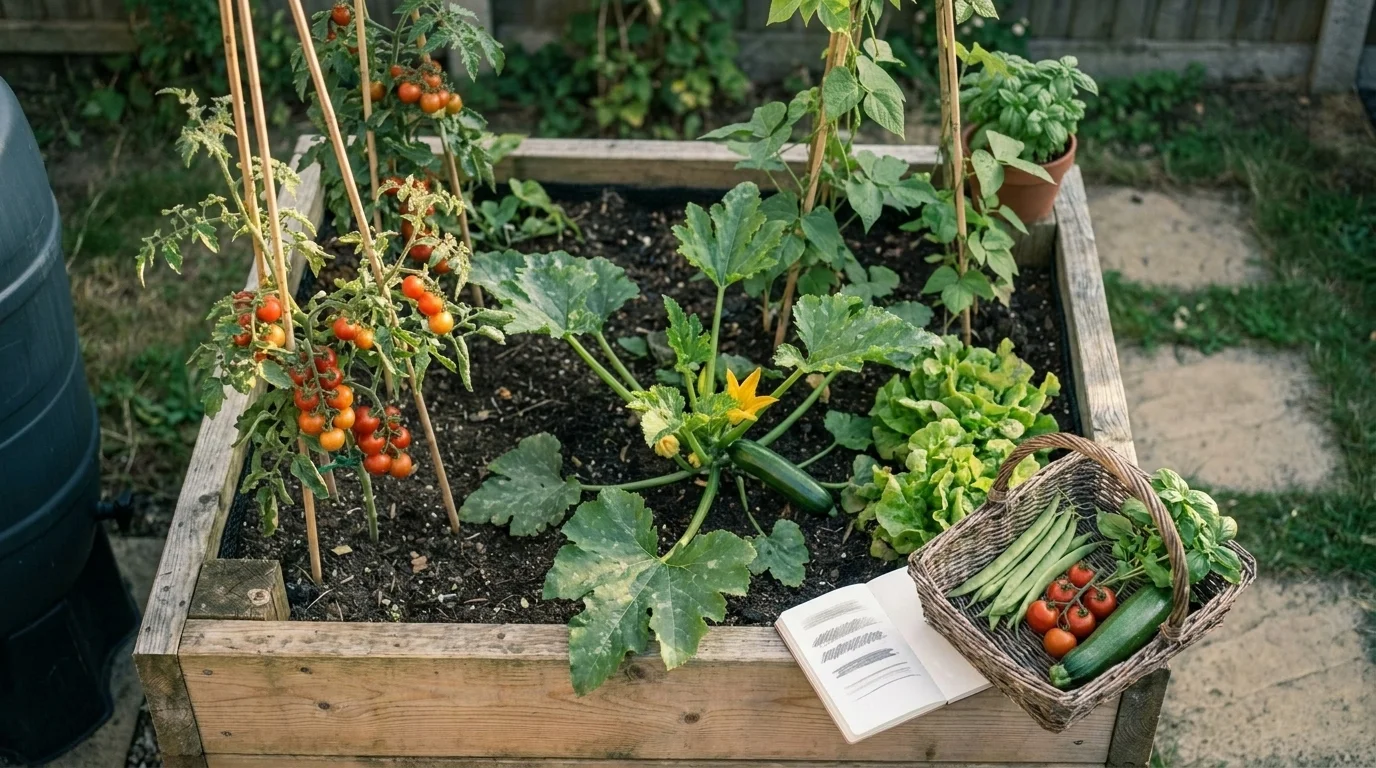
Total build: £150 in scaffold-board timber, soil, and seeds; £150–£400 of produce by season's end. Payback in twelve to sixteen months.
For most UK households gardening on a budget, the honest answer to "is gardening worth it?" is yes — a £30 to £150 starter setup typically pays back in one growing season. The 2023 RHS-cited allotment figures put a 250 m² plot at £247 a year in running costs against £1,910 a year of produce — a 7.7× return (MoneySavingExpert — Gardening on the Cheap). The catch is that the maths only works if you grow the right crops. Potatoes, onions, and standard carrots are supermarket-cheap; growing them at home loses you money. Cherry tomatoes, herbs, salad leaves, courgettes, and runner beans — all expensive in shops, all high-yielding per plant — make the difference between a garden that pays for itself and a garden that quietly costs you more than the supermarket would have.
This article is for the reader who wants the actual numbers. With fresh vegetable prices in the US up 7.5% from March 2025 to March 2026 (Burpee Savings Breakdown) and equivalent UK supermarket inflation in the same band, the "should I grow my own?" question has a sharper edge than it did three years ago. Below are three startup-cost tiers, a ranked per-crop ROI table, the crops to avoid, and an honest section on when gardening doesn't save money.
Three startup-cost tiers
The published cost data on UK home gardens splits cleanly into three brackets. Each one has a realistic first-year produce value that the literature now puts numbers on; the cost math below is built from current 2025-2026 UK pricing (Checkatrade Raised Bed Cost, MyJobQuote, MoneySavingExpert).
Tier
Setup cost
What it grows
Realistic Year-1 produce value
Tier 1 — Windowsill / balcony
£0–£30
Salad leaves, basil, mint, chives, cherry-tomato pot, herb mix
£40–£120
Tier 2 — First raised bed
£50–£150
Salads, courgettes, runner beans, bush tomatoes, herbs, chard
£150–£400
Tier 3 — Multi-bed kitchen garden
£250–£500+
Tier 2 + Brassicas, climbing peas, summer squashes, soft fruit
£500–£1,000+
Three things worth saying about the table before anyone reaches for a credit card.
The Tier 1 number is the one most people underestimate. A £30 windowsill setup — a 60 cm trough, a bag of multipurpose compost, a pack of cut-and-come-again salad leaves, a basil plant, and a mint cutting begged from a neighbour — produces something close to £40 of salad and herbs in a single summer if you actually pick from it weekly. The conventional wisdom says you need a proper garden to start; the conventional wisdom is wrong, and the math is wrong with it.
The Tier 2 number is where most home gardeners genuinely land. A 4 × 4 ft (1.2 × 1.2 m) wooden raised bed kit runs around £150 in the UK; fill it with around 0.5 m³ of soil (£40–£80 at bulk bag rates), add £20 of seeds and starter plants, and the all-in is £180–£250 for the first season (Checkatrade). One real-world UK case in the trade-press synthesis: £200 of metal beds, £150 of annual produce, payback around 16 months. If you can build the bed yourself from rough-sawn timber rather than buying a kit, the entry cost drops to £30–£100 — exactly the bracket where the first-season payback becomes one-to-one.
The Tier 3 number compounds in years two and three because the infrastructure depreciates over a decade, not a season. One US analysis (Abundant Permaculture) projects a £656 initial setup with £78/year of seeds and supplies returning roughly £4,000 of produce over ten years — about $2.73 returned per $1 spent. UK numbers are similar; the structure of the math is the same.
The renter caveat: every number in Tier 2 and Tier 3 above assumes you'll be in the same place for at least two years. If you might move sooner, stay in Tier 1, or use containers (the SIP — sub-irrigated planter — is the rental-safe workhorse here) that you can take with you.
Best vegetables to grow for money
The single biggest decision determining whether a garden pays back is what you plant. The table below ranks the crops with the best return on investment for a UK home garden, with seed-packet cost, expected per-plant yield, current UK supermarket price, and a rough payback time. The yield numbers are from the published Burpee and Homes & Gardens single-plant benchmarks (Burpee Savings Breakdown; Homes & Gardens — 9 Vegetables Cheaper to Grow than Buy); UK supermarket prices are based on current Tesco/Sainsbury's averages for organic-equivalent quality at time of writing.
Crop
Seed packet
Plants from packet
Yield per plant
UK shop price
Payback in weeks
Herbs (basil, mint, thyme)
£2
5–20+
100+ g (cut-and-come)
£1.20 / 30g packet
2–4
Cut-and-come salad leaves
£2.50
200+
~3–4 kg total
£1.80 / 150g bag
4–6
Cherry tomatoes
£3
6
2–3 kg / plant
£3.00 / 250g punnet
8–10
Courgettes (one plant!)
£2
4–6
4–6 kg (~10 lb)
£1.50 each (~3 / kg)
6–8
Runner beans
£2.50
20+
1.5–2 kg / plant
£2.00 / 250g
10–12
Swiss chard
£2
30+
~1 kg cut-and-come
£1.80 / 100g
6–8
Kale
£2
30+
~1.5 kg cut-and-come
£1.40 / 200g
8–10
Spring onions
£1.50
100+
8–10 / planted hole
£0.90 / bunch
8–10
Three patterns worth noticing.
First, herbs win on £/m² because they're sold in shops in tiny over-packaged portions at extreme markup. A £2 packet of basil seed gives you a year's worth at supermarket-bench-grade quality; one £1.20 packet of basil at Tesco is enough for one pasta. The ratio is the highest in the entire vegetable garden.
Second, cut-and-come-again crops compound — every salad leaf you don't harvest is a leaf that grows another leaf. Bonnie Plants' framing of this is the cleanest in the literature: lettuce, spinach, kale, and chard deliver multiple harvests from a single sowing, which is why they sit at the top of every honest ROI ranking (Bonnie Plants — Save Money Growing Vegetables).
Third, courgettes and tomatoes do the disproportionate work in a small bed because the per-plant yield is enormous relative to the footprint. One zucchini plant in a 60 cm pot delivers around ten pounds of produce from a £2 seed packet across a single UK summer.
Loading image...
One courgette plant: 10 lb of produce from a £2 seed packet. The conventional wisdom says you need a proper garden; the conventional wisdom is wrong.
What NOT to grow
The credibility line for any honest article about saving money with a garden is the list of crops to avoid. The published ROI analyses are explicit about this, and the rule is the one that surprises new gardeners: if a crop is cheap in supermarkets, growing it at home loses you money (Joyberry Studios — Best ROI Vegetables; Yours.co.uk — Budget Gardening Ideas).
Potatoes — at roughly £1.20/kg in the supermarket, against a 2-3 kg yield per square metre that needs months in the ground. Russet, yellow, and red varieties all land at the very bottom of the published ROI rankings. The exception is novelty potatoes (pink fir apple, ratte, jersey royals) that supermarkets charge £8+/kg for; those work.
Onions, leeks, and standard cabbage — also low-priced in shops, also slow-growing. A single onion takes most of a season for £0.30 of supermarket savings.
Carrots — at £1/kg in shops, the storage and effort don't pay back unless you're growing rainbow heritage varieties.
Sweetcorn — needs significant bed space and a long growing season for relatively low per-cob yield. Lovely fresh, but rarely worth the footprint in a small UK garden.
Garlic — borderline; supermarket bulbs are cheap and the home harvest is small. Worth growing only if you want hardneck varieties that don't appear in shops.
Garden centre-bought starter plants — not a crop but a category. A £4.50 tray of six tomato seedlings is the same six plants as a £3.00 seed packet that gives you twenty more in reserve. Buying ready-grown starts is the single fastest way to push a garden's economics into the red.
The negative-ROI rule is also where the Reddit-style "is it really cheaper?" question gets its honesty. The frugal-living forums are right to be sceptical of breathless "you'll save thousands!" headlines. The right answer is: yes, if you grow the right things, with seeds rather than starter plants, in a tier of setup that matches your space and tenure.
The allotment math
For UK gardeners willing to take on a council or private allotment, the economics shift up by an order of magnitude. The reference numbers (MoneySavingExpert — Gardening on the Cheap):
Council allotments: up to around £100 per year for a standard plot
Private allotments: typically closer to £200 per year
Plot size: a standard UK allotment is roughly 250 m² (around 10 rods, in the old measurement)
Produce value: roughly £1,910 per year from a 250 m² plot tended consistently — the figure that RHS-cited 2023 data settled on
That works out to a 7.7× return on a council plot, or roughly 9.5× once you account for the lower private rate. The math hides two costs that the headline number doesn't capture: roughly 4–6 hours of weekly labour during the growing season, and a few hundred pounds of one-off infrastructure (a shed, a water butt, a couple of cold frames) in year one. Adjusted for those, the genuine pay-back is somewhere around 5×–6× — still the best ROI you can get from any £100-a-year subscription anywhere in Britain.
The catch is the waiting list. Most UK councils have multi-year waits for plots; getting on the list now, before you're sure you want to garden, is the cheapest decision you can make. The other catch is consistency: an unmanaged plot becomes a council eviction within a couple of seasons. The math only works if you actually show up.
Seeds, not starter plants. A £3 packet of cherry-tomato seeds gives you 20 plants. The garden centre will sell you 6 plants for £4.50. Ratio: 5× more plants for less money.
Bulk compost. A 2,500 L compost dumpy bag at £319 works out to roughly 13p per litre; the same compost in 50 L retail bags is £12.99, or 26p per litre — a 50% saving at scale. If you don't need 2,500 L, split a bag with a neighbour.
A water butt and a hose-pipe ban-safe setup. A 200 L water butt off a downpipe runs around £50 installed and pays itself back in two summers on metered water alone. The other thing it does — gives you rainwater that's better for the plants than chlorinated tap water — doesn't appear on the bill but matters in a hot August.
Compost everything home, including coffee grounds and cardboard. Two bins, brown-and-green mix, turned twice a season. A working compost system removes most of the bagged-soil-improver line from the annual garden budget.
DIY raised beds from rough-sawn timber. Scaffold boards cost around £20 each; four boards screwed into corner posts make a 4 × 4 ft bed for roughly £80 plus screws — a £70 saving on the typical kit.
Bare-root rather than potted shrubs and hedging. Bare-root hawthorn at around 60p per plant vs. potted at £3+ for the same hedge (RHS budget-friendly garden). Plant October–March, when bare-root stock is dormant; the difference at twenty metres of hedge is roughly £50.
Seed-swap groups and the Heritage Seed Library. Most UK cities now have seed-swap meetings every winter — typically through a local horticultural society or the Garden Organic Heritage Seed Library in Coventry. Free or near-free seed plus access to varieties not on the National List.
Homemade pest sprays. A 1% castile-soap spray for aphids is roughly 5p per spray bottle vs. £4 for a commercial equivalent. Works as well, smells better, doesn't kill the bees you want around.
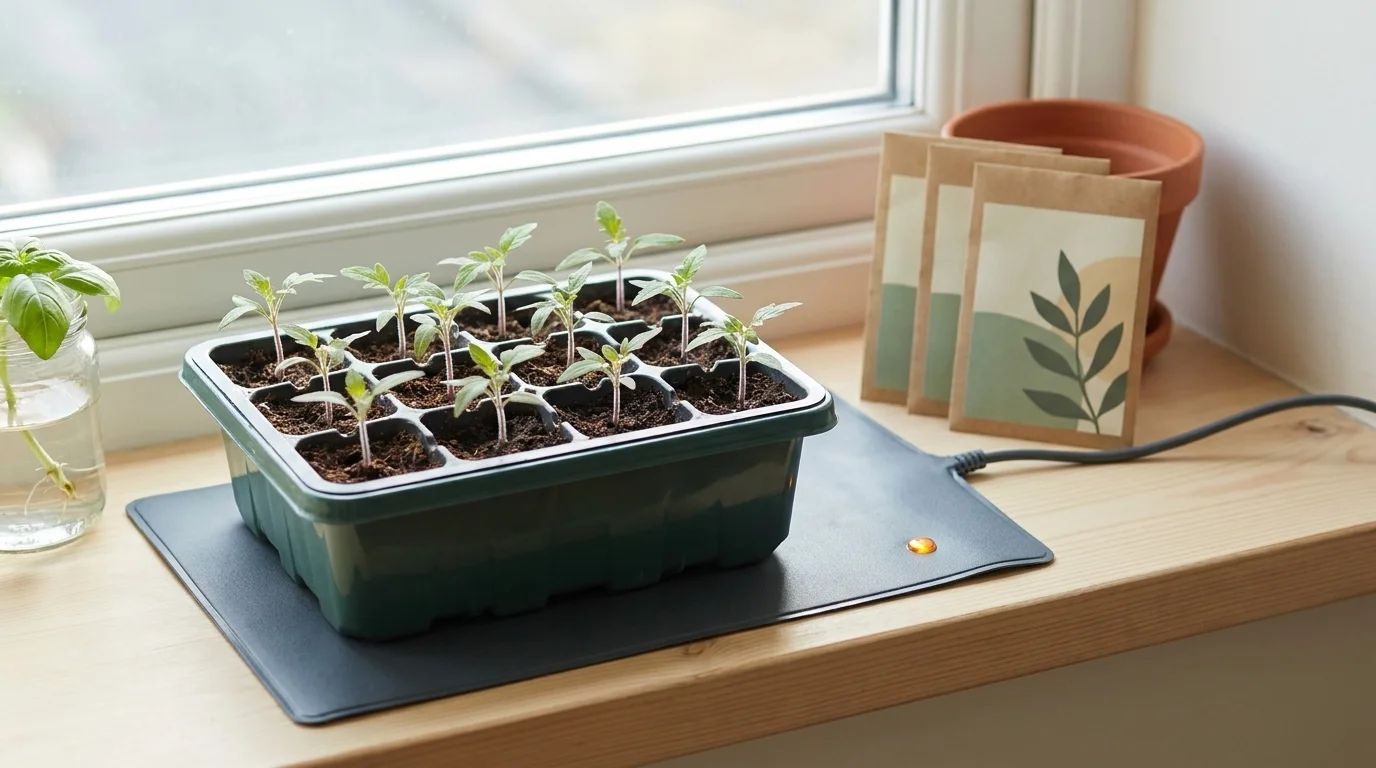
A propagation shelf instead of a heated greenhouse. A south-facing windowsill with a single £15 seedling heat mat will start every annual you need in spring without the £200 greenhouse investment.
Loading image...
A £15 seedling heat mat on a south-facing windowsill starts every annual you need without the £200 greenhouse. The math is one to thirteen, not close.
When gardening doesn't save money
The frugal-living audience is the most sensitive in any gardening readership to overclaiming, and the right response is to name the failure modes plainly. Gardening fails the money test in five recognisable situations:
You grow supermarket-cheap staples. A potato bed in a 4 × 4 ft raised plot returns less than the same space planted with cherry tomatoes by a factor of roughly five. The earlier "what NOT to grow" section is the version of this rule that matters most.
You buy starter plants at the garden centre instead of starting from seed. £4.50 for six tomato plants vs. £3 for a packet that gives you twenty — repeated across the bed, this single habit can flip a garden's economics into the red.
You build £500+ of infrastructure for one season's use. Brick-edged beds, professional installation, custom-built planters — beautiful, durable, and a real cost. They pay back over a decade, not a year. If you might move within two years, stay in Tier 1 or 2 above.
You water with metered mains rather than a water butt. In a dry UK summer the metered cost of watering a bed adequately can run to £40–£80 for the season — easily wiping out the savings on what's grown. A £50 water butt removes the line entirely.
You don't actually have the time to tend it. A neglected garden is the most expensive garden of all — input costs accumulate, output doesn't. The published ROI math assumes 4–6 hours a week during the growing season for an allotment-scale plot, less for a single raised bed. If your weeks won't allow that consistency, the cheaper move is a smaller setup that you'll actually maintain.
The honest cost of a garden, set against the honest savings, is one of the more useful number sets a household budget can know. The point isn't to maximise the savings number at all costs; it's to make sure the garden you do build sits on the right side of the line.
Can you sell what you grow?
The side-revenue side of home gardening — small-scale market gardening, herb walls for local cafés, CSA shares — is real but a separate undertaking from saving money on the household food bill. The fastest payback at the small end is in herbs sold to neighbours or a local farmers' market: a £2 packet of basil seed plants 20 pots and a £20–£40 return at typical farmers' market prices. Beyond that, the unit economics shift toward serious time investment — and any commercial sale of produce in the UK needs to comply with local-authority food and hygiene registration if it's beyond the casual swap level. The honest answer to "can I make money from my garden?" is "yes, slowly, and as a different thing from saving money on your own groceries."
The closing math
A £30 windowsill setup that produces a summer's worth of salad and herbs is a household budget decision that pays back inside its first season. A £150 raised bed planted with the right crops pays back in 12-16 months and continues to compound. A council allotment at £100/year produces produce worth somewhere around £1,900 if you tend it consistently. None of these numbers is exotic; all of them are within reach of a renter, a first-time gardener, or a household that just wants to push back on the supermarket bill.
The thing the conventional wisdom gets wrong is the assumption that home gardening is mostly a hobby with some accidental savings attached. The published numbers say the opposite: gardening on a budget is, for most UK households who grow the right crops with the right setup, one of the better-paying small investments available to them. The trick is to grow the expensive stuff — herbs, salad leaves, cherry tomatoes, courgettes, runner beans — and to skip the supermarket-cheap staples that the cost line already covers. Start in Tier 1, scale up when the tier you're in is clearly paying back, and don't buy a starter plant when a packet of seeds and a Saturday afternoon would do the same job for one-tenth the price.
Total build for a working first-season balcony garden, based on the numbers above: £14–£30 in seeds and a couple of recycled containers, two hours of setup, zero holes in the wall, and a year-end harvest worth somewhere between £40 and £120. That is the math that the rest of this rests on, and it is — once you write it down — almost impossible to argue with.
For most UK households, yes — a £30 to £150 starter setup typically pays back within one growing season. RHS-cited 2023 allotment data shows £247 a year of running cost yielding around £1,910 of produce, a 7.7× return. The catch: only if you grow expensive crops (herbs, salad leaves, courgettes, cherry tomatoes, runner beans) and skip the supermarket-cheap staples (potatoes, onions, carrots).
How much does it cost to start a vegetable garden in the UK?
Three realistic tiers: £0–£30 for a windowsill or balcony herb-and-salad setup, £50–£150 for a single 4 × 4 ft raised bed with soil, and £250+ for a multi-bed kitchen garden. Council allotments add around £100 a year on top; private allotments closer to £200. The £150 raised bed typically pays back in 12–16 months.
Which vegetables save the most money to grow at home?
Herbs (basil, mint, thyme) lead the ROI ranking by a wide margin because supermarket portions are tiny and over-packaged. Cut-and-come-again salad leaves, cherry tomatoes, courgettes, runner beans, kale, and Swiss chard are the next tier — all expensive in shops and high-yielding per plant. One zucchini plant produces about 10 lb of produce from a sub-£3 seed packet.
Which vegetables should you avoid growing to save money?
Potatoes, onions, leeks, standard carrots, and standard cabbage — all supermarket-cheap, slow-growing, and a net loss on the household budget. Heritage and novelty varieties (rainbow carrots, jersey royal potatoes) are exceptions because supermarkets price them at a premium. Also avoid buying ready-grown starter plants from the garden centre — a £4.50 tray of six tomato seedlings is the same six plants as a £3 packet of seeds that gives you twenty more in reserve.
Is it cheaper to grow your own food than buy it?
Yes, if you grow the right crops with seeds (not starter plants) in a setup tier that matches your space and tenure. With UK supermarket vegetable prices on a multi-year climb, a £150 raised bed planted with cherry tomatoes, herbs, salad leaves, and courgettes will typically deliver £150–£400 of produce in its first season — a year-one payback before infrastructure depreciates over the decade that follows.
When does gardening NOT save money?
When you grow supermarket-cheap staples, when you buy ready-grown plants instead of seeds, when you build expensive raised-bed infrastructure for a single season, when you water with metered mains rather than a £50 water butt, or when the garden requires consistent labour the household doesn't have. A neglected garden is the most expensive garden of all — input costs accumulate, output doesn't.
Cultivating Within Constraints: How International Trade Agreements Affect Seed Exchange
Join
Loading...
Our Green Community!
Loading...
VerdeNook is more than just a source of gardening wisdom; it’s a platform for sharing, learning, and growing together. We invite you to join our community, share your stories, and spread the joy of gardening. Let’s sow the seeds for a greener, healthier, and more sustainable future, one garden at a time.