Exotic Plant Adventures: Growing and Caring for Unique and Unusual Plants
Share this article:
The 2026 rare-plant shelf is smaller than the 2021 one — every pot earns its place by name, by provenance, and by what the plant actually does indoors.
The Garden Media Group's 2026 Trends Report named collectible houseplants the year's defining consumer aesthetic, framing it as a Gen Z and Millennial movement and quoting the report directly: "Collecting is making a comeback, especially with Gen Z and Millennials. They're reclaiming individuality through collecting – a quiet rebellion against disposable culture." Plant-collecting as personal museum, as quiet rebellion, as the new Pokémon — fine. But the practical question for anyone reading a list of unusual houseplants in May 2026 is not whether the trend is real. It is whether the plant you are about to spend $50 on is genuinely scarce, mass-produced and mispriced, or — increasingly often — wild-collected from a habitat that cannot afford to lose another specimen. That third category is the one nobody wants to talk about, and it is where this list begins.
Quick answer: what counts as an unusual or rare houseplant in 2026?
A houseplant is genuinely rare when it is slow to propagate (variegated cuttings can take six to twelve months to root), restricted to a narrow native habitat (the Peruvian form of Monstera obliqua), or CITES-regulated for export. A houseplant is unusual when it looks startling on a shelf but is no harder to source than a pothos. Many plants sold as rare in 2026 — Pink Princess Philodendron, Thai Constellation Monstera, several "rare" Hoyas — are now mass-tissue-cultured and stocked at big-box retailers for $5 to $50. The 25 plants below are sorted on that axis, and every one is tagged with its propagation reality and a difficulty ladder from beginner-rare to expert-only.
Marketed as rare versus actually rare in 2026
This is the conversation that the boom-era listicles will not have with you. CTV News reported in June 2025 that Philodendron Pink Princess specimens are now selling for $5 in Canadian shops, down from "well in excess of $100" during the 2020 to 2022 boom. The same piece notes Costa Farms' tissue-culture partnership has put Monstera 'Thai Constellation' into grocery stores at sub-$50 sizes. These are still gorgeous plants. They are no longer a price flex. The detail matters, the way it does with milkweed — what you actually plant in the ground today is not what social media told you to want three years ago, and pretending otherwise wastes money you could spend on a plant that is genuinely scarce.
The list ahead reflects 2026 reality, not 2021 inventory. Three categories: Beginner-Rare plants that look the part at supermarket and big-box prices and survive normal indoor conditions; Intermediate-Rare plants that ask for humidity discipline and patience; and Expert-Rare plants that need a grow cabinet, a careful sourcing conversation, and a tolerance for losing a costly cutting.
Loading image...
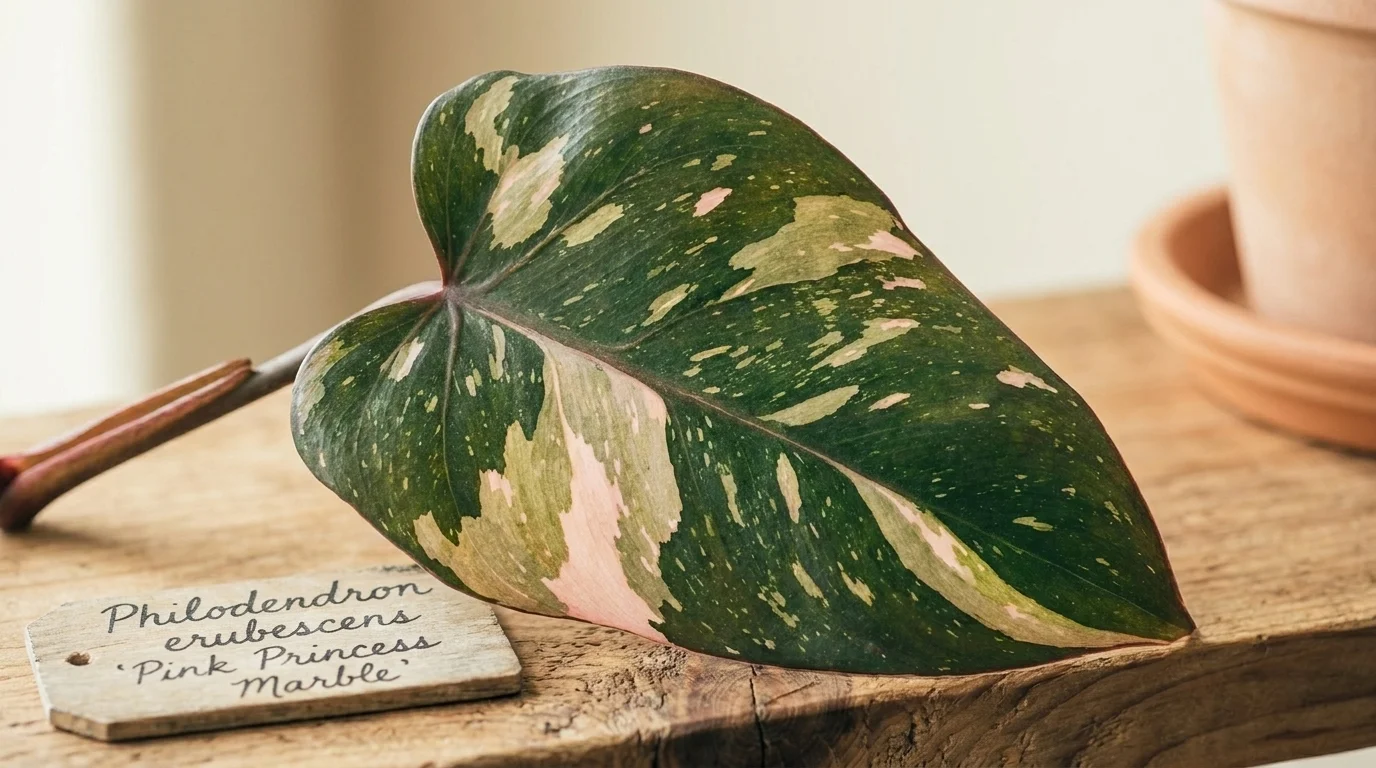
Five years ago this leaf cost a hundred dollars and a wait-list. Tissue culture is the reason it now costs five — and the reason the price flex is over.
Rare aroids: philodendron, monstera, and anthurium varieties
The aroid family — Araceae — is where the 2026 collector market lives. These are the plants with the silver-marked leaves, the dramatic fenestrations, and the slow, sculptural growth that does not photograph the same on day one as on month six. The genus-level demand is enormous: keyword data shows roughly 2,400 monthly searches each for "philodendron varieties" and "monstera varieties," and the SERP rewards specific cultivar names over hand-wave categories. The honest distinction inside aroids is not "rare versus common." It is "tissue-culturable versus stubbornly not."
Philodendron Pink Princess (Beginner-Rare). Pink-variegated P. erubescens sport. As above — now $5 to $40 retail, depending on the size and the percentage of pink in the leaves. Light: bright indirect. Water: when the top two inches dry. Humidity: 40–60% is fine. Difficulty: 2/5. A first collector plant. The 'Pink Princess Marble' selection holds variegation more reliably than the standard cultivar.
Philodendron 'Jungle Boogie' (Beginner-Rare). Narrow, deeply lobed leaves; named by Garden Media Group's 2026 trend coverage as one of the season's signature varieties. Easy indoor grower. Light: bright indirect. Difficulty: 2/5.
Philodendron gloriosum (Intermediate-Rare). The heart-shaped, silver-veined creeper that crawls along a long shallow planter rather than climbing. Needs warmth, humidity above 60%, and a wide flat pot. Difficulty: 3/5.
Philodendron Spiritus Sancti (Expert-Rare). One of the genuine 2026 collector tier. Soltech's 2026 status-symbol pricing places mature specimens at $900 to $5,600 depending on size and seller. Native to a single small region of Espírito Santo, Brazil. Slow to propagate. If a seller offers one well below the $900 to $5,600 range, ask hard questions about provenance before you spend the money. Difficulty: 5/5.
Philodendron McColley's Finale, Philodendron gigas, Philodendron 'Pink Princess Marble' round out the beginner-to-intermediate philodendron shelf at typical houseplant prices.
Monstera deliciosa 'Thai Constellation' (Beginner-Rare in 2026). The cream-speckled monstera that defined Instagram 2021 is now a grocery-store plant. Costa Farms tissue culture is the reason. Light: bright indirect. Difficulty: 2/5.
Monstera adansonii variegata (Intermediate-Rare). The smaller-leaved, fenestrated monstera, but with cream-and-white variegation. Still genuinely uncommon because variegated cuttings root unevenly. Humidity: 60% or above. Difficulty: 3/5.
Monstera obliqua (Peruvian form) (Expert-Rare). Roughly $1,800 according to Soltech; the more-hole-than-leaf monstera that is reliably misidentified online — most of what is sold as "obliqua" is actually M. adansonii. Cabinet conditions only. Difficulty: 5/5.
Variegated Monstera Albo Borsigiana ($1,350 to $2,900, per Soltech). Cuttings are sold by the node. Difficulty: 4/5.
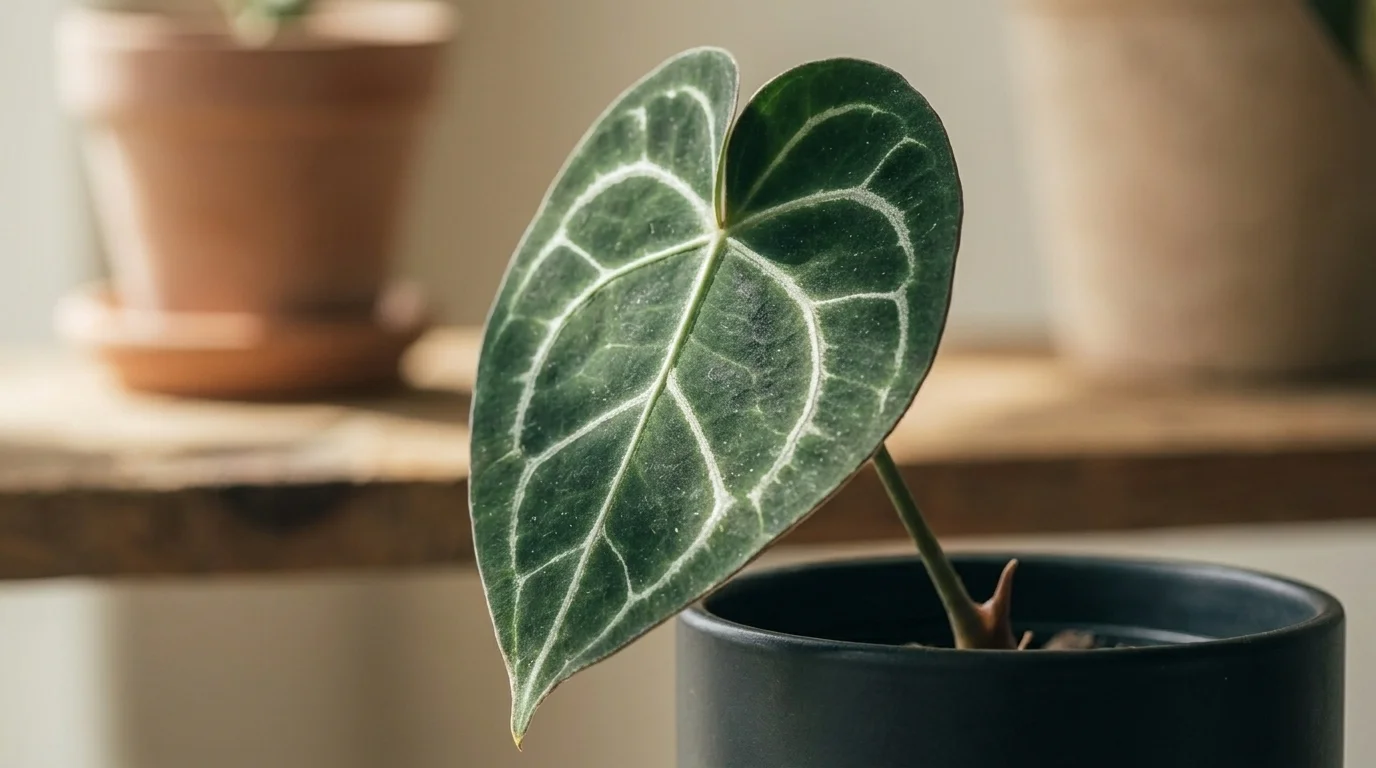
Anthurium clarinervium (Intermediate-Rare). The velvet-leaved aroid with bright silver venation. Wants a chunky bark-based aroid mix, humidity above 60%, and patience. Difficulty: 3/5.
Anthurium 'King of Spades' and Papillilaminum hybrids (Expert-Rare). Per Soltech, these velvet-anthurium specimens run $600 to $1,050. The 2026 collector aesthetic is shifting toward velvet texture, deep-vein color, and named-hybrid provenance rather than the Pink Princess era's variegation chase. Anthurium warroquinum is the cloud-forest specialist worth naming in the same breath — it is exactly the kind of habitat-restricted species the sourcing-and-ethics section addresses.
Loading image...
The 2026 collector aesthetic has moved on from pink-and-cream — texture is the new variegation, and the silver-vein topology is what to study before you spend.
Unusual succulents and cacti
The succulent and cactus side of the unusual-houseplant world has a sourcing problem that the aroid side does not — much of it can be wild-collected on a scale that is genuinely destroying source habitats, especially in southern Africa and the southwestern United States. We will return to this in the sourcing section. For now, the named plants worth knowing:
Haworthia truncata (Intermediate-Rare). The window-leaf succulent: stubby, geometric, translucent panes at the tips. Light: bright indirect (the translucent windows evolved to filter sun underground). Difficulty: 3/5. Buy from succulent specialists — never wild-collected.
Euphorbia lactea cristata 'Mermaid Tail' (Intermediate-Rare). A coral-shaped, blue-green crest; one of the Garden Media Group 2026 trend-coverage named varieties. Grafted onto a rootstock, slow-growing, dramatic on a shelf. Light: bright direct. Difficulty: 3/5.
Pachypodium lamerei ("Madagascar palm"; not a true palm). Caudex with spiny trunk and a tuft of leaves at the crown. Light: bright direct. Difficulty: 2/5 if you can give it a hot windowsill.
Albuca spiralis 'Frizzle Sizzle' (Beginner-Rare). Bulb with tightly corkscrewed grass-like leaves. Winter-grower from the South African Cape — confusing for first-time keepers because it goes dormant in summer. Difficulty: 3/5.
Rare orchids
Orchid search demand is up: monthly volume for "rare orchids" sits around 2,900 and trended higher in early 2026. Orchids are also the family with the deepest CITES history — almost every orchid in international trade is on the Convention list. Asking about provenance is not optional here.
Cattleya hybrids (Intermediate-Rare). The corsage orchid; large, fragrant, dramatically colored. Light: bright with a few hours of weak direct. Difficulty: 3/5.
Vanda coerulea (Intermediate-Rare). The "blue" Vanda — pale lavender-blue tessellation. Roots grown bare in a wooden basket. Difficulty: 3/5 if you can give it daily misting or weekly soaks.
Paphiopedilum slipper orchids (Intermediate-Rare). Terrestrial orchids with pouched lower lips. Tolerant of lower light. Buy nursery-propagated, never wild-collected — slipper orchid poaching is a known and recurring conservation problem.
Jewel orchids (Ludisia discolor, Macodes petola). Grown for the velvety, gold-veined foliage rather than the flowers. Beginner-Rare; thrives in lower light and high humidity, often used in glass terrariums.
Carnivorous and curious
Venus flytrap (Dionaea muscipula). Native to a 75-mile radius around Wilmington, North Carolina, and nowhere else on Earth. Wild collection has been a felony in North Carolina since 2014. Buy from tissue-culture specialists like California Carnivores or local carnivorous-plant society sales — never from a roadside stand. Light: bright direct. Water: distilled or rainwater only, never tap. Difficulty: 3/5.
Nepenthes (tropical pitcher plants) — N. ventricosa, N. sanguinea, N. truncata. Hanging vine pitchers. Highland species want cool nights; lowland species want consistent warmth. Humidity: 60% or above. Difficulty: 3/5 to 4/5 by species.
Drosera (sundews) — capensis, binata, and the more dramatic D. regia. Sticky, dew-tipped tentacles. Beginner-Rare; far easier than flytraps. Difficulty: 2/5.
Sarracenia (American pitcher plants). Native to the southeastern US bogs; grown outdoors in cool-winter climates rather than indoors. Worth knowing as a temperate alternative to Nepenthes.
Variegated and silver foliage
The 2026 aesthetic, per the Ideal Home and Garden Media Group trend roundups, has moved away from pink-and-cream variegation toward silver, neon, and velvet texture. Three plants name themselves:
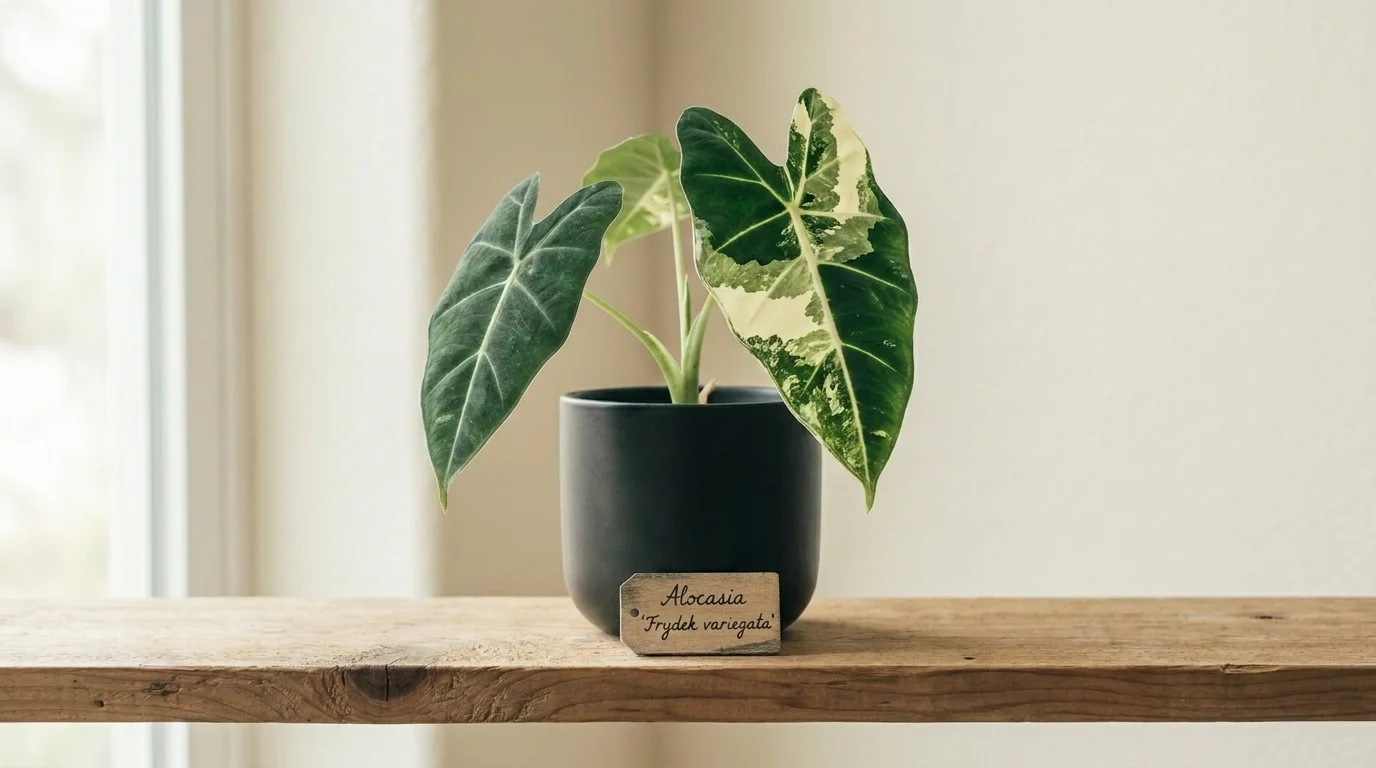
Alocasia 'Frydek variegata' (Intermediate-Rare). The velvet-leaf Alocasia with cream variegation; a 2026 Garden Media Group trend-named selection. Humidity above 60%. Difficulty: 4/5 — variegated Alocasias revert and rot more easily than the standard 'Frydek'.
Aglaonema 'Khanza Pink' (Beginner-Rare). Garden Media Group 2026 named variety. Pink-marbled foliage in a forgiving, low-light houseplant body. Difficulty: 1/5.
Aphelandra squarrosa (Zebra Plant) (Beginner-Rare). Named in the same 2026 trend coverage. Striking white-veined dark-green foliage on an upright plant. Likes humidity. Difficulty: 3/5 — it sulks if dry air shocks it.
Hoya polyneura ("fishtail Hoya"). Leaves with raised, fish-skeleton venation; one of the 2026 collector-aesthetic plants Indoor Plantify and others have called out as the genuine texture-led rarity to chase. Difficulty: 2/5 if you can give it bright indirect light and let the soil dry between waterings.
Begonia maculata (Beginner-Rare). Angel-wing begonia with white polka dots on dark green leaves. Mass-produced and widely available. Difficulty: 2/5.
Begonia ferox (Intermediate-Rare). The "fierce begonia"; bullate, pointed, deeply textured leaves described relatively recently from China. Difficulty: 3/5.
Variegated Ceropegia woodii (String of Hearts). Trailing succulent with heart-shaped leaves and pale variegation. Difficulty: 2/5.
Caladium 'White Christmas', 'Florida Sweetheart'. Tuberous, seasonally dormant, dramatic for the months they are awake. Difficulty: 2/5 if you accept the dormancy.
Loading image...
Variegated Frydek is the listicle plant the listicle won't warn you about — it reverts faster than the standard cultivar and rots quicker if its roots stay wet.
Sourcing rare houseplants legally and ethically in 2026
This is the section nobody else is writing, and it is the reason this list exists at all. Every plant above can be sourced ethically. Most of them can also be sourced unethically. The difference is usually not visible in the listing photo.
The scale of the problem is not theoretical. EcoWatch quotes Pieter van Wyk, botanist at South Africa's Richtersveld National Park, warning that succulent poaching "might eclipse the country's lucrative rhino horn industry" and that "more than half of the plants from the region were not rare, but are now becoming rare" — driven by collector demand seeded on social media. The same piece notes that individual wild saguaro cacti in Arizona are now being microchipped against poaching, with stolen plants selling for around $150 per foot. Venus flytraps have been felony-protected in North Carolina since 2014, and even with that protection, wild-collected specimens still surface in the trade.
The fix is small and concrete. Buy from named specialist nurseries. Logee's in Connecticut has been a rare-plant breeder for more than a century and ships propagated stock; Steve's Leaves specialises in begonias and named cultivars; Mountain Crest Gardens is the succulent and Echeveria source that anchors the top of the SERP because they earn it on inventory and provenance; Peace Love & Happiness Club out of Seattle ships rare aroids and orchids with clear propagation provenance; California Carnivores is the canonical tissue-culture source for flytraps, sundews, and Sarracenia. For orchids, the American Orchid Society's nursery directory is the right first stop. None of these sellers is the cheapest. All of them can tell you, by genus and often by accession number, how the plant in front of you came to be in the pot.
A short checklist for any rare-plant purchase: ask the seller whether the plant is tissue-cultured, division-propagated from the nursery's own stock, or imported as a cutting; for any CITES-listed genus — orchids, cycads, most variegated aroids of wild origin — ask to see the CITES paperwork before money changes hands; if the seller cannot answer either question, walk away. Etsy and Facebook Marketplace will give you a price, but they will not give you provenance, and for the genera most at risk the absence of provenance is itself a red flag. The same way a 'Lurie Garden' echinacea from an Illinois seed house is not the same plant as a New York ecotype from a local nursery, a tissue-cultured Spiritus Sancti from a licensed breeder is not the same plant as the same cultivar from a seller who will not say where the cutting came from. The pollinators know the difference for natives. The conservation register knows the difference for these.
Loading image...
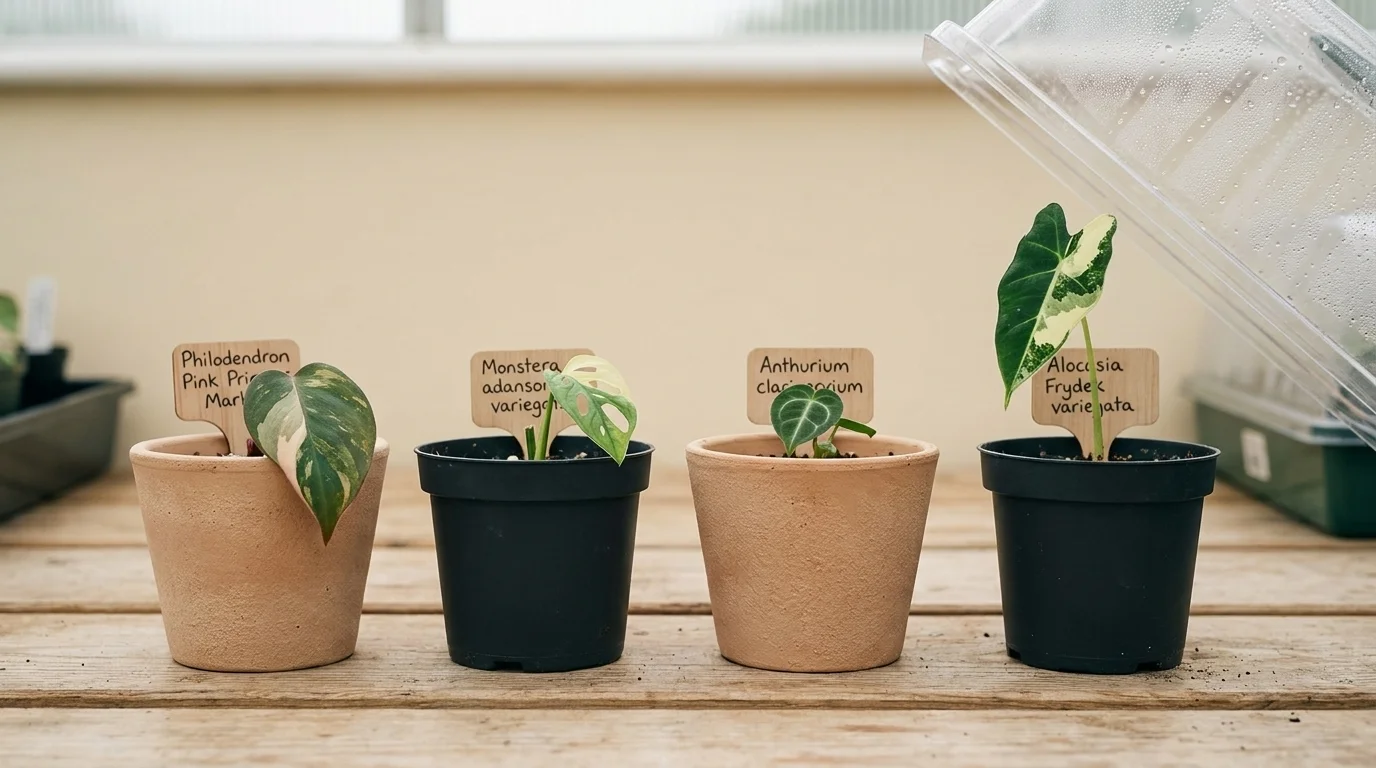
Provenance lives on the bench, not the listing photo — a cutting that can be traced to a propagation tray is the difference between buying a plant and laundering a wild one.
A practical closing for the May 2026 window
The honest summary, from a regenerative grower's chair: the 2026 collector market has matured. The plants that were rare and expensive five years ago are now stocked at supermarkets, which is good for first-time keepers and is teaching the whole hobby that "rare" is a moving target. The plants that are actually rare in 2026 are scarcer than ever, in part because some of the collector pressure has moved from the boom-era cultivars onto species the supply chain cannot ethically meet — which is why the sourcing section above is longer than the listicle of any single category.
If you are starting a collection this spring, plant the Beginner-Rare list and learn what a happy aroid root looks like before you spend $900 on a cutting. By the time the Hudson Valley serviceberry flowers — three weeks from now in most of the Northeast — you can have a Pink Princess, an Aglaonema 'Khanza Pink', a flytrap from a tissue-culture nursery, and a Hoya polyneura, settled and growing, for the price of one Spiritus Sancti node. The collector tier is still there next year. The species being stripped from the Richtersveld are not.
What counts as an unusual or rare houseplant in 2026?
A houseplant is genuinely rare when it is slow to propagate (variegated cuttings can take six to twelve months to root), restricted to a narrow native habitat (the Peruvian form of Monstera obliqua), or CITES-regulated. Many plants sold as rare in 2026 — Pink Princess Philodendron, Thai Constellation Monstera, several 'rare' Hoyas — are now mass-tissue-cultured and stocked at big-box retailers for $5 to $50.
Is the Pink Princess Philodendron still rare in 2026?
No. CTV News reported in June 2025 that Pink Princess Philodendron specimens are now sold in Canadian shops for as little as $5, down from well over $100 during the 2020 to 2022 boom, after growers learned to mass-produce the cultivar through tissue culture. It is still a beautiful collector starter — just no longer a price flex.
What is the most expensive houseplant in 2026?
According to Soltech's 2026 status-symbol pricing, mature Philodendron Spiritus Sancti specimens sell for $900 to $5,600 depending on size and source; Variegated Monstera Albo Borsigiana runs $1,350 to $2,900; the Peruvian form of Monstera obliqua hovers around $1,800; and velvet anthuriums (King of Spades, Papillilaminum hybrids) range $600 to $1,050.
How do I source rare houseplants legally and ethically?
Buy tissue-cultured specimens from named specialist nurseries — Logee's for breadth, Steve's Leaves for begonias, Mountain Crest Gardens for succulents, Peace Love & Happiness Club for aroids, California Carnivores for flytraps and sundews. Ask sellers for provenance: country of origin, propagation method, and CITES paperwork for listed genera like orchids, cycads, and many succulents. CITES regulates around 34,310 plant species as of January 2026, and Venus flytrap poaching has been a felony in North Carolina since 2014.
What is the easiest rare houseplant for a beginner?
Begonia maculata, Syngonium 'Milk Confetti', Aglaonema 'Khanza Pink', Pothos cultivars, and the now-affordable Philodendron Pink Princess are all Beginner-Rare — visually striking, forgiving of normal indoor conditions, and unlikely to die from a missed watering. Save Anthurium warroquinum and Spiritus Sancti for after you have kept one of these alive for a year.
Why are some rare houseplants illegal to buy?
Many rare species — orchids, cycads, certain succulents and aroids — are CITES-regulated because wild collection is driving them toward extinction. EcoWatch reports that succulent poaching in South Africa's Richtersveld region 'might eclipse the country's lucrative rhino horn industry.' Buying wild-collected specimens without CITES paperwork is illegal in most countries and accelerates the problem. Always ask for tissue-cultured or nursery-propagated provenance.
What is the difference between 'rare' and 'unusual' houseplants?
Unusual houseplants look striking on a shelf but are easy to source — Aglaonema 'Khanza Pink', Begonia maculata, Aphelandra (Zebra Plant). Rare houseplants are genuinely scarce — slow to propagate, habitat-restricted, or CITES-listed. The 2026 collector market has matured to the point where many plants sold as 'rare' are unusual, and most listicles do not draw the distinction.
Do exotic houseplants need a greenhouse?
Most do not. Beginner-Rare plants (Pink Princess, Aglaonema 'Khanza Pink', Begonia maculata, String of Hearts) tolerate ordinary 40 to 60 percent indoor humidity. Intermediate-Rare plants (Anthurium clarinervium, Monstera adansonii variegata, variegated Alocasia 'Frydek') want 60 percent or more — a humidifier or pebble tray usually suffices. Expert-Rare plants like Monstera obliqua and many velvet anthuriums genuinely need a glass cabinet or grow tent with controlled humidity.
Where do unusual houseplants actually come from?
The honest split is roughly: mass-produced tissue-cultured cultivars from large nurseries (Costa Farms tissue culture put Thai Constellation in supermarkets), division-propagated stock from specialist nurseries that breed in-house, imported nursery-propagated cuttings from southeast Asia or Latin America, and — for some CITES-listed genera — wild-collected specimens that should not be in the trade. Asking the seller to name the propagation method tells you which category you are in.
Cultivating Resilience: Adapting International Home Gardening Practices to Climate Change Realities
Join
Loading...
Our Green Community!
Loading...
VerdeNook is more than just a source of gardening wisdom; it’s a platform for sharing, learning, and growing together. We invite you to join our community, share your stories, and spread the joy of gardening. Let’s sow the seeds for a greener, healthier, and more sustainable future, one garden at a time.